
Gleason Insurance Brokers

Developer & Subdivider Insurance · Builders Risk · Subdivision Bonds · General Liability Start a Business Insurance Quote Today

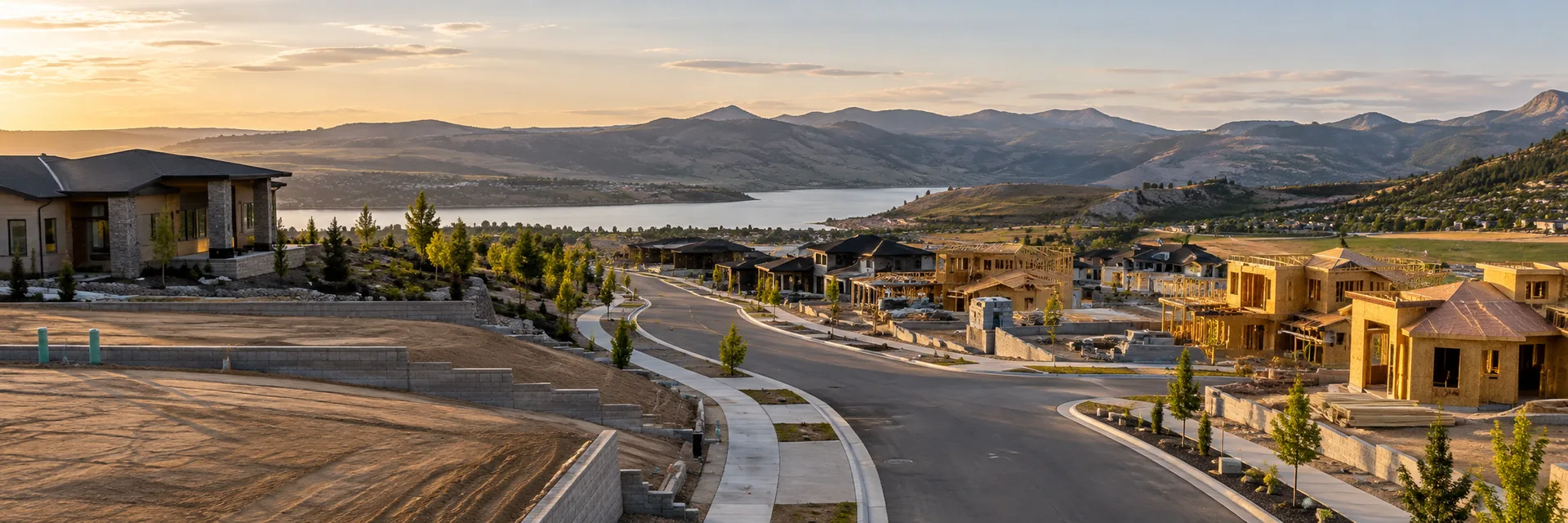
A residential subdivision under construction, framed houses along a new street — developer and subdivider insurance in Inland Empire, California

California commercial insurance

Inland Empire — Developer/Subdivider Insurance, CA

844-97-USAVE

Inland Empire developers and subdividers work through the same phases as any project — land, entitlement, construction, sale, and the years of completed-operations exposure afterward — coordinated with California's own regulatory structure for the contractors doing the work.

  • Entitlement to Post-Sale
  • Completed Operations Tail
  • Contractor Licensing
CaliforniaGeneral information only, not legal advice — illustrative scenarios and coverage, subject to change without notice. Content may be out of date or contain errors, and requirements vary by city, county, state, agency, project, contract, carrier and policy, among other factors; verifying what applies to your own situation is your responsibility. Full disclaimer

Developer and subdivider risk in Inland Empire

Developer and subdivider risk in Inland Empire spans the full project lifecycle — from entitlement and land development through construction and, critically, the years after units are sold when construction-defect and subsidence claims can surface.

Read more

The completed-operations tail should be accounted for from project inception — a policy scoped only to construction leaves that later exposure exposed. This kind of mistake rarely shows up right away; it tends to surface years down the line, once a claim hits coverage that's no longer active. Developers leasing to breweries or restaurants in the Inland Empire can compare tenant insurance requirements against brewery and restaurant insurance in Inland Empire.

Covers exposure from entitlement through construction and after the sale
The completed-operations tail commonly extends well past construction
Size the program to the full project lifecycle, not only the construction window
Defect and subsidence claims can emerge long after the units have closed

Licensing for Inland Empire contractors doing the work

Contractors performing the actual work on an Inland Empire development — general contractors, land improvement contractors handling grading and site utilities, and specialty trades — are licensed and regulated under the CSLB (Contractors State License Board).

Read more

The trades and GCs doing the work carry their own licensing and coverage; the developer's program runs alongside that, not instead of it. What actually protects a project when something goes wrong is keeping these two layers genuinely distinct, not just distinct on paper.

Contractor licensing runs through the CSLB (Contractors State License Board)
Developer coverage is separate from the trades' own policies
Verify subcontractors are carrying their own required coverage
The developer entity isn't covered simply because the GC is licensed

Core coverage for an Inland Empire developer

Workers compensation for any Inland Empire development entity with employees is required once you have any employee.

Read more

General liability, builders risk, and — for completed residential projects — a dedicated subsidence or completed-operations program round out a typical Inland Empire developer's coverage.

Any employee at all triggers the workers compensation requirement
The construction phase calls for general liability plus builders risk
Residential projects typically need completed-operations or subsidence coverage
Program should reflect the entity's actual role and staffing

Lender, JV and municipal requirements

Lenders, joint-venture partners and municipalities routinely set their own insurance requirements as a condition of financing or approval for Inland Empire projects.

Read more

Before assuming a standard policy fits, read the actual requirement: specific limits, additional insured status, and the required duration of completed-operations coverage. This is one of the more common places a developer's program turns out to fall short of what was actually promised.

Bond forms, amounts and riders for Inland Empire projects are set locally, not by a single statewide standard — Riverside and San Bernardino counties and the city can require different bond types for the same project (subdivision/improvement bond, encroachment/permit bond, performance bond), so confirm the exact requirements with the issuing jurisdiction rather than assuming one bond or policy covers every obligation.

A real example of this in practice: a JV partner capitalizing an Inland Empire distribution warehouse will typically require builders risk and liability limits sized to industrial-scale construction risk, distinct from what the same partner would require on a residential subdivision elsewhere in the same region — reflecting the area's real, dominant logistics development pattern.

A lender's financing terms commonly dictate specific coverage limits
JV partners may require their own additional insured status
Getting municipal approval can come with its own insurance conditions attached
Read the actual requirement before assuming standard coverage fits

Getting coverage in place

Describe the actual Inland Empire project — unit count, project type, phase, and any lender or JV insurance requirements — so the program reflects real exposure rather than a generic developer template.

Read more

As part of our California developer and subdivider practice, we place coverage for Inland Empire projects directly — call 844-978-7283 or request a quote to begin.

Describe unit count, project type and phase
Note any lender or JV insurance requirements
We serve Inland Empire as part of our California developer coverage
Request a quote online, or call 844-978-7283

Subdivision Improvement Agreements and Development Agreements in Inland Empire

Developers working on an Inland Empire subdivision project typically encounter two distinct legal instruments that are easy to confuse.

Read more

Under a Subdivision Improvement Agreement (SIA), the developer commits to building the public infrastructure — roads, water, sewer, storm drain — tied to the project's tentative and final subdivision maps, secured by a bond sized to the engineer's cost estimate. A Development Agreement (DA), authorized under California Government Code section 65864, is a separate, broader contract vesting entitlements and fee schedules for a set term in exchange for developer commitments — it typically carries its own indemnity and insurance requirements, distinct from whatever the SIA requires for the physical improvements.

An Inland Empire project can require an SIA, a DA, or both, depending on project size and the conditions attached by Riverside and San Bernardino counties. CEQA environmental review is a standard checkpoint for many California subdivision approvals — check current guidance through the Governor's Office of Land Use and Climate Innovation (lci.ca.gov/ceqa). Check exactly what applies to your specific project with the local planning or engineering department directly — jurisdiction-specific requirements are the norm here, not an edge case.

SIA: obligates the developer to build the public infrastructure tied to the tentative
DA: locks in entitlements and fees for a set term, authorized under California Government Code section 65864
An Inland Empire project may need an SIA, a DA, or both — confirm with Riverside and San Bernardino counties
Get quotes today for a project-specific review before a lender or jurisdiction deadline forces a fast decision

Encroachment permits and right-of-way work in Inland Empire

Any work performed within a public right-of-way in Inland Empire — utility connections, curb cuts, street cuts, driveway approaches — typically requires its own encroachment permit (sometimes called a right-of-way permit), issued separately from the underlying subdivision approval even when both are handled by the same Riverside and San Bernardino counties department.

Read more

Encroachment permits usually require their own separate bond — not the same subdivision/improvement bond already covering the broader infrastructure work. An Inland Empire project can have its subdivision/improvement bond fully in place and still need a separate encroachment permit and bond for a specific utility tie-in that falls outside the original map's scope. Confirm both requirements directly with the issuing jurisdiction before right-of-way work starts — working without an active encroachment permit is a common source of stop-work orders.

Inland Empire developers cross two separate county authorities depending on location — Riverside County's Transportation Department issues encroachment permits under County Ordinance No. 499, while San Bernardino County Public Works runs its own Permits Operations Support Division — and within Riverside County, city projects still route through the City of Riverside's own multi-department sign-off (Water, Electric, Fire, Police, Parks, Planning, Traffic and Public Works all weigh in) rather than the county directly.

Covers any work in an Inland Empire public right-of-way: utility connections, curb cuts, street cuts
This is a separate issuance from subdivision map approval, even under the same department
Secured by a distinct encroachment/permit bond, not the subdivision/improvement bond
Confirm both permit and bond directly with Riverside and San Bernardino counties before right-of-way work starts

Impact fees, construction financing and draw requests for Inland Empire projects

California subdivisions commonly carry school, traffic, park, water and sewer impact fees as conditions of approval — the total can be substantial on a larger project.

Read more

These fees are separate from bonding and insurance requirements but affect the same project cash-flow timeline, so an Inland Empire developer benefits from mapping all three together — impact fees, bonding, and insurance — rather than treating them as three unrelated line items reviewed at different times.

Construction lenders on Inland Empire projects typically attach their own insurance conditions to the loan agreement — specific limits, additional insured status, and builders risk coverage confirmed before funds are released. Draw requests generally require proof that builders risk and liability coverage remain active and that lien releases are current; a lapse in coverage discovered at a draw request is one of the more common, avoidable causes of a delayed disbursement on a Riverside and San Bernardino counties project.

Impact fees are a local-level cost, separate from bonding or insurance requirements
Map impact fees, bonding and insurance together against the project timeline, not separately
Construction lenders on california projects typically require proof of active coverage at each draw request
Discovering a lapsed policy at a draw request routinely — and avoidably — delays funding

A realistic Inland Empire development scenario

A developer builds a large distribution warehouse in the Inland Empire, one of the most active industrial real estate markets in the country given its proximity to the ports of LA and Long Beach.

Read more

The project's builders risk and general liability program needs to reflect industrial-scale construction risk — different equipment, different site logistics — than the residential subdivision template used elsewhere in this comparison.

A separate residential project in the region's eastern desert communities faces its own distinct exposure: extreme heat driving real workforce safety planning, and, in foothill areas, wildland-urban interface fire exposure similar to parts of Los Angeles County — two different risk conversations under the same regional metro.

Industrial/warehouse construction is a genuinely dominant project type given port-proximity logistics demand
Industrial-scale builders risk/GL programs differ meaningfully from a residential subdivision template
Eastern desert areas add extreme-heat workforce risk; foothill areas add wildfire interface exposure

Local factors shaping development in Inland Empire

Riverside and San Bernardino counties have become one of the largest industrial and logistics real estate markets in the country, driven by proximity to the ports of Los Angeles and Long Beach — warehouse and distribution-center development is a genuinely dominant project type here in a way it isn't in most other CA metros.

Read more

The region's eastern desert areas also carry real extreme-heat exposure, and foothill communities carry wildland-urban interface wildfire exposure similar to parts of Los Angeles County.

One of the largest industrial/logistics real estate markets in the US, driven by port proximity
Warehouse and distribution-center development is a genuinely dominant project type here
Eastern desert areas carry extreme heat exposure; foothill communities carry wildfire interface risk

Frequently asked questions

13 questions — start typing to filter

What insurance does an Inland Empire developer or subdivider actually need?

For an Inland Empire project: general liability, builders risk during construction, workers compensation for any employees, and — for completed residential projects — completed-operations or subsidence coverage that extends well past the construction phase.

Does Inland Empire development insurance cover the contractors doing the work?

No — the Inland Empire developer's program and the contractors' own licensing and insurance are separate. Contractors working in California are licensed under the CSLB (Contractors State License Board) and carry their own coverage.

How long does completed-operations coverage need to stay in force after an Inland Empire project closes?

It depends on California's construction-defect statute of limitations and any lender or contractual requirement for the Inland Empire project — this is one of the most commonly underinsured gaps in developer programs, so confirm the actual duration needed rather than assuming a standard policy term is enough.

Does Gleason Insurance Brokers write developer and subdivider coverage in Inland Empire, CA?

Yes — we're licensed in California, Arizona, Nevada, Texas and Utah, and place coverage for Inland Empire developers and subdividers directly. On an Inland Empire project that usually means coordinating project-specific liability, builders risk, the subdivision and improvement bonds a public agency asks for, and the pollution or professional exposures a particular site brings with it — which of those apply depends on the project, not on the city.

How is Developer/Subdivider insurance priced for an Inland Empire project?

Pricing reflects unit count, project phase, total project value and any lender or JV requirements — an Inland Empire project's actual scope drives the quote, not a flat per-project rate.

Which county issues the encroachment permit for an Inland Empire project?

It depends on the exact location — Riverside County's Transportation Department issues permits under County Ordinance No. 499, while San Bernardino County Public Works runs its own separate Permits Operations Support Division. City projects within either county may route through the city instead — confirm which authority actually governs before applying.

Does an Inland Empire warehouse project need different coverage than a residential subdivision here?

Yes — the region's dominant industrial/logistics development, driven by proximity to the ports of LA and Long Beach, needs builders risk and general liability sized to industrial-scale construction risk and equipment, distinct from the residential subdivision template used for the region's foothill and desert-community residential growth.

Do I need a Subdivision Improvement Agreement for a project in Riverside and San Bernardino counties?

If your Inland Empire project involves subdividing land and building public infrastructure — roads, utilities, drainage — tied to a tentative, Riverside and San Bernardino counties will typically require a Subdivision Improvement Agreement (SIA) secured by a subdivision/improvement bond. Confirm the specific requirement with the local planning or engineering department for your project.

What's the difference between a Development Agreement and an Improvement Agreement for an Inland Empire project?

A Development Agreement vests your project's entitlements and fee schedule for a set term (authorized under California Government Code section 65864), while an Improvement Agreement (including a Subdivision Improvement Agreement) obligates you to actually build the public infrastructure tied to your map. An Inland Empire project can need one, the other, or both — they answer different questions.

Do I need a separate encroachment permit for utility work on an Inland Empire project?

Likely yes — work in the public right-of-way in Inland Empire, including utility connections and curb cuts, typically requires its own encroachment permit and often its own encroachment/permit bond, separate from any subdivision/improvement bond already covering the project's larger infrastructure. Confirm directly with Riverside and San Bernardino counties before right-of-way work starts.

Are impact fees the same as subdivision improvement bond requirements in Riverside and San Bernardino counties?

No — they're separate. Impact fees (school, traffic, park, water, sewer) are a cash payment condition of approval, while a subdivision improvement bond secures the developer's obligation to actually build the infrastructure under the Subdivision Improvement Agreement. An Inland Empire project typically has both, on different timelines, and neither substitutes for the other.

What happens if builders risk coverage lapses during a draw request on an Inland Empire project?

Most construction lenders require proof of active builders risk and liability coverage at each draw request on an Inland Empire project — a lapse discovered at that point is a common, avoidable cause of delayed funding. Confirm renewal timing against your draw schedule rather than your policy's own renewal date alone.

Does Gleason Insurance Brokers coordinate bonding and insurance across multiple Inland Empire projects at once?

Yes — we regularly coordinate subdivision/improvement bonds, encroachment/permit bonds, builders risk and liability programs across multiple active projects in Riverside and San Bernardino counties for the same developer. Start today by describing your current project pipeline so the program reflects your real, combined exposure rather than treating each project in isolation.

Areas we serve near Inland Empire

Coverage placed for contractors and businesses operating in Inland Empire and these surrounding communities.

View ZIP codes we serve (40)

Riverside, CA: 92501, 92502, 92503, 92504, 92505, 92506, 92507, 92508

San Bernardino, CA: 92401, 92402, 92403, 92404, 92405, 92406, 92407, 92408

Ontario, CA: 91758, 91761, 91762, 91764

Rancho Cucamonga, CA: 91701, 91729, 91730, 91737, 91739

Corona, CA: 92877, 92878, 92879, 92880, 92881

Fontana, CA: 92331, 92334, 92335, 92336, 92337

Moreno Valley, CA: 92551, 92552, 92553, 92554, 92555

Official resources

Verify current licensing, regulatory and program requirements directly with the responsible agency — this is general information, not legal advice, requirements change without notice, and what is summarized here may be out of date or contain errors. Confirming what applies to your own city, project, contract and policy is your responsibility.

Updated October 12, 2026