Gleason Insurance Brokers

Developer & Subdivider Insurance · Builders Risk · Subdivision Bonds · General Liability Start a Business Insurance Quote Today

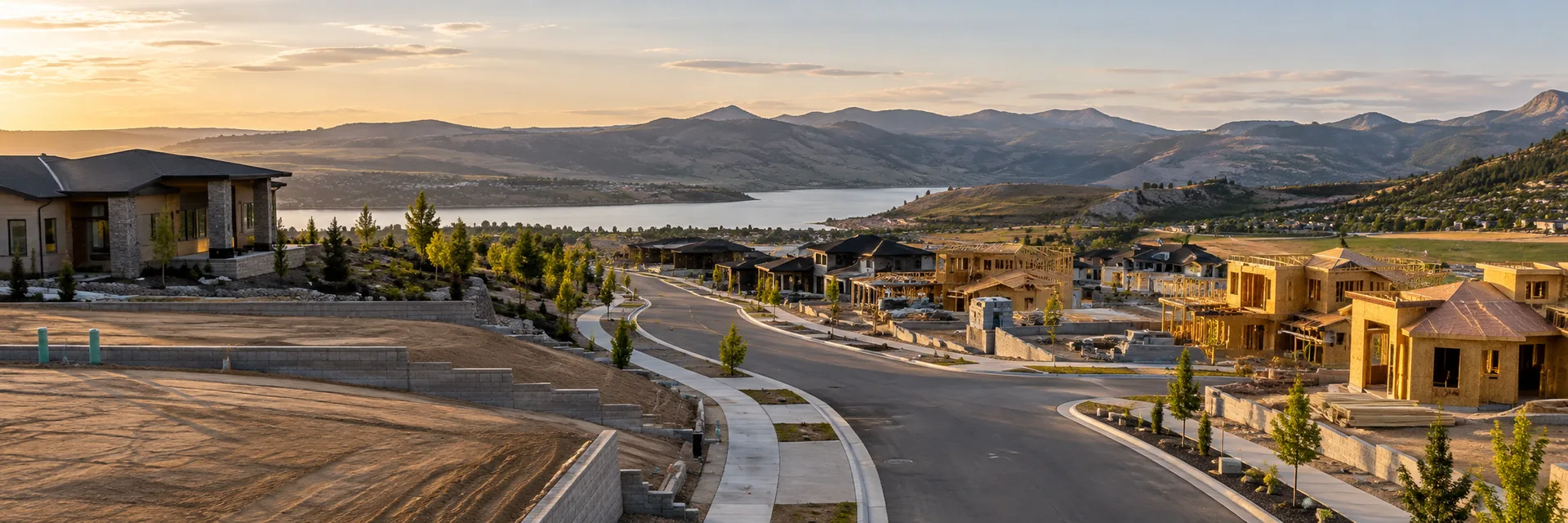
A residential subdivision under construction, framed houses along a new street — developer and subdivider insurance for California

California commercial insurance

California — Developers & Subdividers Insurance

844-97-USAVE

Developers and subdividers carry risk a general contractor never sees — entitlement delays, subdivision improvement bonding, and construction defect exposure that can surface a decade after homes are sold. Coverage needs to be built around the project lifecycle, not a standard contractor policy.

  • Builders Risk
  • Completed Operations Tail
  • Construction Defect

Reviewed by David Gleason, Principal — October 12, 2026

CaliforniaGeneral information only, not legal advice — illustrative scenarios and coverage, subject to change without notice. Content may be out of date or contain errors, and requirements vary by city, county, state, agency, project, contract, carrier and policy, among other factors; verifying what applies to your own situation is your responsibility. Full disclaimer

Interactive coverage guide

Build a coverage stack around how the business actually operates.

Start with the preselected industry or trade, then adjust the operational questions. The commonly considered stack updates live. Keep the coverages you want GIB to evaluate, remove ones you do not want included in your quote request, and add other available lines before continuing.

Common Starting Coverages

General LiabilityThird-party injury and property damage

What it is

General Liability commonly addresses covered third-party bodily injury, property damage and certain personal or advertising injury claims, subject to the policy.

Why businesses like yours commonly carry it

Businesses commonly use it as a starting liability policy and to satisfy customer, landlord or contract requirements.

Possible coverage gap

General Liability is not intended to replace policies for employee injuries, business vehicles, owned property, cyber events or professional errors.

Learn more about General Liability
Builder's RiskProject property during construction

What it is

Builder's Risk may insure covered buildings, materials and certain project property while construction is underway.

Why businesses like yours commonly carry it

Owners, developers and contractors commonly consider it when a structure or major renovation is exposed during construction.

Possible coverage gap

Commercial Property and General Liability are not automatic substitutes for course-of-construction property coverage.

Learn more about Builder's Risk

Commonly Added Based on Operations

Cyber Liability & Data BreachCyber events, data and system interruption

What it is

Cyber insurance may address certain first-party and third-party losses from covered data breaches, cyberattacks, ransomware and system interruption, depending on the policy.

Why businesses like yours commonly carry it

Developers move deposits, lender draws and investor funds electronically, often across several project entities.

Possible coverage gap

General Liability generally should not be assumed to address data breach response, ransomware or network interruption.

Learn more about cyber insurance for real estate developers

Exposure-Dependent Coverages

Professional Liability / E&OErrors in professional services or advice

What it is

Professional Liability may address covered claims alleging errors, omissions or failures in professional services.

Why businesses like yours commonly carry it

Businesses providing design, engineering, consulting, specifications or professional advice commonly consider it.

Possible coverage gap

General Liability is generally not intended to replace coverage for economic loss arising from professional errors.

Learn more about Professional Liability / E&O
Contractors Pollution LiabilityPollution conditions and cleanup liability

What it is

Pollution Liability may address covered cleanup costs and third-party injury or property damage arising from pollution conditions.

Why businesses like yours commonly carry it

Businesses working with fuels, chemicals, soil, water, demolition or environmental conditions may have pollution exposures.

Possible coverage gap

Standard General Liability commonly contains pollution exclusions or limitations.

Learn more about Contractors Pollution Liability
Umbrella / Excess LiabilityAdditional limits above scheduled liability policies

What it is

Umbrella or Excess Liability may provide additional limits above identified underlying liability policies, subject to its own terms and exclusions.

Why businesses like yours commonly carry it

Businesses with larger contracts, vehicles, public exposure or higher severity potential commonly consider additional limits.

Possible coverage gap

An umbrella does not automatically broaden every exclusion or sit over every policy unless the issued terms say it does.

Learn more about Umbrella / Excess Liability

Loading quote and requirements options…

Educational guidance only. Results are not a coverage recommendation, quote, binder, policy interpretation, or guarantee of coverage. Actual needs, availability, forms, limits, exclusions and requirements vary. A licensed insurance professional should review the complete risk and issued policy terms.

Verified Google reviews

What developers say about us

5.0 / 5from 7 Google reviews

Reviews reflect individual client experiences and are not a guarantee of coverage, pricing or results.

91 Enterprise LLC

91 Enterprise LLC

March 24, 2026

We are using Gleason insurance for our commercial auto policy and GL policy. David is the best insurance broker I've worked with — very honest, responsive, and knowledgeable. Highly recommend.

Fito Plumbers

Fito Plumbers

February 20, 2026

We have been working with David at Gleason Insurance Brokers for 8+ years. David always goes above and beyond to make sure we have the appropriate coverages. He explains everything in detail and makes sure we feel confident and understand all of our policies. He is always available and responds right away!

Barry Stay

Barry Stay

February 17, 2026

David provides great service and I highly recommend him for your insurance needs.

Why development risk is different from contracting risk

A developer or subdivider carries risk across the entire project lifecycle — entitlement and environmental review, land development and construction itself, and long after the last home or unit is sold.

Read more

General liability for a developer needs to account for all three phases, not just the construction period a contractor's policy typically focuses on.

Construction defect exposure is the clearest example: a homeowner or HOA can bring a claim years after a development is complete, and the developer — not just the contractors who performed the work — is commonly named. Completed operations coverage with an adequate claim window matters more here than almost anywhere else in construction insurance.

Risk spans entitlement, construction and long after project completion
Completed operations coverage needs an adequate claim window
Developers are commonly named in construction defect claims
A standard contractor GL policy doesn't automatically fit a developer's exposure

What tends to raise the bar

Where higher limits and extra endorsements are commonly requested

Patterns this agency typically sees, not a statement of what any particular project, agency or carrier will ask for.

Projects around two million dollars and up

Mid-sized and larger jobs are where umbrella or excess limits start being written into the insurance exhibit, and where a per-project aggregate is most often asked for. The figure is a rough threshold we tend to see rather than a rule — plenty of smaller contracts ask for more, and some larger ones ask for less.

Pulling a permit with a city or county

Some jurisdictions set their own insurance conditions before a permit is issued, separate from anything the project owner asks for. It is worth reading the permit conditions as its own document rather than assuming the contract covers it.

Encroachment permits and work in the public right of way

Working in a city, county or Caltrans right of way commonly carries its own limits, its own additional insured wording naming the agency, and sometimes a bond as well.

Public works

The awarding agency writes its requirements into the bid package, and they are rarely identical to what a standard commercial policy already provides. Bonding, DIR registration and certified payroll usually travel with them.

Property management companies and landlords

The manager, the building owner and sometimes a lender are commonly all named, and the waiver of subrogation is often mutual. A management company typically has one standard insurance exhibit it applies to every vendor.

Commercial retail, shopping centers and malls

Mall and shopping center rules commonly set named additional insureds and specific limits before anyone is cleared to work on site, and the requirement frequently comes from the center itself or its property management company rather than from the tenant who hired you.

High-rise buildings

Height, occupancy and water damage exposure commonly push limits up and bring specific endorsements with them. Building rules for contractor access are frequently a separate document again.

Colleges, universities and school districts

Institutional contract templates commonly specify limits and endorsements directly, and depending on the work may ask about coverages a construction policy does not carry as standard.

Caltrans and other government work

State and federal agencies commonly specify their own forms, their own wording and their own limits, and are usually the least flexible about substitutions.

What tends to be asked for alongside the higher limits

Per-project aggregateCG 25 03 or CG 25 04
The one that surprises people most. A general aggregate is normally shared across every job running in the policy term, so a claim on one project can erode the limit the next contract assumed was there. A per-project aggregate sets a limit for the designated project instead.
Additional insured, scheduled or blanketCG 20 10 and CG 20 37
Ongoing operations and completed operations are two separate endorsements, and larger contracts commonly ask for both.
Primary and non-contributoryoften CG 20 01
Decides whether the downstream policy responds first or shares with the upstream party’s own cover.
Waiver of subrogationCG 24 04
Frequently named alongside additional insured status rather than instead of it.
Higher umbrella or excess limits
Commonly the first thing an insurance exhibit raises. If the underlying limits do not match what the umbrella sits above, the tower may not respond the way the contract assumes.

Two real examples, published by the agencies themselves

Reading an actual insurance clause is worth more than any summary of one. Both of these are public, and they ask for different things — which is the point.

  • City of Los Angeles Bureau of Engineering — liability insurance for permitsStates a commercial minimum of $1 million with a $2 million aggregate, a thirty-day written cancellation notice, and the City named both as certificate holder AND as additional insured. It also expects proof to stay on file for as long as the encroachment exists, not just through construction.
  • Caltrans Encroachment Permits Manual — Chapter 200, section 203.3Asks for an endorsement naming the State of California, the Department and its directors, officers, employees and agents as additional named insureds — and for the certificate AND the endorsement to be furnished. A good illustration of why a certificate on its own is rarely what an agency means.

Core coverage for California developers and subdividers

General liability sized for development-scale exposure, builders risk across what's often a multi-building or phased project, and subdivision improvement bonds guaranteeing infrastructure completion all form the foundation.

Read more

Pollution liability is worth reviewing for any redevelopment or infill site with contamination history, and professional liability applies if the developer provides any design or engineering input beyond hiring outside firms.

A 2024 file of ours: a first-time residential developer near San Jose could not get a roughly $10 million project placed at all, and the project-specific program that eventually worked also had to satisfy the city before permits were released. Read the full case.

General liability sized for development-scale exposure
Builders risk across multi-building or phased projects
Subdivision improvement bonds guarantee infrastructure completion
Pollution and professional liability worth reviewing case by case

Entitlement, environmental review and project timeline risk

CEQA environmental review is a standard gate for many California subdivision approvals — current guidance runs through the Governor's Office of Land Use and Climate Innovation (lci.ca.gov/ceqa), not the former Office of Planning and Research, and the review timeline can affect both project financing and insurance program timing.

Read more

Redevelopment of a site with any contamination history should factor in Department of Toxic Substances Control requirements early — this can affect both the project timeline and whether pollution liability coverage is needed alongside standard development insurance.

CEQA review is a standard gate for many CA subdivision approvals
Current guidance runs through lci.ca.gov/ceqa, not the former OPR
Contamination history triggers DTSC review on redevelopment sites
Environmental timeline affects both financing and insurance program timing

Sources for this section

Coordinating bonding, insurance and general contractor risk transfer

A developer typically coordinates several layers at once: subdivision improvement bonds with the local jurisdiction, the project's own builders risk and liability program, and risk transfer from the general contractors, land improvement contractors and subcontractors actually performing the work.

Read more

Verifying that the general contractor's own insurance program — including completed operations coverage — is adequate is part of managing the developer's own long-term construction defect exposure, not a separate concern from the developer's own coverage.

None of this is a commitment on a carrier's behalf. These are practices many insurers may expect, sometimes written in as a subject-to and sometimes carried in the terms and conditions of the policy they issue. Your own obligations follow from your agreements and from the bound coverage, so take the contract wording to legal counsel.

Primary and non-contributory wording is the piece developers most often leave out. Being named as an additional insured on a general contractor’s policy says the cover can respond; primary and non-contributory is what commonly decides whether it responds first rather than sharing with your own. Carriers usually attach it only where a written contract calls for it, and the endorsement that results is subject to the policy as issued — so the contract language and the endorsement are worth reading together rather than one after the other.

Subdivision bonds, project insurance and GC risk transfer all coordinate together
Verify the GC's completed operations coverage as part of your own risk management
This isn't three separate concerns — they interact directly
A gap in any one layer can shift exposure back to the developer

How risk transfer actually flows

Project Owner or Developer → General Contractor → Subcontractor

Contract requirements flow down the chain. Uninsured risk flows back up it wherever a link is missed. Open a handoff to see what commonly travels with it.

Project Owner / Developer
  • Additional insured, ongoing operationsoften CG 20 10Extends the downstream party’s general liability to the upstream party for work still in progress. It is the form most contracts have in mind when they say "name us as additional insured", and on its own it generally stops responding once the work is finished.
  • Additional insured, completed operationsoften CG 20 37Covers the same party for claims arising after the work is complete — which is when a great many construction claims actually surface. A contract asking for both ongoing and completed operations is usually asking for two separate endorsements, not one.
  • Primary and non-contributoryoften CG 20 01Commonly decides whether the downstream policy responds first or shares with the upstream party’s own cover. Usually keyed to a written contract requiring it.
  • Waiver of subrogationCG 24 04Gives up the insurer’s right to recover from the upstream party after paying a claim. Frequently named alongside additional insured status rather than instead of it.
  • Indemnity in the prime contractThe contractual promise the insurance is meant to stand behind. California limits how far indemnity can reach on some construction contracts, so the wording matters as much as the endorsements attached to it.
  • Certificate, plus the endorsements behind itA certificate evidences that a policy existed on the day it was issued. It is not proof that any particular endorsement sits on that policy, which is why a requirement is commonly checked against the endorsement itself.

A wrap-up changes this picture. Where the owner or developer places an OCIP or CCIP, much of the enrolled work is covered under that program instead, and what each party still has to carry outside it is set by the wrap-up documents.

General Contractor
Subcontractor

The limits a contract asks for, and what each one means

Contracts commonly state required limits as well as required endorsements. One million dollars per occurrence with a two million dollar general aggregate is a combination many construction agreements use, but the figures vary by project, by owner and by trade, and the limit is only one number on the policy — it says nothing about what is excluded or which endorsements are attached.

Per occurrence
The most the policy generally pays for any one covered occurrence.
General aggregate
The most it generally pays across the policy term. Some contracts ask for it to apply per project, which is its own endorsement.
Products and completed operations aggregate
A separate bucket for claims arising after the work is finished, which is where completed-operations additional insured status becomes relevant.
Umbrella or excess above it
Sits above the underlying limits. If the underlying policy does not match what the umbrella requires beneath it, the tower may not respond as the contract assumes.

Working with Gleason Insurance Brokers on development projects

We coordinate general liability, builders risk and pollution liability as one program for California developers and subdividers, with the bonding handled through the same agency as its own surety agreement — not separate transactions handled independently.

Read more

Share your project's scope, phasing, and any known environmental or entitlement complexity — call 844-978-7283 or request a quote to start the review.

Because a development project's insurance needs shift meaningfully from land purchase through years after the last unit sells, see the developer's insurance timeline for what to buy at each phase.

One coordinated program across GL, builders risk, bonding and pollution
Built around your actual project scope and phasing
We handle known environmental/entitlement complexity directly
Start with a call to 844-978-7283, or send a quote request

From entitlement to recorded map: agreements, maps and permits in sequence

California subdivision development generally moves through a real sequence, and each step can carry its own insurance or bonding trigger: entitlement approvals and any Development Agreement come first, followed by a tentative map (with its own conditions of approval), then the Subdivision Improvement Agreement securing the public infrastructure the final map depends on, then the final map itself — which typically can't record until the SIA and its bond are in place — with any needed encroachment permits for right-of-way work handled alongside or after recordation.

Read more

Smaller lot splits often move through a parcel map process instead of a full tentative/final map sequence, but the same underlying bonding and improvement-obligation questions still apply proportional to project scope. Conditions of approval attached at any stage — tentative map, parcel map, or the DA itself — should be tracked against their specific timing triggers, since several directly affect when insurance or bonding needs to already be in place, not just eventually.

Get quotes today for a project-specific review rather than waiting until a lender or jurisdiction deadline forces a fast decision — confirming these requirements early is consistently faster and cheaper than resolving a bonding or coverage gap discovered midway through the entitlement process.

Developers and subdividers working specific markets can find pages built for their own local requirements, including Santa Barbara Developer & Subdivider Insurance, Las Vegas Developer & Subdivider Insurance, Phoenix Developer & Subdivider Insurance, Reno Developer & Subdivider Insurance and Tucson Developer & Subdivider Insurance. For how coverage needs actually change phase by phase, see The Developer's Insurance Timeline, and for a real example of a post-wildfire rebuild, see Palisades Rebuild Insurance for Developers and GCs.

Sequence: entitlement/Development Agreement -> tentative map -> Subdivision Improvement Agreement -> final map -> encroachment permits as needed
A final map typically can't record until the SIA and its bond are in place
Parcel maps (lot splits) carry the same bonding/improvement questions at smaller scale
Track conditions of approval against their specific timing triggers, not just an eventual deadline

Developer and subdivider insurance by California metro

Local pages for the California markets where development and subdivision work is most active.

Frequently asked questions

14 questions — start typing to filter

How is developer insurance different from standard contractor insurance?

It needs to account for the full project lifecycle — entitlement, construction and long after completion — with completed operations coverage sized for construction defect exposure that can surface years later.

Do I need pollution liability for a California development project?

Worth reviewing specifically for any redevelopment or infill site with contamination history — standard general liability typically excludes pollution conditions.

What is CEQA review and how does it affect my project timeline?

CEQA environmental review is a standard approval gate for many California subdivisions, now administered through the Governor's Office of Land Use and Climate Innovation (lci.ca.gov/ceqa) — it can affect both financing and insurance program timing.

Do I need to verify my general contractor's insurance separately from my own developer coverage?

Yes — the GC's completed operations coverage is directly connected to your own long-term construction defect exposure, not a separate concern.

What's the difference between subdivision bonds and my project's general liability insurance?

Bonds guarantee that approved infrastructure improvements will actually be completed; general liability covers third-party liability and property damage exposure. A development project typically needs both.

How long after a development is complete can a construction defect claim arise?

It can be years — this long tail is exactly why completed operations coverage with an adequate claim window matters more for developers than for many other types of contractors.

Does Gleason Insurance Brokers coordinate all of this as one program?

Yes — we coordinate general liability, builders risk, bonding and pollution liability together for California developers rather than treating them as separate transactions.

Can a final map record before the Subdivision Improvement Agreement bond is in place?

Generally no — California subdivisions typically require the SIA and its bond to be in place before the final map can record, since the bond is what secures the public infrastructure the map depends on. Confirm the specific sequencing and timing with your project's city or county engineering department, since requirements can vary by jurisdiction.

Who typically buys home under construction insurance on a new subdivision, the builder or the buyer?

Usually the builder or developer — home under construction insurance on a subdivision is typically placed by whoever holds the risk of loss during construction, which is the builder in most new-home contracts until closing.

How did the Palisades wildfire affect insurance for rebuild projects?

The January 2025 Pacific Palisades wildfire changed real considerations for developers, subdividers and GCs working on rebuild projects in that area. Read our full breakdown of Palisades rebuild insurance considerations.

Do you place developer and subdivider coverage outside the major metro areas?

Yes — we place coverage throughout California, including markets like Santa Barbara, not just the largest metro areas.

Does a developer running an OCIP need a third-party administrator for subcontractor certificates?

Often, yes. A large wrap-up program can mean dozens of subs across multiple phases, and tracking every certificate and endorsement by hand at that scale is exactly where things slip — which is why some carriers bring in a TPA to verify it independently rather than relying on the developer's own team. The cost is real, but so is the alternative: a documentation gap that only surfaces after a claim is filed can mean a denied claim, or an audit that treats an under-documented subcontractor's payroll as the developer's own.

Does this kind of certificate tracking only apply to a required OCIP?

No — some developers arrange this kind of certificate and endorsement tracking and subcontractor compliance monitoring even outside a program that requires it, to keep carrier terms and conditions and the risk transfer process monitored across a project without managing it internally. It's typically available at a fairly reasonable added cost relative to the administrative relief it provides.

What is project-specific liability insurance for a developer or subdivider?

Project-specific liability insurance — most commonly structured as an OCIP (Owner Controlled Insurance Program) or CCIP (Contractor Controlled Insurance Program) — covers general liability, and often workers compensation, for every enrolled contractor under one policy for the life of a single large project, rather than each contractor carrying separate annual policies. See the OCIP and CCIP Wrap-Up Insurance page for the full comparison and enrollment timing considerations.

Additional official resources

Verify current licensing, regulatory and program requirements directly with the responsible agency — this is general information, not legal advice, requirements change without notice, and what is summarized here may be out of date or contain errors. Confirming what applies to your own city, project, contract and policy is your responsibility.

Explore Related Coverage and Contractor Resources

Related coverage
Guides, trades and resources

Updated October 12, 2026