Gleason Insurance Brokers

General Liability · Workers' Comp · Commercial Auto · Pollution Insurance · Surety Bonds Start a Business Insurance Quote Today

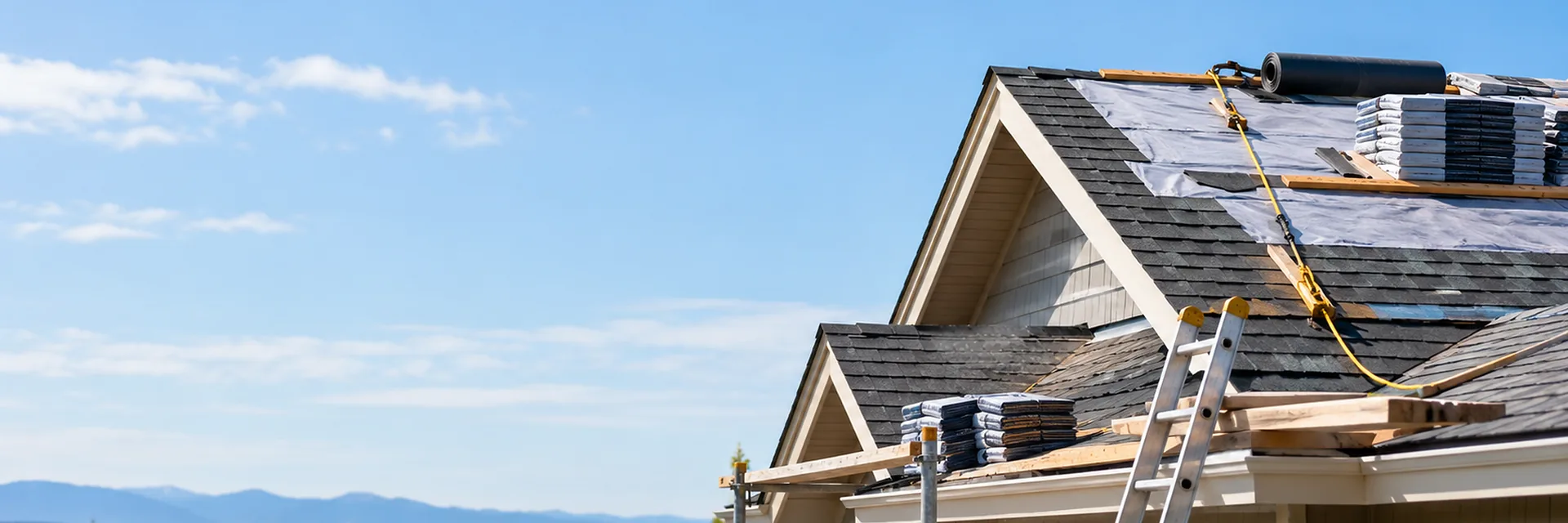
Roofers installing covering on a building roof — roofing contractor insurance

California commercial insurance

Roofing Contractor Insurance California

844-97-USAVE

Roofing carries a real, permanent workers' compensation requirement no other trade on this site shares in quite the same way — C-39 roofing contractors can't claim the no-employee exemption at all, regardless of how the rest of California's contractor workers' comp timeline plays out. Coverage built around the fall, completed-operations and open-roof-exclusion exposures specific to this trade.

  • General Liability
  • Workers Comp (C-39)
  • Completed Operations

Reviewed by David Gleason, Principal — October 12, 2026

Next Level Experience. Insurance Done Right.

CaliforniaGeneral information only, not legal advice — illustrative scenarios and coverage, subject to change without notice. Content may be out of date or contain errors, and requirements vary by city, county, state, agency, project, contract, carrier and policy, among other factors; verifying what applies to your own situation is your responsibility. Full disclaimer

Interactive coverage guide

Build a coverage stack around how the business actually operates.

Start with the preselected industry or trade, then adjust the operational questions. The commonly considered stack updates live. Keep the coverages you want GIB to evaluate, remove ones you do not want included in your quote request, and add other available lines before continuing.

Common Starting Coverages

General LiabilityThird-party injury and property damage

What it is

General Liability commonly addresses covered third-party bodily injury, property damage and certain personal or advertising injury claims, subject to the policy.

Why businesses like yours commonly carry it

Businesses commonly use it as a starting liability policy and to satisfy customer, landlord or contract requirements.

Possible coverage gap

General Liability is not intended to replace policies for employee injuries, business vehicles, owned property, cyber events or professional errors.

Learn more about General Liability

Commonly Added Based on Operations

Contractor Equipment / Inland MarineMobile tools, equipment and property away from premises

What it is

Inland Marine is commonly used for tools, equipment and certain mobile property that moves between locations or jobsites.

Why businesses like yours commonly carry it

Contractors frequently move tools, testing equipment and mobile machinery among jobsites.

Possible coverage gap

General Liability should not be assumed to insure the business's own tools and equipment against theft or physical damage.

Learn more about Contractor Equipment / Inland Marine
Cyber Liability & Data BreachCyber events, data and system interruption

What it is

Cyber insurance may address certain first-party and third-party losses from covered data breaches, cyberattacks, ransomware and system interruption, depending on the policy.

Why businesses like yours commonly carry it

Contractors commonly use email, electronic banking, project platforms, payroll systems and cloud document storage.

Possible coverage gap

General Liability generally should not be assumed to address data breach response, ransomware or network interruption.

Learn more about cyber insurance for contractors

Exposure-Dependent Coverages

Installation FloaterMaterials awaiting or undergoing installation

What it is

An Installation Floater may cover certain materials and equipment in transit, temporary storage and during installation, subject to the policy.

Why businesses like yours commonly carry it

Businesses responsible for materials before final installation commonly consider this coverage.

Possible coverage gap

A basic liability policy generally should not be assumed to cover the insured's materials against physical loss before installation is complete.

Learn more about Installation Floater
Builder's RiskProject property during construction

What it is

Builder's Risk may insure covered buildings, materials and certain project property while construction is underway.

Why businesses like yours commonly carry it

Owners, developers and contractors commonly consider it when a structure or major renovation is exposed during construction.

Possible coverage gap

Commercial Property and General Liability are not automatic substitutes for course-of-construction property coverage.

Learn more about Builder's Risk
Contractors Pollution LiabilityPollution conditions and cleanup liability

What it is

Pollution Liability may address covered cleanup costs and third-party injury or property damage arising from pollution conditions.

Why businesses like yours commonly carry it

Businesses working with fuels, chemicals, soil, water, demolition or environmental conditions may have pollution exposures.

Possible coverage gap

Standard General Liability commonly contains pollution exclusions or limitations.

Learn more about Contractors Pollution Liability
Umbrella / Excess LiabilityAdditional limits above scheduled liability policies

What it is

Umbrella or Excess Liability may provide additional limits above identified underlying liability policies, subject to its own terms and exclusions.

Why businesses like yours commonly carry it

Businesses with larger contracts, vehicles, public exposure or higher severity potential commonly consider additional limits.

Possible coverage gap

An umbrella does not automatically broaden every exclusion or sit over every policy unless the issued terms say it does.

Learn more about Umbrella / Excess Liability

Loading quote and requirements options…

Educational guidance only. Results are not a coverage recommendation, quote, binder, policy interpretation, or guarantee of coverage. Actual needs, availability, forms, limits, exclusions and requirements vary. A licensed insurance professional should review the complete risk and issued policy terms.

Verified Google reviews

What contractors say about us

5.0 / 5from 7 Google reviews

Reviews reflect individual client experiences and are not a guarantee of coverage, pricing or results.

91 Enterprise LLC

91 Enterprise LLC

March 24, 2026

We are using Gleason insurance for our commercial auto policy and GL policy. David is the best insurance broker I've worked with — very honest, responsive, and knowledgeable. Highly recommend.

Fito Plumbers

Fito Plumbers

February 20, 2026

We have been working with David at Gleason Insurance Brokers for 8+ years. David always goes above and beyond to make sure we have the appropriate coverages. He explains everything in detail and makes sure we feel confident and understand all of our policies. He is always available and responds right away!

Barry Stay

Barry Stay

February 17, 2026

David provides great service and I highly recommend him for your insurance needs.

Why roofing carries elevated underwriting attention

Roofing sits at the top of most carriers' construction risk tiers for a straightforward reason: fall exposure is real and constant, and a roof failure discovered years after installation — a leak, a wind-uplift failure, water intrusion into the structure below — is exactly the kind of long-tail claim that surfaces well after the crew has moved to the next job.

Read more

Underwriters price and structure roofing coverage around both ends of that timeline, not just the active work.

General liability alone doesn't automatically address every part of this either — many roofing policies carry a specific open-roof exclusion, which strips coverage for water damage to the interior of a structure while the roof itself is open during the work. Confirming whether a specific policy carries that exclusion, and what triggers it, matters more for this trade than almost any other.

Fall exposure drives underwriting attention more than almost any other trade
Completed operations and long-tail water-intrusion claims are a real, recurring exposure
Many policies carry a specific open-roof exclusion — confirm it before assuming standard coverage applies
Roofing sits in its own underwriting tier at most carriers, not grouped with general trades

Workers compensation: no exemption for C-39 roofing contractors

California contractor workers comp rules treat roofing differently from most other trades, and it isn't part of the newer SB 216 timeline most of this site's workers' compensation content covers.

Read more

Business and Professions Code Section 7125 has long precluded C-39 roofing contractors specifically from filing a no-employee workers' compensation exemption — every active C-39 license needs workers' compensation insurance or a valid Certification of Self-Insurance on file, whether or not the contractor has employees. This predates SB 216's 2023 additions (C-8, C-20, C-22, D-49) by years, not a related rule.

That means a solo roofing contractor genuinely can't rely on the no-employee exemption the way a solo contractor in most other classifications still can today — confirming current status directly with CSLB is worth doing before assuming an exemption applies, since this is a permanent structural rule for this classification, not a phase-in deadline like the broader 2028 timeline covered elsewhere on this site.

C-39 roofing contractors cannot file a no-employee WC exemption — ever, under Business & Professions Code §7125
This is a separate, older rule than SB 216's 2023 additions (C-8, C-20, C-22, D-49)
Applies regardless of the broader 2028 all-classifications timeline covered on our Workers Compensation guide
See our Workers Compensation guide for the 2028 exemption deadline affecting other classifications

Completed operations and the open-roof exclusion

A completed roofing job's real exposure often starts after the crew leaves — a leak that surfaces during the next rainy season, wind-uplift failure, flashing that wasn't sealed correctly.

Read more

Completed operations coverage is what responds to a claim like this, and confirming it's actually part of the program — not just assumed — matters more for roofing than for a trade whose failures tend to show up while the crew is still on site.

The open-roof exclusion specifically strips coverage for water damage to a structure's interior while the roof is open during active work — a real, commonly-cited exclusion on standard policies, not a hypothetical. Confirming a policy doesn't carry it, or understanding exactly what triggers it, is worth doing before a job starts, not after a storm hits an open roof mid-project. Where a defect claim traces back to the material rather than the installation, the policy that responds is commonly not the roofer’s at all — it generally sits upstream with the manufacturer or the distributor, which is why roofing material supplier insurance is built around product liability rather than workmanship.

Completed operations coverage responds to leaks and failures discovered after the job is done
The open-roof exclusion is a real, commonly-cited exclusion on standard roofing policies
Confirm both before a project starts, not after a claim
CG 20 37 (completed operations additional insured) matters as much for roofing subs as CG 20 10 does

Fall protection and Cal/OSHA compliance

Cal/OSHA fall protection requirements — guardrails, safety nets, personal fall arrest systems — aren't just a safety compliance question for roofing contractors; a documented, actually-followed fall protection program is something underwriters look at directly, and it can affect both pricing and your experience modification rate over time.

Read more

An undocumented or inconsistently-enforced program is a real underwriting flag, not just a workplace-safety gap.

Cal/OSHA requires guardrails, safety nets or personal fall arrest systems for roof work
A documented, followed fall protection program is a real underwriting factor, not just compliance paperwork
Inconsistent enforcement shows up in claims history and can affect renewal pricing

Sources for this section

Certificates, additional insured and completed operations coverage GCs require

General contractors hiring roofing subcontractors routinely require both ongoing and completed operations additional insured status — CG 20 10 alone doesn't cover a leak discovered after the job is finished, which is exactly the kind of claim roofing generates most often.

Read more

See our Certificates of Insurance guide for why a certificate showing only one of these two forms is a common, avoidable rejection reason.

GCs commonly require both CG 20 10 (ongoing) and CG 20 37 (completed operations) for roofing subs
A certificate showing only one is a common rejection reason — confirm both are actually on file
See our Certificates of Insurance guide for the full breakdown of why certificates get rejected

A realistic roofing claims scenario

A re-roof is completed in the fall; the following winter, a homeowner reports water staining on an interior ceiling.

Read more

Investigation points to improperly sealed flashing around a roof penetration — a completed operations claim, not a claim from active work, surfacing months after the crew moved on.

This is a typical, illustrative example meant to show how completed operations coverage responds to a real roofing exposure — not a description of any actual claim, and not a guarantee of how a specific claim would be handled. Actual outcomes depend on the policy's actual terms, exclusions and the specific facts involved; consult a licensed attorney for case-specific guidance.

Completed operations claims often surface a full season after the work is finished
Flashing and penetration seals are a common source of delayed leak claims
The scenario above is illustrative only, not a guarantee of how any specific claim is handled

Getting roofing contractor insurance in place

Describe the actual scope — residential re-roof, commercial low-slope, metal, tile, torch-down — along with crew size and whether the business has employees, so the program reflects the real C-39 workers' compensation requirement and the specific completed-operations exposure this trade carries, not a generic contractor template.

Read more

Gleason Insurance Brokers places roofing contractor coverage throughout California — call 844-978-7283 or request a quote to get started.

Describe roofing type, scope and crew/employee status
Workers comp is not optional or exemptible for C-39 — confirm it's in place from day one
Confirm completed operations and open-roof exclusion status before the policy binds
Call 844-978-7283 or request a quote to get started

Contractors we work with, growing and established

We work with roofing contractors across a range of company sizes — from smaller residential re-roofs up through established commercial and industrial roofing programs.

Read more

Program structure, market access and current capacity all factor into how a specific account is approached, whether the business is an established operation adding crews or already running a considerably larger program.

Roofing risk shifts meaningfully between residential re-roofs, tract-home work and commercial low-slope systems, so tell us where your crews are actually working before the mix changes further. We'll give you a straightforward read on what your business needs right now.

We work with both growing and established operations, trade to trade
Program structure and market access are matched to the size and complexity of the account
Current capacity and focus can affect timing — reach out early so we can plan around it
We'll be direct with you about the best path forward for your specific business

Frequently asked questions

10 questions — start typing to filter

What insurance does a C-39 roofing contractor need in California?

General liability (ideally with both ongoing and completed operations additional insured endorsements available for GC relationships), commercial auto for company vehicles, and workers' compensation — which is mandatory for C-39 regardless of employee count. A surety bond is also required for CSLB licensure.

Can a roofing contractor claim a workers comp exemption in California?

No. Business and Professions Code Section 7125 specifically precludes C-39 roofing contractors from filing a no-employee workers' compensation exemption — this is a permanent rule for this classification, not tied to SB 216's newer 2023/2028 timeline that applies to other trades.

What is the open roof exclusion?

A common general liability policy exclusion that strips coverage for water damage to a structure's interior while the roof is open during active work. Confirming a policy doesn't carry this exclusion — or understanding what specifically triggers it — is a real underwriting question worth asking directly, not assuming.

Does general liability cover a roof leak discovered after the job is finished?

Only if completed operations coverage is actually part of the policy — this responds to claims, like a delayed leak, that surface after the work is done. A policy without it may leave exactly this kind of claim, one of the most common roofing claim types, unaddressed.

What's the difference between CG 20 10 and CG 20 37 for roofing subcontractors?

CG 20 10 adds additional insured status for ongoing operations — while work is actively underway. CG 20 37 adds it for completed operations — after the job is finished, which is when most roofing claims actually surface. GCs commonly require both; a certificate showing only one is a common rejection reason.

Do roofing contractors need a specific surety bond?

Yes — like other CSLB-licensed classifications, C-39 roofing contractors need the standard California Contractor's Bond required for licensure. Confirm the current required amount directly with CSLB, since bond requirements can change.

How does fall protection affect roofing insurance?

A documented, consistently-followed Cal/OSHA-compliant fall protection program (guardrails, safety nets, or personal fall arrest systems) is a real factor underwriters consider, and it can affect both pricing and your experience modification rate over time — not just a workplace-safety requirement.

Is metal or tile roofing underwritten differently than shingle roofing?

Roofing material and method can affect underwriting — torch-down and hot-work-adjacent methods carry fire exposure considerations a straightforward shingle re-roof doesn't, for example. Describing the actual scope of work — not just "roofing" generally — gets a program matched to the real risk.

What is roofing construction insurance and what does it cover?

Roofing construction insurance typically means a general liability and workers compensation program built specifically around roofing's exposure profile — height/fall risk, hot-work (torch-down) fire exposure, and completed-operations coverage for leaks that surface after a job is finished. C-39 roofing also carries its own workers comp requirements distinct from most other CSLB classifications.

Where can I get California roofing contractor insurance?

Gleason Insurance Brokers writes California roofing contractor insurance for C-39 licensed roofers, including general liability, workers compensation and completed operations coverage. Call 844-978-7283.

Additional official resources

Verify current licensing, regulatory and program requirements directly with the responsible agency — this is general information, not legal advice, requirements change without notice, and what is summarized here may be out of date or contain errors. Confirming what applies to your own city, project, contract and policy is your responsibility.

Updated October 12, 2026