Gleason Insurance Brokers

General Liability · Workers' Comp · Commercial Auto · Pollution Insurance · Surety Bonds Start a Business Insurance Quote Today

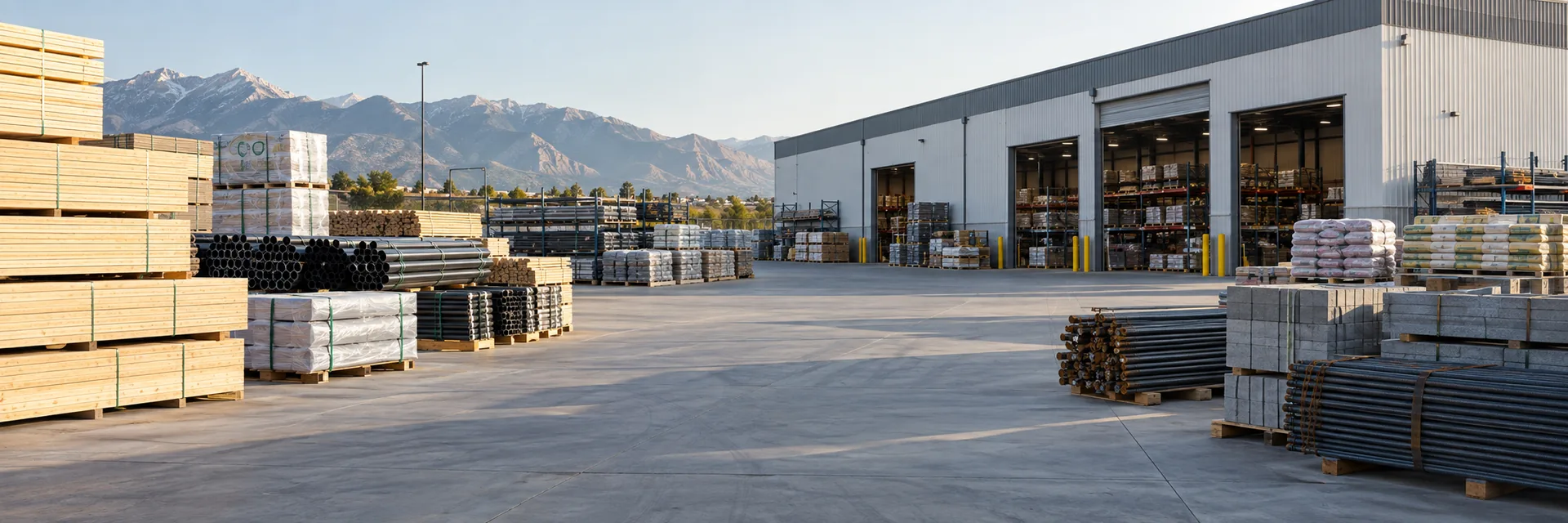
A material supplier’s yard with stacked building products — construction material supplier insurance california

Material suppliers and distributors

Construction Material Supplier Insurance CA

844-97-USAVE

Construction material suppliers sit between manufacturers and contractors. That means they can be pulled into a claim even when they did not design, manufacture or install the product. A roofing distributor can be named when a roof leaks. A lumber supplier can be drawn into a structural defect case. A plumbing distributor can be blamed when a fitting fails. A ready-mix supplier can face a multimillion-dollar dispute about a batch placed months earlier. For California suppliers in the $5 million to $75 million range, the program should protect the yard, inventory, delivery fleet, product chain and balance sheet after the material leaves the premises.

  • Products & Completed Operations
  • Warehouse & Yard Values
  • Distributor Contracts

Reviewed by David Gleason, Principal — October 11, 2026

Next Level Experience. Insurance Done Right.

CaliforniaGeneral information only, not legal advice — illustrative scenarios and coverage, subject to change without notice. Content may be out of date or contain errors, and requirements vary by city, county, state, agency, project, contract, carrier and policy, among other factors; verifying what applies to your own situation is your responsibility. Full disclaimer

Interactive coverage guide

Build a coverage stack around how the business actually operates.

Start with the preselected industry or trade, then adjust the operational questions. The commonly considered stack updates live. Keep the coverages you want GIB to evaluate, remove ones you do not want included in your quote request, and add other available lines before continuing.

Common Starting Coverages

General LiabilityThird-party injury and property damage

What it is

General Liability commonly addresses covered third-party bodily injury, property damage and certain personal or advertising injury claims, subject to the policy.

Why businesses like yours commonly carry it

Businesses commonly use it as a starting liability policy and to satisfy customer, landlord or contract requirements.

Possible coverage gap

General Liability is not intended to replace policies for employee injuries, business vehicles, owned property, cyber events or professional errors.

Learn more about General Liability
Business Owners Policy / Commercial PackageLiability and property components evaluated together

What it is

A Business Owners Policy commonly combines liability and property coverages for eligible businesses. A Commercial Package Policy may combine multiple commercial coverage parts depending on the account and carrier.

Why businesses like yours commonly carry it

Businesses with premises, contents, inventory or other property exposures may ask GIB to evaluate whether liability and property components can be packaged where appropriate.

Possible coverage gap

Eligibility, included coverages and package structure vary by carrier. Commercial Property may also be written separately rather than as part of a package.

Learn more about Business Owners Policy / Commercial Package

Commonly Added Based on Operations

Commercial AutoBusiness vehicles, drivers and physical damage

What it is

Commercial Auto may address liability arising from covered business vehicles and, when selected, physical damage and other vehicle-related coverages.

Why businesses like yours commonly carry it

Businesses that own or regularly use vehicles may need a policy structured around business use, drivers and vehicle schedules.

Possible coverage gap

Personal auto policies may restrict or exclude business use, and General Liability is generally not a substitute for auto liability.

Learn more about Commercial Auto
Cyber Liability & Data BreachCyber events, data and system interruption

What it is

Cyber insurance may address certain first-party and third-party losses from covered data breaches, cyberattacks, ransomware and system interruption, depending on the policy.

Why businesses like yours commonly carry it

Suppliers invoice contractors constantly and are among the businesses most often impersonated in payment-change fraud.

Possible coverage gap

General Liability generally should not be assumed to address data breach response, ransomware or network interruption.

Learn more about cyber insurance for suppliers and distributors

Exposure-Dependent Coverages

Equipment BreakdownMechanical, electrical and pressure-system breakdown

What it is

Equipment Breakdown may address certain sudden mechanical, electrical or pressure-system breakdown losses, subject to the policy.

Why businesses like yours commonly carry it

Businesses dependent on refrigeration, production, HVAC, electrical or other critical equipment commonly consider it.

Possible coverage gap

Standard property forms may not address every internal mechanical or electrical breakdown.

Learn more about Equipment Breakdown
Commercial Crime / FidelityEmployee theft and certain fraud losses

What it is

Commercial Crime may address certain covered theft, fraud and funds-transfer losses, depending on the selected insuring agreements.

Why businesses like yours commonly carry it

Businesses handling money, inventory, payments or account access commonly consider crime coverage.

Possible coverage gap

Property and cyber policies do not necessarily cover every employee theft or social-engineering loss.

Learn more about Commercial Crime / Fidelity
Umbrella / Excess LiabilityAdditional limits above scheduled liability policies

What it is

Umbrella or Excess Liability may provide additional limits above identified underlying liability policies, subject to its own terms and exclusions.

Why businesses like yours commonly carry it

Businesses with larger contracts, vehicles, public exposure or higher severity potential commonly consider additional limits.

Possible coverage gap

An umbrella does not automatically broaden every exclusion or sit over every policy unless the issued terms say it does.

Learn more about Umbrella / Excess Liability

Loading quote and requirements options…

Educational guidance only. Results are not a coverage recommendation, quote, binder, policy interpretation, or guarantee of coverage. Actual needs, availability, forms, limits, exclusions and requirements vary. A licensed insurance professional should review the complete risk and issued policy terms.

Verified Google reviews

What contractors say about us

5.0 / 5from 7 Google reviews

Reviews reflect individual client experiences and are not a guarantee of coverage, pricing or results.

91 Enterprise LLC

91 Enterprise LLC

March 24, 2026

We are using Gleason insurance for our commercial auto policy and GL policy. David is the best insurance broker I've worked with — very honest, responsive, and knowledgeable. Highly recommend.

Fito Plumbers

Fito Plumbers

February 20, 2026

We have been working with David at Gleason Insurance Brokers for 8+ years. David always goes above and beyond to make sure we have the appropriate coverages. He explains everything in detail and makes sure we feel confident and understand all of our policies. He is always available and responds right away!

Barry Stay

Barry Stay

February 17, 2026

David provides great service and I highly recommend him for your insurance needs.

Products / Completed Operations Is the Long-Tail Exposure

Underwriting should identify whether the company manufactures, fabricates, modifies, assembles, private-labels, imports, distributes, specifies or simply resells products. A pure distributor and a private-label importer do not create the same product-liability exposure.

A pure distributor and a private-label importer do not create the same product-liability exposure

Manufacturer and Distributor Contracts Matter

Review manufacturer indemnity, vendor status, warranties, defense obligations, recall responsibility, product specifications and insurance requirements. Do not assume the manufacturer will automatically defend the distributor.

Review manufacturer indemnity, vendor status, warranties, defense obligations, recall responsibility, product specifications and insurance requirements
Do not assume the manufacturer will automatically defend the distributor

How risk transfer works in a supply chain

Manufacturer → Material Supplier or Distributor → Contractor or Project Owner

A supplier sits in the middle: it answers to the contractors it delivers to, and it can ask the manufacturers it buys from for the same protections. Open a handoff to see what commonly travels with it.

Manufacturer
  • Additional insured, vendorsoften CG 20 15The form written for this relationship specifically: a manufacturer naming the business that resells or distributes its product. It is commonly narrower than it first appears — vendor forms frequently exclude repackaging, relabeling, demonstration, installation and any change to the product, so a supplier that does more than warehouse and deliver may find the grant does not reach what it actually does.
  • Manufacturer indemnity in the supply agreementThe promise behind the insurance, and generally worth having in writing before a claim rather than after one. Where a defect originates upstream, an indemnity that was never documented tends to leave the supplier arguing about it at the worst possible moment.
  • Waiver of subrogationCG 24 04Gives up the insurer’s right to recover from the upstream party after paying a claim. Frequently named alongside additional insured status rather than instead of it.
  • Evidence of the manufacturer’s products limitsA supplier’s own products exposure is frequently judged against what stands behind it. A manufacturer with thin limits, or one outside the United States and difficult to pursue, commonly changes how a supplier’s own program is built.
  • Certificate, plus the endorsements behind itA certificate evidences that a policy existed on the day it was issued. It is not proof that any particular endorsement sits on that policy, which is why a requirement is commonly checked against the endorsement itself.

This is the direction suppliers most often skip. The downstream requirements usually arrive in writing from a customer; the upstream ones have to be asked for.

Material Supplier / Distributor
Contractor or Project Owner

The limits a contract asks for, and what each one means

Supply agreements commonly state required limits alongside required endorsements. One million dollars per occurrence with a two million dollar general aggregate is a combination many construction supply contracts use, but for a supplier the products and completed operations aggregate is frequently the figure that matters more, and the numbers vary by material, by contract and by what is being built with it.

Per occurrence
The most the policy generally pays for any one covered occurrence.
Products and completed operations aggregate
The bucket a supplier’s claims usually fall into, and a separate one from the general aggregate. A contract that names only a general aggregate may be leaving the more relevant number unstated.
General aggregate
The most the policy generally pays across the term for everything outside products and completed operations — premises, operations and the yard itself.
Auto liability for the delivery fleet
Usually stated separately, and frequently the limit a contractor checks first when a supplier’s truck will be coming onto an active site.
Umbrella or excess above it
Sits above the underlying limits. A tower built only over general liability can leave the delivery fleet short of what a contract assumes, so what the umbrella sits over is worth confirming alongside how high it goes.

Property and Inventory

Building-material operations can have large values in warehouses and outdoor yards. Fire protection, rack storage, wildfire, flood, theft, valuation and outdoor-stock terms can materially affect the property program.

Building-material operations can have large values in warehouses and outdoor yards
Fire protection, rack storage, wildfire, flood, theft, valuation and outdoor-stock terms can materially affect the property program

Delivery Fleet

Suppliers may run pickups, vans, flatbeds, stake beds, boom trucks, tractors, mixers and specialized delivery units. Backing, jobsite access, loading/unloading, long loads and driver turnover can make auto one of the largest premium lines.

Suppliers may run pickups, vans, flatbeds, stake beds, boom trucks, tractors, mixers and specialized delivery units
Backing, jobsite access, loading/unloading, long loads and driver turnover can make auto one of the largest premium lines

Cargo / Inland Marine

Responsibility for material in transit depends on ownership terms and contracts. Company delivery, common carrier, customer pickup, high-value loads, breakage and temporary storage should be addressed.

Responsibility for material in transit depends on ownership terms and contracts
Company delivery, common carrier, customer pickup, high-value loads, breakage and temporary storage should be addressed

Workers Compensation

Forklifts, loading, cutting, saws, glass handling, concrete operations and material movement create very different WC exposures from office sales staff.

Forklifts, loading, cutting, saws, glass handling, concrete operations and material movement create very different WC exposures from office sales staff

Umbrella / Excess

Products and heavy auto can create severe claims. Larger distributors may need meaningful excess limits to satisfy contractor customers and protect the balance sheet.

Products and heavy auto can create severe claims
Larger distributors may need meaningful excess limits to satisfy contractor customers and protect the balance sheet

Cyber, Crime and Business Interruption

ERP, inventory, dispatch, customer records and electronic payments make cyber and crime relevant. Property business income should also account for supply-chain dependency and alternate warehouse capacity.

ERP, inventory, dispatch, customer records and electronic payments make cyber and crime relevant
Property business income should also account for supply-chain dependency and alternate warehouse capacity

Lines we place for building material suppliers

A supply house is not a contractor, and its program is not a contractor’s. The exposure sits in the product sold, the stock held, the trucks delivering it and the yard it all moves through. These are the lines that come up most often. Which apply depends on what is distributed, how it is delivered and each carrier’s appetite at the time.

Send what you distribute, the delivery operation and any current loss information and we will organize the submission — request a supplier quote. Coverage is not bound by submitting a request.

Products and completed operations — the long-tail exposure for anyone who sells material that is later installed by somebody else
Property and inventory — the yard, the warehouse and the stock sitting in both
Delivery fleet — flatbeds, boom trucks and the loading and unloading that goes with them
Cargo and inland marine — material in transit and on a customer’s site before it is accepted
Workers compensation — yard, warehouse and driver classifications, which are where audits usually turn
General liability — premises exposure at a counter or will-call open to the trades
Umbrella and excess — commonly named in a supply agreement with a manufacturer or a large customer
Crime and cyber — funds transfer, customer credit accounts and the systems holding them

Underwriting File

Revenue by product line, manufacturer/distributor/importer role, inventory values, SOV, outdoor stock, fleet, drivers, cargo limits, forklifts, fabrication, warranty practices, product claims, locations and five years of loss history.

Revenue by product line, and the manufacturer, distributor or importer role
Inventory values, a statement of values and outdoor stock
Fleet, drivers, cargo limits and forklifts
Fabrication performed on site and warranty practices
Product claims, every location, and five years of loss history

More supplier segments

Suppliers with distinct product, yard and delivery exposures have their own pages.

Frequently asked questions

8 questions — start typing to filter

What insurance does a construction material supplier need?

A typical program may include GL/products, property, auto, cargo/inland marine, workers compensation, umbrella, cyber and crime.

Can a distributor be sued for a product it did not manufacture?

Yes. Distributors and sellers can still be named in product claims.

Does commercial property cover outdoor inventory?

It can, but yard stock and catastrophe terms should be specifically reviewed.

Is cargo needed if the company already has auto insurance?

Auto covers the vehicle; the materials being transported can require separate cargo/inland marine coverage.

Does fabrication change underwriting?

Yes. Cutting, modifying, assembling or private labeling can materially change product exposure.

Why do suppliers need umbrella insurance?

Product claims and heavy commercial-auto losses can exceed primary limits.

Does a supplier need cyber insurance?

Often yes because ERP, inventory, email and electronic payments create operational and fraud exposure.

What records help defend a product claim?

Purchase records, lot/batch information, manufacturer documentation, delivery records and specifications can be critical.

Official resources

Verify current licensing, regulatory and program requirements directly with the responsible agency — this is general information, not legal advice, requirements change without notice, and what is summarized here may be out of date or contain errors. Confirming what applies to your own city, project, contract and policy is your responsibility.

Updated October 11, 2026