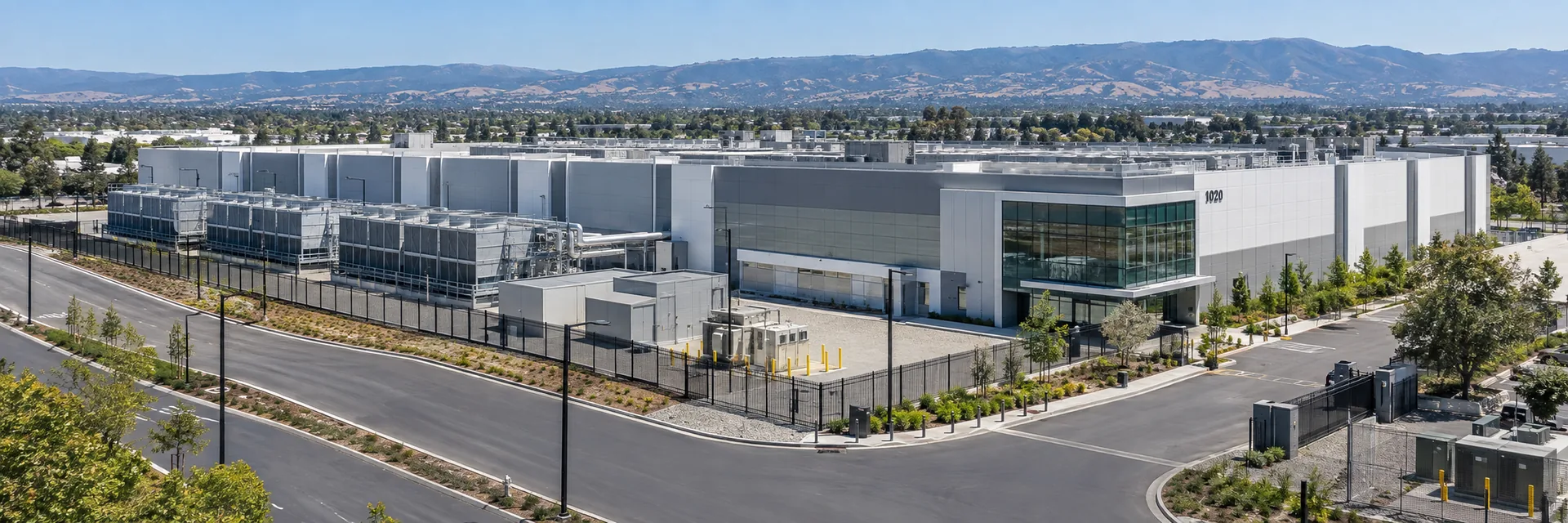
A live data center shouldn't be insured like an office building with expensive contents. The operator can have hundreds of millions of dollars tied to electrical distribution, backup power, cooling, battery systems and network infrastructure — and a failure in one shared system can affect multiple rooms, multiple customers and multiple policies at once.
✓Property Values
✓Time-Element Coverage
✓Correlated-Event Risk
Reviewed by David Gleason, Principal — October 8, 2026
CaliforniaGeneral information only, not legal advice — illustrative scenarios and coverage, subject to change without notice. Content may be out of date or contain errors, and requirements vary by city, county, state, agency, project, contract, carrier and policy, among other factors; verifying what applies to your own situation is your responsibility. Full disclaimer
Interactive coverage guide
Build a coverage stack around how the business actually operates.
Start with the preselected industry or trade, then adjust the operational questions. The commonly considered stack updates live. Keep the coverages you want GIB to evaluate, remove ones you do not want included in your quote request, and add other available lines before continuing.
Common Starting Coverages
General LiabilityThird-party injury and property damage
What it is
General Liability commonly addresses covered third-party bodily injury, property damage and certain personal or advertising injury claims, subject to the policy.
Why businesses like yours commonly carry it
Businesses commonly use it as a starting liability policy and to satisfy customer, landlord or contract requirements.
Possible coverage gap
General Liability is not intended to replace policies for employee injuries, business vehicles, owned property, cyber events or professional errors.
Business Owners Policy / Commercial PackageLiability and property components evaluated together
What it is
A Business Owners Policy commonly combines liability and property coverages for eligible businesses. A Commercial Package Policy may combine multiple commercial coverage parts depending on the account and carrier.
Why businesses like yours commonly carry it
Businesses with premises, contents, inventory or other property exposures may ask GIB to evaluate whether liability and property components can be packaged where appropriate.
Possible coverage gap
Eligibility, included coverages and package structure vary by carrier. Commercial Property may also be written separately rather than as part of a package.
Cyber Liability & Data BreachCyber events, data and system interruption
What it is
Cyber insurance may address certain first-party and third-party losses from covered data breaches, cyberattacks, ransomware and system interruption, depending on the policy.
Why businesses like yours commonly carry it
Facility operators depend on connected building and customer systems where a cyber event can become an outage.
Possible coverage gap
General Liability generally should not be assumed to address data breach response, ransomware or network interruption.
Educational guidance only. Results are not a coverage recommendation, quote, binder, policy interpretation, or guarantee of coverage. Actual needs, availability, forms, limits, exclusions and requirements vary. A licensed insurance professional should review the complete risk and issued policy terms.
Verified Google reviews
What other businesses say about us
5.0 / 5from 7 Google reviews
Reviews reflect individual client experiences and are not a guarantee of coverage, pricing or results.
91 Enterprise LLC
March 24, 2026
We are using Gleason insurance for our commercial auto policy and GL policy. David is the best insurance broker I've worked with — very honest, responsive, and knowledgeable. Highly recommend.
Fito Plumbers
February 20, 2026
We have been working with David at Gleason Insurance Brokers for 8+ years. David always goes above and beyond to make sure we have the appropriate coverages. He explains everything in detail and makes sure we feel confident and understand all of our policies. He is always available and responds right away!
Barry Stay
February 17, 2026
David provides great service and I highly recommend him for your insurance needs.
Build the Program Around Four Balance-Sheet Questions
The California Energy Commission reports more than 200 active data centers statewide and forecasts a significant increase in data-center electricity demand, arriving alongside AI deployments, higher rack densities and large capital programs. For a middle-market or large account, the better question isn't which lines of insurance to buy — it's what can remove usable megawatts, customer capacity or operating revenue from the business, and which policy is supposed to respond.
A useful program organizes around four questions: what property can be physically damaged, what income disappears when capacity is unavailable, what liabilities arise when customers are affected, and what single event can impair several assets or customers at once. That structure keeps the program focused on financial loss instead of a checklist of unrelated products.
The real exposure is usable capacity and revenue, not just the building shell
One shared-system failure can affect multiple rooms, customers and policies at once
Property, income, liability and correlated-event risk are four distinct questions
Electrical infrastructure and cooling plant often carry more value than the building itself
Property Values Have to Follow the Infrastructure, Not Just the Building
For many data centers, electrical systems are the heart of the property exposure — utility and owner transformers, medium- and low-voltage switchgear, UPS systems, batteries, automatic transfer switches and generators. Those values shouldn't be buried in an undifferentiated building number if that prevents the underwriter from understanding concentration and redundancy.
Equipment breakdown deserves its own deliberate review: a data center can lose usable capacity without fire, theft or storm damage at all, from an internal transformer, switchgear or UPS failure. A property policy may cover resulting damage from some events while excluding the internal breakdown that started the loss — the equipment-breakdown form needs to be analyzed on its own, not assumed to be bundled in.
Electrical infrastructure and cooling plant often carry the majority of property value
Operator-owned IT/compute needs to be distinguished from tenant and leased equipment
Equipment breakdown can start a loss with no external peril involved at all
A property policy covering resulting damage doesn't guarantee the breakdown itself is covered
Time-Element Coverage Should Model the Actual Outage, Not a Generic BI Form
Business interruption is a primary severity driver for data centers — the most expensive part of a property loss is often the capacity that can't be sold while it's being repaired. The revenue model should reflect recurring rent or capacity revenue, managed-services revenue, customer concentration, continuing expenses and the realistic time to return to normal occupancy.
Long-lead equipment changes the period of restoration materially: transformers, generators, switchgear and specialized cooling systems can have long procurement periods, and a facility can suffer severe downtime with limited building damage if infrastructure or utilities are impaired — waiting periods matter, since even a 12-hour waiting period can be a meaningful uninsured amount for a high-revenue facility.
Capacity that can't be sold, not the repair bill, usually drives the real severity
Model business income against realistic outage duration, not a generic industry assumption
Long procurement periods for critical equipment extend the true restoration timeline
A short waiting period can still represent a meaningful loss on a high-revenue facility
California Catastrophe Exposure and Customer Contract Risk
Earthquake deductibles and limits can be significant, and a facility can suffer severe downtime with limited building damage if infrastructure or utilities are impaired — seismic bracing, rack anchorage and offsite utility dependency all matter to the underwriting conversation. Water is also a frequent claim driver, and natural flood is treated differently from escaped liquid, so the cause matters as much as the damage itself.
Insurance also needs to be read against the contracts that generate revenue — uptime commitments, service credits, liability caps and consequential-damage waivers. The most important coverage limitation may be a promise the operator made in a customer contract, not an exclusion on the declarations page.
Earthquake and water exposure both deserve explicit, site-specific review in California
Natural flood and escaped liquid can be treated very differently by the same policy
SLA commitments and liability caps can create exposure the policy never anticipated
The colocation contract, not just the policy, often determines the real coverage gap
A Realistic Data Center Operating Loss Scenario
A coolant connection fails and liquid reaches tenant-owned hardware near critical compute — a loss that can create direct property damage, business interruption, and potentially customer-property allegations all from a single mechanical failure.
In a separate pattern, an aging UPS battery system enters thermal runaway, creating fire severity, smoke contamination and a difficult salvage question — testing whether the property, equipment-breakdown and environmental coverage all respond consistently to the same event.
This example is illustrative, not a report of an actual case or a promise of how any real claim would resolve — real outcomes depend on the specific policy, the facts involved, and the carrier's own review. For a situation that's actually happened or is happening, talk to your broker, a licensed attorney, or the relevant regulatory authority directly.
A single liquid-cooling failure can touch property, BI and customer-property coverage at once
Battery thermal runaway raises fire, smoke and environmental questions together
The construction-to-operations handoff on an expanding campus is itself an insurance event
This is illustrative — real claims depend on the actual policy and facts
Lines we place for data centers
A data center program is built around balance-sheet questions rather than a trade’s tool list: what the infrastructure is worth, what an outage actually costs, and what the customer agreements promise. These are the lines that come up most often for California facilities, whether colocation, enterprise or build-to-suit. What applies, and on what terms, depends on the operating model, the tenancy, the loss history and each carrier’s appetite at the time.
Send the operating model, the infrastructure schedule, the customer agreements and any current loss information and we will organize the submission — request a data center quote. Coverage is not bound by submitting a request.
Property — values need to follow the infrastructure rather than the shell: UPS, switchgear, chillers, generators and everything under the raised floor
Time-element and business interruption — responds to earnings lost while the floor is down, based on the actual outage rather than a generic form
Equipment breakdown — mechanical and electrical failure of the plant that keeps the floor powered and cool, which a property form commonly excludes
General liability — third-party injury and property damage at the facility and during customer visits
Workers compensation — required for employees in California, including field and remote-hands staff
Professional liability and technology errors & omissions — allegations arising from managed services and the commitments made in a service agreement
Umbrella and excess — sits above the liability underneath it, and is commonly named in a customer or lender agreement
Construction — a facility being built or expanded carries a program of its own, covered on our data center construction page
Building a Program That Matches the Operating Model
A sophisticated account may use primary and layered/excess property, separate earthquake and flood layers, equipment breakdown, time-element coverage, casualty with umbrella/excess, and pollution — evaluated together rather than purchased as unrelated products. Employee classification also matters: facility engineers, electricians and round-the-clock shift staff should be rated accurately, not as generic office technology employees.
Gleason Insurance Brokers maintains carrier relationships built for data-center risk and works with California owners and operators to structure a full operating insurance program — call 844-978-7283 or request a quote with your facility summary and statement of values.
A sophisticated program coordinates property, casualty, cyber and pollution deliberately
Classify facility engineers, electricians and shift staff accurately, not as generic office staff
Reconcile construction and operating coverage explicitly during any phased campus expansion
Begin with a quote request, or call 844-978-7283
Frequently asked questions
10 questions — start typing to filter
What insurance does a California data center operator typically evaluate?
Property, equipment breakdown, business interruption, service interruption, cyber, Tech E&O, GL, excess liability, pollution and workers compensation are common areas to review — the operating model determines the final program.
Why is business interruption so important?
Because loss of usable capacity can stop recurring revenue even when the direct repair bill is relatively modest. Downtime and long equipment lead times can drive severity.
Is equipment breakdown separate from property insurance?
Yes. Internal mechanical or electrical failure can require equipment-breakdown coverage even when no external covered peril caused the loss.
Does a data center need earthquake coverage in California?
Earthquake should be evaluated because standard property coverage often excludes it. Location, construction, lender requirements, deductibles and risk tolerance affect the decision.
Is liquid cooling automatically covered by property insurance?
Do not assume so. The cause of liquid escape, affected property, exclusions, deductibles and equipment-breakdown provisions should be reviewed.
Are tenant servers covered by the operator's insurance?
Only if the policy and contractual responsibility support that result. Many colocation agreements require customers to insure their own equipment.
Can utility interruption be insured?
Potentially, but service-interruption coverage can include specific direct-damage requirements, waiting periods, distance limitations and covered utility definitions.
Does a colocation provider need Tech E&O?
It should be evaluated when the operator promises uptime, remote hands, monitoring or other technology services that could lead to customer economic-loss claims.
How do lenders affect data-center insurance?
Financing documents can require replacement cost, BI, catastrophe, equipment breakdown, builders risk and liability terms — requirements should be reviewed before placement.
How does this relate to cyber and Tech E&O coverage?
The operating program and cyber program need to be coordinated, not purchased independently. See Data Center Cyber Insurance California for the OT, outage and SLA-specific cyber exposure.
Official resources
Verify current licensing, regulatory and program requirements directly with the responsible agency — this is general information, not legal advice, requirements change without notice, and what is summarized here may be out of date or contain errors. Confirming what applies to your own city, project, contract and policy is your responsibility.