Gleason Insurance Brokers

Public Works Contractor Insurance · Bonding · Certified Payroll Compliance · DIR Registration Start a Business Insurance Quote Today

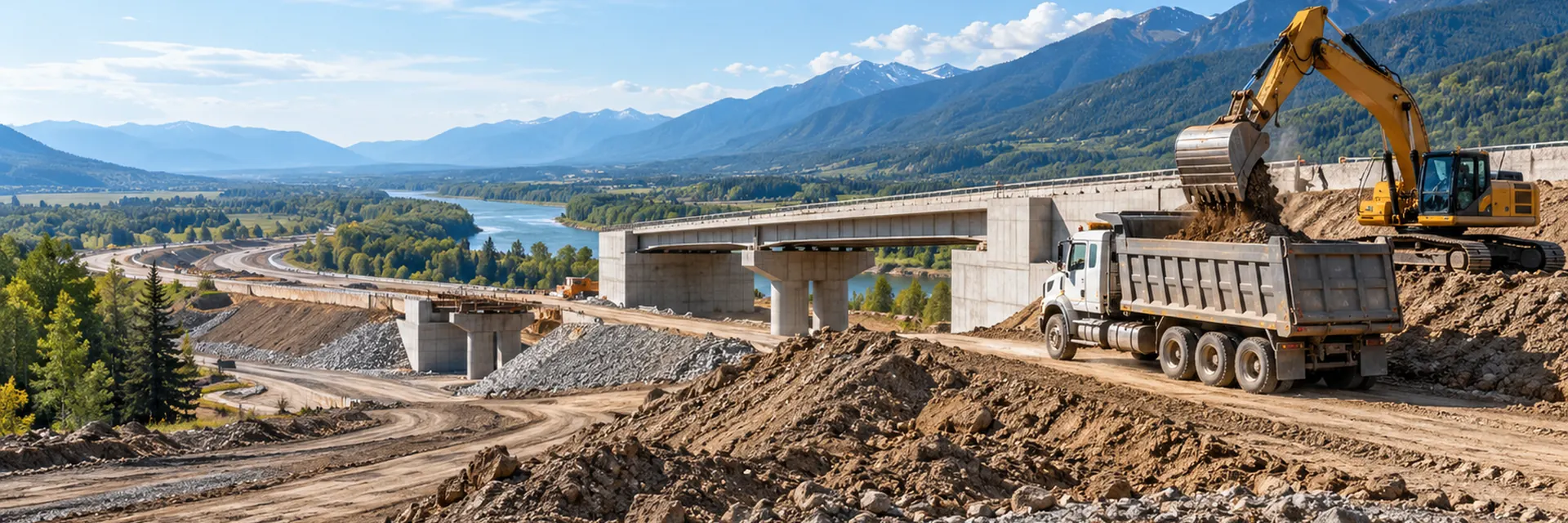
A highway bridge under construction over a river valley, with an excavator and dump truck working the approach embankment — public works contractor insurance requirements

California commercial insurance

Public Works Insurance Requirements CA

844-97-USAVE

Public agencies write their own insurance rules into every bid package — and those rules are rarely identical to what a standard commercial policy already provides. Confirming the specifics before bidding is what keeps a strong bid from getting disqualified over a paperwork mismatch.

  • Agency-Set Requirements
  • Bonding Amounts
  • DIR & Certified Payroll

Reviewed by David Gleason, Principal — October 12, 2026

Next Level Experience. Insurance Done Right.

CaliforniaGeneral information only, not legal advice — illustrative scenarios and coverage, subject to change without notice. Content may be out of date or contain errors, and requirements vary by city, county, state, agency, project, contract, carrier and policy, among other factors; verifying what applies to your own situation is your responsibility. Full disclaimer

Interactive coverage guide

Build a coverage stack around how the business actually operates.

Start with the preselected industry or trade, then adjust the operational questions. The commonly considered stack updates live. Keep the coverages you want GIB to evaluate, remove ones you do not want included in your quote request, and add other available lines before continuing.

Common Starting Coverages

General LiabilityThird-party injury and property damage

What it is

General Liability commonly addresses covered third-party bodily injury, property damage and certain personal or advertising injury claims, subject to the policy.

Why businesses like yours commonly carry it

Businesses commonly use it as a starting liability policy and to satisfy customer, landlord or contract requirements.

Possible coverage gap

General Liability is not intended to replace policies for employee injuries, business vehicles, owned property, cyber events or professional errors.

Learn more about General Liability

Commonly Added Based on Operations

Contractor Equipment / Inland MarineMobile tools, equipment and property away from premises

What it is

Inland Marine is commonly used for tools, equipment and certain mobile property that moves between locations or jobsites.

Why businesses like yours commonly carry it

Contractors frequently move tools, testing equipment and mobile machinery among jobsites.

Possible coverage gap

General Liability should not be assumed to insure the business's own tools and equipment against theft or physical damage.

Learn more about Contractor Equipment / Inland Marine
Cyber Liability & Data BreachCyber events, data and system interruption

What it is

Cyber insurance may address certain first-party and third-party losses from covered data breaches, cyberattacks, ransomware and system interruption, depending on the policy.

Why businesses like yours commonly carry it

Contractors commonly use email, electronic banking, project platforms, payroll systems and cloud document storage.

Possible coverage gap

General Liability generally should not be assumed to address data breach response, ransomware or network interruption.

Learn more about cyber insurance for contractors

Exposure-Dependent Coverages

Installation FloaterMaterials awaiting or undergoing installation

What it is

An Installation Floater may cover certain materials and equipment in transit, temporary storage and during installation, subject to the policy.

Why businesses like yours commonly carry it

Businesses responsible for materials before final installation commonly consider this coverage.

Possible coverage gap

A basic liability policy generally should not be assumed to cover the insured's materials against physical loss before installation is complete.

Learn more about Installation Floater
Builder's RiskProject property during construction

What it is

Builder's Risk may insure covered buildings, materials and certain project property while construction is underway.

Why businesses like yours commonly carry it

Owners, developers and contractors commonly consider it when a structure or major renovation is exposed during construction.

Possible coverage gap

Commercial Property and General Liability are not automatic substitutes for course-of-construction property coverage.

Learn more about Builder's Risk
Contractors Pollution LiabilityPollution conditions and cleanup liability

What it is

Pollution Liability may address covered cleanup costs and third-party injury or property damage arising from pollution conditions.

Why businesses like yours commonly carry it

Businesses working with fuels, chemicals, soil, water, demolition or environmental conditions may have pollution exposures.

Possible coverage gap

Standard General Liability commonly contains pollution exclusions or limitations.

Learn more about Contractors Pollution Liability
Umbrella / Excess LiabilityAdditional limits above scheduled liability policies

What it is

Umbrella or Excess Liability may provide additional limits above identified underlying liability policies, subject to its own terms and exclusions.

Why businesses like yours commonly carry it

Businesses with larger contracts, vehicles, public exposure or higher severity potential commonly consider additional limits.

Possible coverage gap

An umbrella does not automatically broaden every exclusion or sit over every policy unless the issued terms say it does.

Learn more about Umbrella / Excess Liability

Loading quote and requirements options…

Educational guidance only. Results are not a coverage recommendation, quote, binder, policy interpretation, or guarantee of coverage. Actual needs, availability, forms, limits, exclusions and requirements vary. A licensed insurance professional should review the complete risk and issued policy terms.

Verified Google reviews

What contractors say about us

5.0 / 5from 7 Google reviews

Reviews reflect individual client experiences and are not a guarantee of coverage, pricing or results.

91 Enterprise LLC

91 Enterprise LLC

March 24, 2026

We are using Gleason insurance for our commercial auto policy and GL policy. David is the best insurance broker I've worked with — very honest, responsive, and knowledgeable. Highly recommend.

Fito Plumbers

Fito Plumbers

February 20, 2026

We have been working with David at Gleason Insurance Brokers for 8+ years. David always goes above and beyond to make sure we have the appropriate coverages. He explains everything in detail and makes sure we feel confident and understand all of our policies. He is always available and responds right away!

Barry Stay

Barry Stay

February 17, 2026

David provides great service and I highly recommend him for your insurance needs.

Public works insurance requirements aren't standardized

Every awarding body — a city, county, school district, or state agency — can set its own specific insurance requirements within a bid package: limits, required endorsements, minimum carrier financial ratings, and cancellation notice provisions all vary by agency.

Read more

But jurisdiction is only one of the factors that actually drives what a specific project requires — project size and your trade both matter just as much, and treating any one factor as the whole picture is how a real requirement gets missed.

Project size directly affects required limits and bonding amounts — a small city maintenance contract and a multi-million-dollar school construction project can carry meaningfully different insurance and bonding requirements even from the same awarding agency. Your specific trade matters too: a general contractor, an electrical subcontractor, and a fire sprinkler contractor working on the same public project can each face different scheduled additional insured requirements or professional liability expectations depending on their actual scope of work, not just their license classification.

Treating one public works project's requirements as a template for the next — or assuming your usual coverage automatically fits because the jurisdiction is familiar — is a common and avoidable mistake. Project size, trade, and jurisdiction all factor in together, which is exactly why we need to see a copy of the insurance requirements included with your contract documents, bid proposal documents, or the procurement process itself — not a summary, and not an assumption based on a similar past project.

Jurisdiction (the awarding agency) sets its own requirements, but it's not the only variable
Project size directly affects required limits and bonding amounts, even from the same agency
Your specific trade can change scheduled additional insured or professional liability requirements
We need to see the actual insurance requirements from your contract documents, bid proposal or procurement process — not a summary or an assumption

What tends to raise the bar

Where higher limits and extra endorsements are commonly requested

Patterns this agency typically sees, not a statement of what any particular project, agency or carrier will ask for.

Projects around two million dollars and up

Mid-sized and larger jobs are where umbrella or excess limits start being written into the insurance exhibit, and where a per-project aggregate is most often asked for. The figure is a rough threshold we tend to see rather than a rule — plenty of smaller contracts ask for more, and some larger ones ask for less.

Pulling a permit with a city or county

Some jurisdictions set their own insurance conditions before a permit is issued, separate from anything the project owner asks for. It is worth reading the permit conditions as its own document rather than assuming the contract covers it.

Encroachment permits and work in the public right of way

Working in a city, county or Caltrans right of way commonly carries its own limits, its own additional insured wording naming the agency, and sometimes a bond as well.

Public works

The awarding agency writes its requirements into the bid package, and they are rarely identical to what a standard commercial policy already provides. Bonding, DIR registration and certified payroll usually travel with them.

Property management companies and landlords

The manager, the building owner and sometimes a lender are commonly all named, and the waiver of subrogation is often mutual. A management company typically has one standard insurance exhibit it applies to every vendor.

Commercial retail, shopping centers and malls

Mall and shopping center rules commonly set named additional insureds and specific limits before anyone is cleared to work on site, and the requirement frequently comes from the center itself or its property management company rather than from the tenant who hired you.

High-rise buildings

Height, occupancy and water damage exposure commonly push limits up and bring specific endorsements with them. Building rules for contractor access are frequently a separate document again.

Colleges, universities and school districts

Institutional contract templates commonly specify limits and endorsements directly, and depending on the work may ask about coverages a construction policy does not carry as standard.

Caltrans and other government work

State and federal agencies commonly specify their own forms, their own wording and their own limits, and are usually the least flexible about substitutions.

What tends to be asked for alongside the higher limits

Per-project aggregateCG 25 03 or CG 25 04
The one that surprises people most. A general aggregate is normally shared across every job running in the policy term, so a claim on one project can erode the limit the next contract assumed was there. A per-project aggregate sets a limit for the designated project instead.
Additional insured, scheduled or blanketCG 20 10 and CG 20 37
Ongoing operations and completed operations are two separate endorsements, and larger contracts commonly ask for both.
Primary and non-contributoryoften CG 20 01
Decides whether the downstream policy responds first or shares with the upstream party’s own cover.
Waiver of subrogationCG 24 04
Frequently named alongside additional insured status rather than instead of it.
Higher umbrella or excess limits
Commonly the first thing an insurance exhibit raises. If the underlying limits do not match what the umbrella sits above, the tower may not respond the way the contract assumes.

Two real examples, published by the agencies themselves

Reading an actual insurance clause is worth more than any summary of one. Both of these are public, and they ask for different things — which is the point.

  • City of Los Angeles Bureau of Engineering — liability insurance for permitsStates a commercial minimum of $1 million with a $2 million aggregate, a thirty-day written cancellation notice, and the City named both as certificate holder AND as additional insured. It also expects proof to stay on file for as long as the encroachment exists, not just through construction.
  • Caltrans Encroachment Permits Manual — Chapter 200, section 203.3Asks for an endorsement naming the State of California, the Department and its directors, officers, employees and agents as additional named insureds — and for the certificate AND the endorsement to be furnished. A good illustration of why a certificate on its own is rarely what an agency means.

Common requirements that go beyond standard coverage

Additional insured status covering both ongoing and completed operations, primary and noncontributory wording, waiver of subrogation, and specific cancellation notice periods show up routinely on public contracts — these are all specific endorsements that have to be requested and issued, not assumptions built into a standard policy.

Read more

A minimum AM Best financial-strength rating on the carrier — commonly "A- VIII" or better — is also common on public works. Both the letter rating and the Roman numeral financial-size category can matter, so confirm both against the actual contract wording.

Roofing is common public works scope in its own right — school district reroofing and government building roof replacement projects both carry the same public works insurance requirements as any other public contract, layered on top of C-39's own permanent workers' compensation requirement. See our Roofing Contractor Insurance California guide for what's specific to that trade.

Additional insured — ongoing and completed operations — is common
Primary/noncontributory wording and waiver of subrogation frequently required
Specific cancellation notice periods may be specified
AM Best rating minimums apply to both letter grade and size category

DIR, prevailing wage and certified payroll layer on top

Insurance and bonding are only part of public works compliance — DIR registration is typically required before bidding, prevailing wage sets minimum pay rates by trade and locality, and certified payroll reporting documents compliance for the life of the project.

Read more

These requirements apply to the prime contractor and to subcontractors performing prevailing-wage work — verify subcontractor DIR registration and certified payroll compliance rather than assuming it's automatically covered by the prime contractor's own registration.

DIR registration required before bidding, not just before starting work
Prevailing wage sets minimum pay by trade and locality
Certified payroll documents compliance throughout the project
Applies to subcontractors too, not just the prime contractor

Sources for this section

Where public works submissions most often get rejected

The recurring rejection points are rarely exotic: an expired DIR registration, a certificate that doesn't match the contract's actual limits or endorsements, a bond short of the required amount, or a carrier rating below the stated minimum.

Read more

Nearly all are avoidable with an early read of the actual bid documents.

Fixing a mismatch after a bid is submitted, or worse, after award, is a much harder position than catching it during bid preparation — build the insurance and bonding review into the bidding process itself, not after.

Expired DIR registration is a common, avoidable rejection point
COI mismatches with contract limits/endorsements are frequent
Bond amount shortfalls and carrier rating gaps also recur
Review requirements during bid prep, not after submission

A realistic public works compliance scenario

A contractor wins a school district renovation bid, only to discover during the pre-construction meeting that the contract requires DIR public works registration that was never completed, plus a certified payroll reporting process the office wasn't set up to handle.

Read more

The insurance program itself may be perfectly adequate — the compliance gap is separate and can delay the notice to proceed regardless.

Confirming DIR registration status, prevailing wage classification, and certified payroll capability during the bid stage — not after award — is what keeps winning a public project from becoming a scramble to become compliant on a deadline.

This is a typical, illustrative example meant to show how coverage lines can interact — not a description of any actual claim, and not a guarantee of how a specific claim would be handled. Actual outcomes depend on the exact policy language, the facts of the situation, and the carrier's determination; for anything case-specific, consult your policy documents, a licensed attorney, or the applicable regulatory authority.

DIR registration and insurance adequacy are two separate compliance tracks
A registration gap can delay notice to proceed even with good insurance
Confirm compliance status during bidding, not after award
Certified payroll capability needs its own pre-project setup

Getting ahead of public works requirements

Send us a copy of the insurance requirements included with your contract documents, bid proposal documents, or wherever they appear in the procurement process — the specific pages specifying limits, endorsements and bonding, not just the project name or a general description of the work.

Read more

We can flag a mismatch against your current program early enough to fix it before the bid is due, rather than discovering it during award or, worse, after the contract is signed.

This matters precisely because project size, trade and jurisdiction all combine differently on every project — there's no shortcut that replaces actually reading what a specific bid package requires. Call 844-978-7283 or request a quote today with the specific project's requirements attached to get started.

Send the actual insurance requirement pages from your contract documents or bid proposal, not a summary
We can flag a mismatch before the bid is due, not after award
Project size, trade and jurisdiction combine differently every time — there's no shortcut for reading the actual requirement
Call 844-978-7283 or request a quote today with the specific project's requirements attached

Public works requirements as a GC or developer scales up

A commercial general contractor bidding public works for the first time, and a developer or subdivider managing improvement agreements with a public agency, encounter overlapping but distinct requirements — both need to satisfy the awarding agency's insurance and bonding thresholds, but a developer's obligations are usually tied to the improvement agreement itself rather than a single project bid.

Read more

As a contractor grows toward larger public bids, requirements tend to tighten rather than loosen — higher limits, an experience mod ceiling, and DIR registration for prevailing wage work all become live issues that weren't relevant at a smaller scale. Reviewing this against our underwriting readiness guide before bidding avoids a rejected submission over a requirement that could have been addressed in advance.

Public agency requirements typically tighten, not loosen, as project size grows
A developer's public works obligations often run through an improvement agreement, not a single bid
DIR registration and prevailing wage compliance become live issues at this scale
Review readiness before bidding, not after a submission is rejected on a requirement

Construction insurance for public works projects: what "public works contractors insurance" actually means

"Public works contractors insurance" isn't a distinct policy type sold under that name — it's the combination of standard coverage lines (general liability, workers compensation, commercial auto, bonding) assembled to satisfy the specific insurance requirements a public agency attaches to a publicly funded project.

Read more

Construction insurance for public works projects in California generally layers DIR registration, prevailing wage compliance, and often a specific additional insured endorsement form on top of what a private-sector project would require from the same coverage lines.

California public works contractors insurance requirements vary by the awarding agency — a city street project, a school district contract, and a Caltrans highway job can each specify different limits, endorsement forms and bonding amounts for what looks like similar underlying work. Confirming the specific public works construction insurance requirements named in the actual contract, before bidding, is what keeps a bid from being rejected on a technicality after the work is already priced.

"Public works contractors insurance" = standard coverage lines assembled to satisfy agency-specific requirements
Construction insurance for public works projects in CA generally layers DIR/prevailing wage on top of standard coverage
California public works contractors insurance requirements vary by awarding agency, not one fixed standard
Confirm the specific requirement named in the contract before bidding, not after

What DGS and Caltrans specifically require

California's Department of General Services (DGS) publishes the sample insurance provisions state agencies commonly use: commercial general liability of $1,000,000 per occurrence and $2,000,000 aggregate, automobile liability of $1,000,000, and workers' compensation with employer's liability of $1,000,000 — and DGS is explicit that a statement on the certificate is not acceptable in place of the actual endorsement.

Read more

Its contracts routinely require the actual additional language and endorsements to be issued, not just proof a policy exists, and when work is performed on state-owned or state-controlled property, the workers' compensation policy specifically needs a waiver of subrogation in favor of the State.

Caltrans contractor insurance requirements go further. Under Caltrans's 2025 Standard Specifications (section 7-1.06D), general liability runs $1,000,000 per occurrence with $2,000,000 aggregates on bids up to $10,000,000 (rising to $2,000,000 per occurrence and a $4,000,000 general aggregate above that), and umbrella or excess liability is required on top: $5,000,000 on bids up to $1,000,000, $10,000,000 up to $10,000,000, $15,000,000 up to $25,000,000 and $25,000,000 above that. Other agencies set their own figures, so read each contract. That umbrella or excess policy has to include a drop-down clause confirming it responds if the primary limit is impaired or exhausted, and its limits sit separate from and in addition to the underlying GL limits, not layered into the same number.

One Caltrans-specific requirement is worth calling out on its own: Caltrans's Standard Specifications explicitly prohibit an XCU exclusion — coverage cannot exclude explosion, collapse and underground hazards. That single clause is a real trap for a contractor whose current policy carries a standard XCU exclusion, since it means the policy as written wouldn't actually satisfy a Caltrans contract's insurance requirement, not just a minor technicality to negotiate around after award.

Beyond the GL/auto/WC floor, California state contract insurance requirements often layer in coverage many contractors don't carry by default — builder's risk or an installation floater, cyber liability, pollution liability and professional liability all show up as project-specific requirements depending on scope, and most California public works contracts (Caltrans, DGS, LAUSD and similar agencies among them) specifically require a separate pollution policy on projects involving excavation, demolition or utility work. Reading the actual insurance exhibit in the contract documents — not assuming a standard policy program already includes every one of these — is the only reliable way to confirm what a specific bid actually requires.

For how prevailing wage requirements actually affect insurance costs on a public project, see How Prevailing Wage Can Affect Your Insurance Costs on Public Works.

DGS: GL, auto and WC are the floor — actual endorsements required, not just a certificate
Caltrans: $1M/$2M GL (higher above $10M bids) plus $5M–$25M umbrella with a drop-down clause
Caltrans specifically prohibits an XCU (explosion, collapse, underground) exclusion
Additional coverages — builder's risk/installation floater, cyber, pollution, professional liability — are common project-specific add-ons, not automatic inclusions
See our Certificates of Insurance guide for why a submitted certificate or endorsement gets rejected, including the CG 20 10 vs. CG 20 37 distinction
See our General Liability guide for how per-project and per-location aggregate limits (CG 25 03 / CG 25 04) actually work
See our Excavation & Grading guide for a trade-specific breakdown of XCU exposure
See our Workers Compensation guide for the 2028 SB 216 / SB 1455 no-employee exemption deadline
See what this looks like in practice in Orange County (TCA toll roads), San Diego (federal/military work), Sacramento (where DGS itself is headquartered) and Stockton (the I-5 viaduct replacement)

Frequently asked questions

24 questions — start typing to filter

Will my insurance automatically meet city requirements?

Not necessarily. Cities, counties and public agencies can require specific limits, additional insured endorsements, primary and noncontributory wording, waivers of subrogation, cancellation provisions, auto coverage, workers' compensation, umbrella limits and other endorsements — the actual written requirements should be reviewed against the policy.

Does my general liability cover me if I occasionally work in a roadway?

Do not assume that it does. Roadway, utility, excavation, sewer, storm-drain, plumbing, electrical and traffic-control operations can create specialized exposures — the actual operations should be disclosed to the insurance company so the policy can be evaluated for applicable classifications, restrictions and exclusions.

When do I need an encroachment permit?

Work within a public right-of-way may require an encroachment permit from the city, county or other public agency controlling that right-of-way. Requirements depend on the jurisdiction and work being performed.

Do I need an A contractor license to obtain an encroachment permit?

The required license classification depends on the work and the requirements of the public agency issuing the permit — do not assume that one classification applies to every encroachment project. Confirm the required classification with CSLB and the issuing agency before bidding or beginning work.

What is an AM Best rating?

AM Best is an independent credit-rating organization specializing in the insurance industry. Its ratings are frequently used by lenders, general contractors, developers and project owners when establishing minimum financial-strength requirements for insurance companies.

What does an A- rating mean?

The letter component is associated with AM Best's assessment of an insurer's financial strength — the exact meaning should be evaluated using AM Best's current rating scale.

What does the Roman numeral in a rating such as A- VIII mean?

The Roman numeral represents AM Best's Financial Size Category, which is different from the insurer's Financial Strength Rating. When a contract requires "A- VIII or better," both portions of the requirement can matter.

Does Caltrans require a specific umbrella or excess liability limit?

Yes. Caltrans's 2025 Standard Specifications (section 7-1.06D) tie the umbrella or excess limit to the total bid: $5,000,000 for bids up to $1,000,000, $10,000,000 up to $10,000,000, $15,000,000 up to $25,000,000 and $25,000,000 above that. The policy must drop down if the primary limits are impaired or exhausted, and its limits sit on top of the general liability limits. Other public agencies set their own figures, so confirm the limit in the actual bid specifications before submitting.

What does "public works contractors insurance" actually mean?

It's not a distinct policy sold under that name — it's your standard coverage lines (general liability, workers compensation, commercial auto, bonding) assembled and endorsed to satisfy the specific insurance requirements a public agency attaches to a publicly funded project. Get a quote today, and as broker availability allows, we can walk through what your contract actually requires as part of that process.

Do public works contractors insurance requirements differ between cities, counties and Caltrans in California?

Yes — California public works contractors insurance requirements vary by the awarding agency. A city street project, a school district contract and a Caltrans highway job can each specify different limits, endorsement forms and bonding amounts. Confirm the specific requirement named in your actual contract before bidding.

Is public works construction insurance more expensive than standard commercial insurance?

Not inherently — the coverage lines themselves are the same ones used on private work. What adds cost is meeting the specific requirements layered on top: higher limits, scheduled additional insured endorsements, DIR-registered payroll compliance, and bonding sized to the contract. Start a quote today, and as broker availability allows, we can go through your specific project's requirements as part of getting you an accurate picture.

Why do public works insurance requirements differ even within the same city or agency?

Because jurisdiction is only one of the factors — project size and your specific trade matter just as much. A small maintenance contract and a large school construction project from the same agency can carry different limits and bonding amounts, and different trades on the same project can face different additional insured or professional liability requirements. That's why we need to see the actual requirements from your contract documents or bid proposal, not assume based on a past project.

What should I send you to review my public works insurance requirements?

A copy of the actual insurance and bonding pages from your contract documents, bid proposal documents, or wherever the requirements appear in the procurement process — the specific language, not a summary or the project name alone. Send it along with a quote request, and as broker availability allows, we can flag a mismatch before your bid is due as a courtesy.

Where can I find California public works bid opportunities?

Cal eProcure (caleprocure.ca.gov) is the state's official portal for advertised state, county, city and school district bid opportunities. Individual cities, counties and agencies also often run their own separate bid portals — check both the statewide listing and the specific awarding agency's own procurement page. For estimating labor costs on a bid, DIR's prevailing wage determinations (dir.ca.gov) show the current required rates by trade and location.

Is liability insurance for a public works general contractor different from a standard GL policy?

The policy form is usually the same ISO CG 00 01 base, but public agencies often add per-project aggregate, government additional insured status, and higher minimum limits. General Contractor Liability Insurance covers how GCs typically structure limits and endorsements to meet those public-works-specific requirements.

Do public agencies check that my bond and insurance carriers are CSLB compliant?

Yes — a lapsed bond or a carrier that isn't properly filed with the CSLB can hold up a public works award even when the coverage itself is adequate. CSLB Compliant Insurance Carriers covers what carriers and filings the CSLB actually checks.

Does general contractor insurance coverage change for public works projects?

The coverage lines stay the same, but public agencies often add requirements on top of standard general contractor insurance coverage — per-project aggregate limits, government additional insured status, and higher minimums than a typical private job.

Does real estate developer insurance change when a project includes public infrastructure dedication?

Often yes — real estate developer insurance on a project dedicating streets, utilities or parks to a public agency commonly needs to add that agency as an additional insured and confirm coverage extends through the dedication and acceptance process.

What are Caltrans' contractor insurance requirements?

Under its 2025 Standard Specifications, Caltrans requires general liability of $1,000,000 per occurrence with $2,000,000 aggregates on bids up to $10,000,000 (more above that), plus umbrella or excess liability of $5,000,000 to $25,000,000 by bid size with a drop-down clause, and its specifications prohibit an XCU (explosion, collapse, underground) exclusion — a standard policy with that exclusion in place wouldn't satisfy the requirement as written. Special provisions can change a specific contract, so always confirm against the actual bid documents.

Does DGS require a certificate of insurance, or something more?

More. DGS is explicit that contracts commonly require the actual additional insured endorsement and other policy language to be issued — a certificate of insurance only shows a policy exists, it doesn't by itself add anyone as an additional insured or grant a waiver of subrogation. Work performed on state-owned or state-controlled property also typically requires a workers' compensation waiver of subrogation naming the State specifically.

Do municipal broadband projects carry the same public works requirements as road or building projects?

Yes — publicly funded fiber and broadband infrastructure carries the same real public works insurance requirements as any other public contract. See our fiber optic installer insurance California guide for what that means for this specific trade.

Does Caltrans have specific requirements for directional drilling in state right-of-way?

Yes — HDD operations within Caltrans right-of-way carry their own specific encroachment-permit and insurance requirements. See our horizontal directional drilling insurance California guide for what this trade needs on public infrastructure projects.

Does prevailing wage compliance affect my insurance costs?

Yes, directly — prevailing wage is usually framed as a payroll issue, but it has real, measurable effects on workers compensation costs and bonding capacity. Read how prevailing wage actually affects your insurance costs.

Do public works contractors get more insurance and bonding options with more years in business?

Yes. Gleason Insurance Brokers has access to more markets for public works contractors with at least four years of operating history, which typically means more bonding capacity and more competitive terms alongside the usual public works review points like AM Best rating, CSLB compliance and loss history. Call 844-978-7283 to review your bid capacity.

Additional official resources

Verify current licensing, regulatory and program requirements directly with the responsible agency — this is general information, not legal advice, requirements change without notice, and what is summarized here may be out of date or contain errors. Confirming what applies to your own city, project, contract and policy is your responsibility.

Explore Related Coverage and Contractor Resources

Related coverage
Guides, trades and resources

Updated October 12, 2026