Gleason Insurance Brokers

General Liability · Workers' Comp · Commercial Auto · Pollution Insurance · Surety Bonds Start a Business Insurance Quote Today

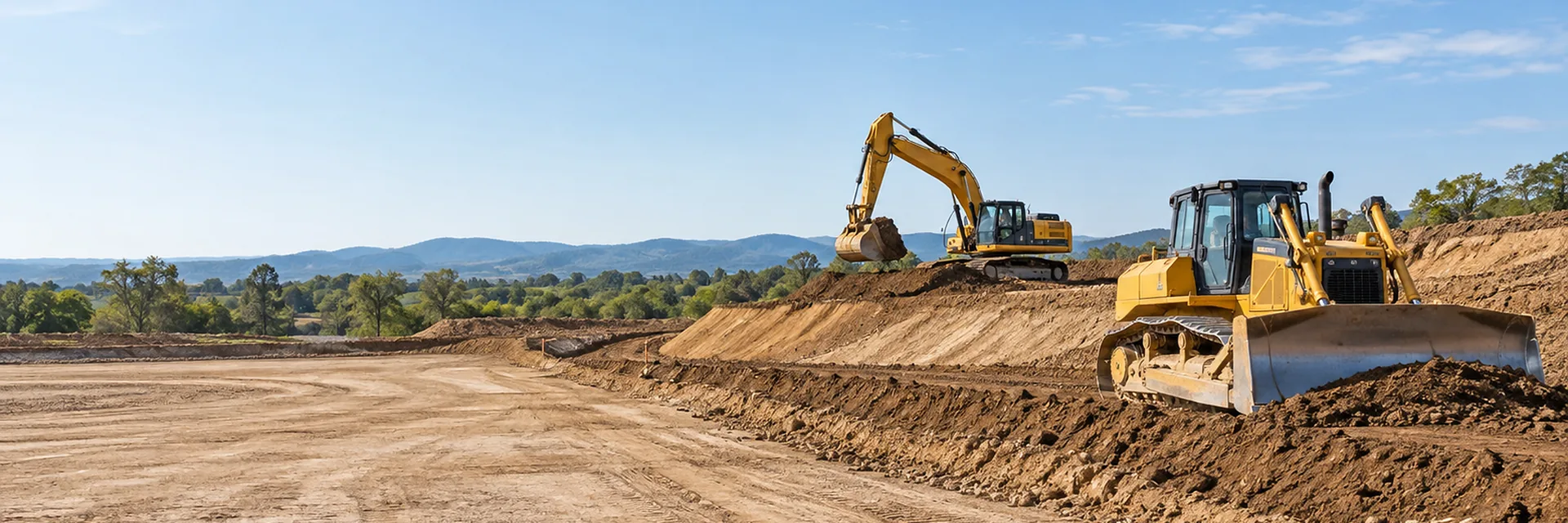
An excavator grading earth on a site being prepared for construction — excavating and grading contractor insurance

California commercial insurance

Excavation & Grading Contractor Insurance CA

844-97-USAVE

Excavation and grading sit at the intersection of underground utility risk, soil and groundwater exposure, and heavy equipment operations — three distinct risk categories that most other trades don't combine. Coverage needs to address all three specifically, not just a generic contractor policy.

  • Utility-Locate Exposure
  • Pollution Liability
  • Heavy Equipment

Reviewed by David Gleason, Principal — October 12, 2026

Next Level Experience. Insurance Done Right.

CaliforniaGeneral information only, not legal advice — illustrative scenarios and coverage, subject to change without notice. Content may be out of date or contain errors, and requirements vary by city, county, state, agency, project, contract, carrier and policy, among other factors; verifying what applies to your own situation is your responsibility. Full disclaimer

Interactive coverage guide

Build a coverage stack around how the business actually operates.

Start with the preselected industry or trade, then adjust the operational questions. The commonly considered stack updates live. Keep the coverages you want GIB to evaluate, remove ones you do not want included in your quote request, and add other available lines before continuing.

Common Starting Coverages

General LiabilityThird-party injury and property damage

What it is

General Liability commonly addresses covered third-party bodily injury, property damage and certain personal or advertising injury claims, subject to the policy.

Why businesses like yours commonly carry it

Businesses commonly use it as a starting liability policy and to satisfy customer, landlord or contract requirements.

Possible coverage gap

General Liability is not intended to replace policies for employee injuries, business vehicles, owned property, cyber events or professional errors.

Learn more about General Liability

Commonly Added Based on Operations

Contractor Equipment / Inland MarineMobile tools, equipment and property away from premises

What it is

Inland Marine is commonly used for tools, equipment and certain mobile property that moves between locations or jobsites.

Why businesses like yours commonly carry it

Contractors frequently move tools, testing equipment and mobile machinery among jobsites.

Possible coverage gap

General Liability should not be assumed to insure the business's own tools and equipment against theft or physical damage.

Learn more about Contractor Equipment / Inland Marine
Cyber Liability & Data BreachCyber events, data and system interruption

What it is

Cyber insurance may address certain first-party and third-party losses from covered data breaches, cyberattacks, ransomware and system interruption, depending on the policy.

Why businesses like yours commonly carry it

Contractors commonly use email, electronic banking, project platforms, payroll systems and cloud document storage.

Possible coverage gap

General Liability generally should not be assumed to address data breach response, ransomware or network interruption.

Learn more about cyber insurance for contractors

Exposure-Dependent Coverages

Installation FloaterMaterials awaiting or undergoing installation

What it is

An Installation Floater may cover certain materials and equipment in transit, temporary storage and during installation, subject to the policy.

Why businesses like yours commonly carry it

Businesses responsible for materials before final installation commonly consider this coverage.

Possible coverage gap

A basic liability policy generally should not be assumed to cover the insured's materials against physical loss before installation is complete.

Learn more about Installation Floater
Builder's RiskProject property during construction

What it is

Builder's Risk may insure covered buildings, materials and certain project property while construction is underway.

Why businesses like yours commonly carry it

Owners, developers and contractors commonly consider it when a structure or major renovation is exposed during construction.

Possible coverage gap

Commercial Property and General Liability are not automatic substitutes for course-of-construction property coverage.

Learn more about Builder's Risk
Contractors Pollution LiabilityPollution conditions and cleanup liability

What it is

Pollution Liability may address covered cleanup costs and third-party injury or property damage arising from pollution conditions.

Why businesses like yours commonly carry it

Businesses working with fuels, chemicals, soil, water, demolition or environmental conditions may have pollution exposures.

Possible coverage gap

Standard General Liability commonly contains pollution exclusions or limitations.

Learn more about Contractors Pollution Liability
Umbrella / Excess LiabilityAdditional limits above scheduled liability policies

What it is

Umbrella or Excess Liability may provide additional limits above identified underlying liability policies, subject to its own terms and exclusions.

Why businesses like yours commonly carry it

Businesses with larger contracts, vehicles, public exposure or higher severity potential commonly consider additional limits.

Possible coverage gap

An umbrella does not automatically broaden every exclusion or sit over every policy unless the issued terms say it does.

Learn more about Umbrella / Excess Liability

Loading quote and requirements options…

Educational guidance only. Results are not a coverage recommendation, quote, binder, policy interpretation, or guarantee of coverage. Actual needs, availability, forms, limits, exclusions and requirements vary. A licensed insurance professional should review the complete risk and issued policy terms.

Verified Google reviews

What contractors say about us

5.0 / 5from 7 Google reviews

Reviews reflect individual client experiences and are not a guarantee of coverage, pricing or results.

91 Enterprise LLC

91 Enterprise LLC

March 24, 2026

We are using Gleason insurance for our commercial auto policy and GL policy. David is the best insurance broker I've worked with — very honest, responsive, and knowledgeable. Highly recommend.

Fito Plumbers

Fito Plumbers

February 20, 2026

We have been working with David at Gleason Insurance Brokers for 8+ years. David always goes above and beyond to make sure we have the appropriate coverages. He explains everything in detail and makes sure we feel confident and understand all of our policies. He is always available and responds right away!

Barry Stay

Barry Stay

February 17, 2026

David provides great service and I highly recommend him for your insurance needs.

Why this trade carries elevated underwriting attention

Excavation and grading work is inherently higher-hazard than most trades — heavy equipment operation, trenching and shoring exposure, proximity to underground utilities, and the possibility of encountering contaminated soil or groundwater all factor into how underwriters evaluate the risk.

Read more

The depth and scope of excavation, soil type, proximity to structures or utilities, and whether shoring or trench protection systems are used all matter to underwriting — a detailed, honest description of typical operations produces a more accurate quote than a generic trade description. Excavators, dozers and loaders are scheduled on an equipment floater, outlined on excavation and utility equipment insurance.

Heavy equipment, trenching and utility-proximity risk are underwriting focal points
Soil type and excavation depth affect risk evaluation
Shoring and trench protection practices matter to underwriters
Detailed operational description beats a generic trade label
Real active demand right now: LA's rail tunneling, Fresno's High-Speed Rail corridor and Bakersfield's oilfield/pipeline work — see the Los Angeles, Fresno and Bakersfield metro pages for what's driving it locally
See our Directional Drilling & Trenchless guide for how this same underground/utility-strike exposure applies to trenchless installation work specifically

Utility locating is not optional

California requires contacting the applicable regional utility-locating service before any excavation — DigAlert for Southern California, USA North 811 for Northern and Central California — and this is both a legal requirement and a core risk-management practice, not a formality.

Read more

A utility strike can simultaneously trigger general liability claims (property damage, potential bodily injury), business interruption exposure for the utility or nearby businesses, and pollution liability exposure if the strike releases contaminants — a single incident spanning multiple coverage lines.

Utility locate is legally required before any excavation
DigAlert (Southern CA) or USA North 811 (Northern/Central CA)
A single utility strike can trigger multiple coverage lines at once
Documentation of locate compliance supports both safety and claims defense

Pollution liability for soil and groundwater exposure

Standard general liability typically excludes pollution conditions, which is a real gap for excavation work that could encounter contaminated soil, groundwater, or underground storage tanks.

Read more

Contractors pollution liability is the specific coverage built for this exposure.

For projects with known or suspected contamination — former industrial sites, older properties with underground tanks — environmental reports (Phase I or Phase II assessments) are commonly requested by underwriters and should be gathered early rather than after the fact.

This exposure often surfaces well before the first cut of dirt — during the geotechnical and environmental review phase, when a Phase I Environmental Site Assessment identifies whether prior site use makes contamination plausible, and a Phase II ESA (actual soil and groundwater sampling) confirms it if warranted. A clean assessment reduces the odds of an unexpected discovery but doesn't eliminate them — confirm what environmental due diligence was actually performed on a site before bidding excavation work on it, not just what the plans show.

Pollution liability is one of the most commonly skipped coverages across construction generally, not just excavation — see why most contractors don't think of their own work as environmental exposure until it is.

Standard GL typically excludes pollution — a real gap for this trade
Contractors pollution liability addresses soil/groundwater exposure specifically
Phase I/II environmental reports are commonly requested for known-risk sites
Gather environmental documentation before, not during, underwriting

Equipment and inland marine coverage

Excavators, graders, compactors and similar heavy equipment typically need inland marine or equipment coverage — general liability doesn't cover damage to owned equipment, and equipment values in this trade often run well into six figures per unit.

Read more

Rented or leased equipment coverage should be confirmed separately — some policies cover it, others require a specific endorsement, and assuming it's automatically included is a common and avoidable gap.

Owned heavy equipment needs inland marine or equipment coverage
Equipment values in this trade often run into six figures per unit
Confirm rented/leased equipment coverage explicitly
GL does not cover damage to your own equipment

A realistic excavation claims scenario

An excavation crew damages an underground gas line during a grading project — despite a DigAlert or USA North 811 locate request having been filed, the utility was marked inaccurately.

Read more

This kind of claim tests both general liability (property damage, potential business interruption to the utility) and, depending on severity, can trigger a much larger loss than the excavation contract itself was worth.

Filing the locate request is necessary but not sufficient — documenting that it was filed, and following the required waiting period before digging, is what actually supports the contractor's position if a strike happens anyway despite an accurate mark.

This is a typical, illustrative example meant to show how coverage lines can interact — not a description of any actual claim, and not a guarantee of how a specific claim would be handled. Actual outcomes depend on the exact policy language, the facts of the situation, and the carrier's determination; for anything case-specific, consult your policy documents, a licensed attorney, or the applicable regulatory authority.

An accurate locate request doesn't guarantee an accurate utility mark
Utility strikes can trigger losses far larger than the excavation contract value
Documentation of the locate request supports the contractor's position
The required waiting period after filing matters as much as filing itself

Getting coverage that matches the actual risk

Describe typical excavation depth, soil conditions, proximity to utilities and structures, and equipment owned so the quote reflects real operations — this trade benefits more than most from a detailed submission rather than a generic one.

Read more

Gleason Insurance Brokers places coverage for excavation and grading contractors across California — call 844-978-7283 or request a quote with your operations and equipment detail.

An August 2026 file shows what writing the lines together can do: a California excavation contractor doing grading, trenching and site work for new homes moved pollution, equipment, general liability, auto and workers' compensation across, and the auto, liability and pollution package came in under what the auto policy alone had been costing. Read the full case.

Describe typical excavation depth and soil/site conditions
List owned heavy equipment for accurate inland marine coverage
Confirm pollution liability coverage for soil/groundwater exposure
Call 844-978-7283, or submit a quote request to begin

Bonding and public works considerations for excavation contractors

Excavation and grading work shows up disproportionately often on public works projects — site prep, utility trenching and grading are frequently among the earliest trades on a public job, which means bonding and insurance requirements need to be in place earlier in the project timeline than for trades that come in later.

Read more

A CSLB license bond alone typically isn't sufficient once a contractor is bidding this kind of work directly with a public agency.

Growing grading operations bidding larger public jobs should treat bonding capacity as a proactive planning question, not something to work out after winning a bid that's already bigger than what the contractor has bonded for before.

Excavation and grading are often among the earliest trades mobilized on a public works project
Requirements need to be in place earlier in the timeline than for later-stage trades
The CSLB license bond alone typically isn't sufficient for direct public agency contracts
Treat bonding capacity as proactive planning before bidding larger public jobs

XCU coverage: explosion, collapse and underground hazards

XCU stands for explosion, collapse and underground — three loss categories that a standard general liability policy has historically been permitted to exclude, and that matter more to excavation, grading, utility, pipeline, demolition and concrete work than to almost any other trade.

Read more

An XCU exclusion strips coverage for exactly the losses this kind of work is most exposed to: a struck gas line, a trench or shoring collapse, damage to underground utilities, structures or property caused by digging, drilling or blasting near them.

Public agencies increasingly won't accept a policy carrying that exclusion at all. Caltrans' own contractor insurance requirements are explicit on this point — coverage cannot contain an exclusion for explosion, collapse and underground hazards, period. A policy that would otherwise satisfy every limit and endorsement a Caltrans or similar public works contract requires can still fail to qualify if it carries a standard XCU exclusion, since that's treated as a separate, independent requirement from the stated limits.

For a business built around excavation, grading, utility or pipeline work, confirming XCU exposure is covered — not just assumed to be, because "general liability" sounds broad enough — belongs in the same conversation as confirming pollution liability and utility-locate documentation, since all three trace back to the same underlying exposure: work that happens below grade, next to infrastructure that isn't always exactly where the drawings say it is.

XCU = explosion, collapse, underground — historically excludable on a standard GL policy
Caltrans contracts explicitly prohibit an XCU exclusion, not just require a limit
Highest relevance: excavation, grading, utility, pipeline, demolition, concrete, public works
Confirm this the same way utility-locate documentation and pollution liability get confirmed — not assumed
See our Public Works Insurance Requirements guide for why Caltrans specifically prohibits an XCU exclusion on its contracts
See our Contractors Pollution Liability guide for what actually triggers a pollution claim, including contaminated soil and utility strikes

Contractors we work with, growing and established

We work with excavation and grading contractors across a range of company sizes — from a single-machine operation up through established programs running a real equipment schedule on commercial and civil sites.

Read more

Program structure, market access and current capacity all factor into how a specific account is approached, whether the business is an established operation adding crews or already running a considerably larger program.

A grading contractor moving from residential lots into larger commercial or public earthwork changes the underwriting picture, so tell us about that shift before it happens, not after. We'll walk you through what actually fits your current operation.

We work with both growing and established operations, trade to trade
Program structure and market access are matched to the size and complexity of the account
Current capacity and focus can affect timing — reach out early so we can plan around it
We'll be direct with you about the best path forward for your specific business

Street excavation bonds, and the tail that outlives the job

A street excavation bond is not a project bond and it does not come off when the job does.

Read more

San Francisco Public Works states the point plainly on its own general excavation page: the bond "guarantees maintenance of the pavement in the trench and roadway for 3 years" after restoration is finished, and the permit holder requirement is "A Street Excavation Bond of at least $25,000." The form itself says the same thing from the surety's side — the obligation stays in full force for three years after the pavement is restored, and the surety can only step out by giving the Bureau of Street-Use and Mapping thirty days' written notice, and then only where the restoration is already more than three years old.

For a grading and trenching operation that is the detail worth planning around. The excavation is measured in days; the bond is measured in years, and it sits against bonding capacity the whole time. A contractor who opened a dozen trenches across three cities is carrying a dozen open obligations, each tied to a trench backfilled long ago, and the surety is looking at all of them when the next job comes up for bid. None of this is insurance — a bond guarantees performance to the agency and leaves the contractor liable to repay the surety, which is the opposite of how a general liability policy works.

The agency is also not the only party with an interest in the restoration. Settlement in a backfilled trench shows up as a depression, a crack or a failed patch months later, and the question of whether that is bond work, warranty work or a damage claim is usually decided by what the compaction and inspection records say. That is a documentation habit rather than a coverage feature, and it is frequently what the file turns on. The soils report behind a grading plan comes from a geotechnical engineer, whose coverage is described on insurance for geotechnical engineering firms.

San Francisco: a Street Excavation Bond of at least $25,000, held against pavement maintenance for three years after restoration
The surety's exit is thirty days' written notice, and only once the restoration is more than three years old
Each open trench is a live obligation against bonding capacity long after the crew has left
Amounts, terms and whether a bond is required at all differ by city and by permit type — read the issuing agency's own conditions
Compaction and inspection records are what separate bond work from a liability claim when a trench settles

Frequently asked questions

18 questions — start typing to filter

Is utility locate legally required, or just a good practice?

It's legally required in California before excavation begins — DigAlert for Southern California or USA North 811 for Northern and Central California, depending on the project location.

What happens if my equipment strikes a utility during excavation?

It can trigger general liability, pollution liability, and potentially business-interruption exposure simultaneously, depending on what's struck and what's released — this is why locate compliance matters as much as it does.

Does general liability cover contaminated soil discovered during excavation?

Typically no — standard GL policies exclude pollution conditions. Contractors pollution liability is the specific coverage built to address soil and groundwater contamination exposure.

Do I need environmental reports before I can get pollution liability coverage?

For known or suspected contamination sites, underwriters commonly request Phase I or Phase II environmental reports — gathering these early speeds up the underwriting process significantly.

Is my excavator or grader covered under general liability?

No — general liability covers third-party claims, not damage to your own equipment. Excavators, graders and similar heavy equipment typically need inland marine or equipment coverage.

Do I need different coverage for deep excavation with shoring versus shallow grading work?

The specifics matter to underwriting — excavation depth, soil type, and whether shoring or trench protection systems are used all factor into how the risk is evaluated and priced.

Is rented excavation equipment automatically covered under my policy?

Don't assume so — confirm whether rented or leased equipment coverage is included or needs a specific endorsement, since this varies by policy.

What makes construction company insurance for excavation different from a standard contractor policy?

Excavation and grading carry specific exposures a generic construction company insurance package doesn't automatically cover: underground utility damage, soil subsidence, and pollution from disturbed contaminated soil are all common exclusions on a standard general liability policy unless specifically endorsed. Commercial construction insurance companies that specialize in this trade typically underwrite excavation separately from general carpentry or framing work for exactly this reason.

Does excavation and grading work need pollution coverage beyond general liability?

Often yes — disturbing soil can expose contamination, and most GL policies carry an absolute pollution exclusion. Construction Pollution Liability Insurance is written specifically to respond to contamination discovered or caused during grading, trenching and earthwork.

If I run my own dump trucks for hauling spoils, does my excavation policy cover them?

No — dump trucks need their own commercial auto coverage regardless of what's on the excavation GL or equipment policy. Dump Truck Insurance Agency covers owner-operator and small-fleet dump truck coverage specifically, including the cargo and physical damage exposures excavation contractors run into.

Does general liability insurance for builders cover excavation and earthwork exposures?

It can, but not automatically — general liability insurance for builders often carries exclusions or sublimits for subsidence, earth movement and underground utility damage that matter specifically for excavation work, so confirming those terms directly is worth doing before relying on a standard policy.

What is XCU coverage, and why does it matter for excavation contractors?

XCU stands for explosion, collapse and underground — three loss categories a standard general liability policy has historically been allowed to exclude. For excavation, grading, utility, pipeline and demolition work, an XCU exclusion strips coverage for exactly the risks the trade is most exposed to: a struck utility line, a trench collapse, underground property damage. Caltrans' own contractor insurance requirements explicitly prohibit an XCU exclusion on its contracts, so confirming a policy doesn't carry one matters for public works eligibility, not just claims protection.

Does excavation insurance cover tree and root removal?

Not automatically — tree and root removal is its own licensed scope with its own equipment and liability profile. See our tree service insurance California guide for coverage built specifically around aerial work, chippers and utility-line proximity.

Does excavation coverage extend to underground fiber boring?

Not automatically — underground fiber installation is its own licensed scope (C-7), even though it shares real utility-strike exposure with excavation work. See our fiber optic installer insurance California guide for how this specific trade is covered.

What does excavation contractor insurance need to include?

At minimum, general liability with confirmed underground/XCU exposure addressed, workers compensation, commercial auto and equipment coverage — excavation contractor insurance built around anything less than that leaves a real, trade-specific gap given how much of this work happens near existing utilities and structures.

Do excavation contractors need motor truck cargo insurance?

If the operation hauls its own dirt, spoils or equipment between sites rather than contracting that out, motor truck cargo insurance for those trucks is worth confirming separately from the auto liability and equipment coverage already part of the program.

Where can I get land grading contractor insurance in California?

Gleason Insurance Brokers writes land grading contractor insurance California excavation and grading crews need, including liability, contractors equipment and pollution coverage reviewed together. Call 844-978-7283.

How long does a street excavation bond stay open after the trench is backfilled?

Longer than most contractors expect, and the term is set by the agency rather than by the job. San Francisco's street excavation bond is written to stay in full force for three years after the pavement is restored, and the surety can only step out on thirty days' written notice once that restoration is already more than three years old. Other cities set their own terms, and some use an annual bond that runs with the permits instead. The practical effect is the same either way: an obligation that occupies bonding capacity long after the crew has moved on, which is worth counting before bidding the next job rather than after.

Official resources

Verify current licensing, regulatory and program requirements directly with the responsible agency — this is general information, not legal advice, requirements change without notice, and what is summarized here may be out of date or contain errors. Confirming what applies to your own city, project, contract and policy is your responsibility.

Explore Related Coverage and Contractor Resources

Related coverage
Guides, trades and resources

Updated October 12, 2026