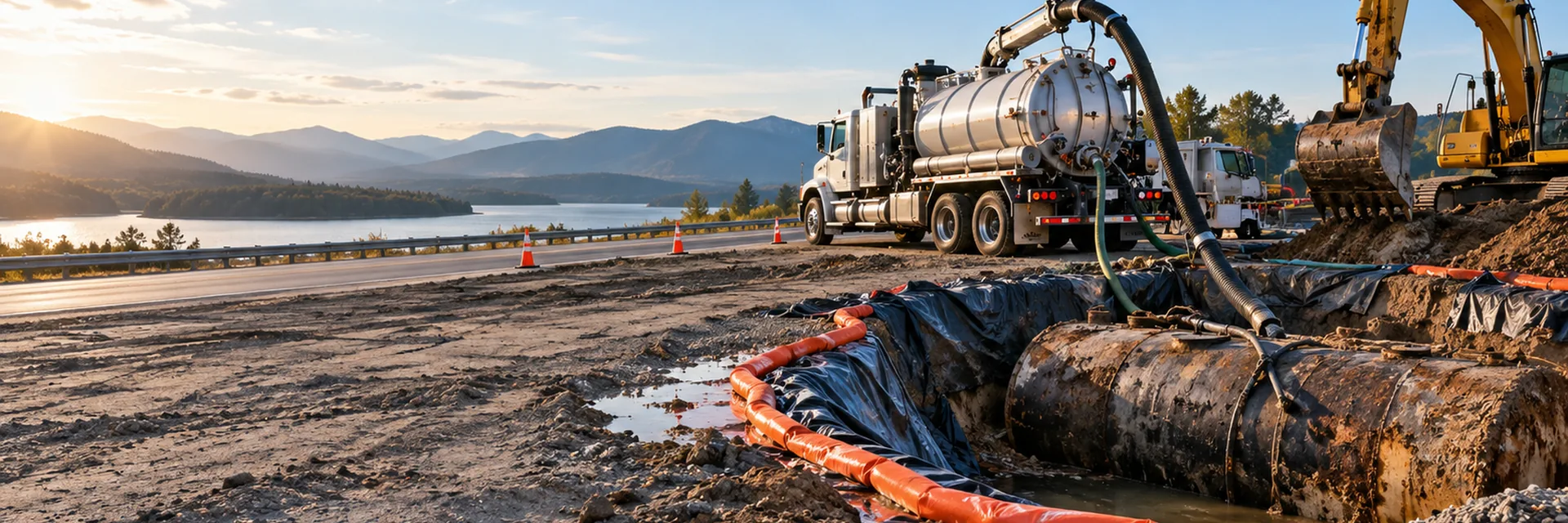
Are there different types of pollution liability insurance?
Yes — pollution coverage can vary substantially among policies. Depending on the policy and operation, coverage may address jobsite pollution conditions, transportation exposures, cleanup costs, third-party bodily injury, third-party property damage, emergency response, completed operations, and other pollution-related exposures. Actual policy wording controls coverage.
Does contractors pollution liability cover transportation?
Not automatically — transportation pollution may be covered, endorsed, restricted or excluded depending on the policy. Contractors transporting contaminated soil, waste, chemicals or other materials should specifically disclose those operations.
Does pollution insurance cover contamination discovered on the jobsite?
It depends on the policy and circumstances — known conditions, unknown conditions, pre-existing contamination and newly created pollution conditions may be treated differently.
Will I need soil samples or environmental reports to obtain pollution coverage?
Possibly — underwriters may request Phase I or Phase II reports, soil testing, remediation plans, soil management plans, environmental reports, project scope, and disposal information, depending on the project and environmental exposure.
What does standard contractors pollution liability generally cover?
Coverage varies significantly — a contractors pollution liability policy may provide coverage for certain pollution conditions arising from contracting operations, subject to the policy's definitions, exclusions, limits, deductibles and endorsements. Never assume one CPL policy is equivalent to another.
Can I get project-specific pollution liability?
Potentially — project-specific pollution policies may be available for qualifying projects, with terms structured around the anticipated construction period plus additional completed-operations or reporting provisions where available.
What happens if my construction project takes longer than expected?
Contact the broker and carrier before the project-specific policy expires. Extensions may be available depending on the carrier, but they should never be assumed to be automatic.
Is contractors pollution liability insurance required, or optional?
It's not legally mandated the way workers compensation is, but many contracts — particularly public works, utility and excavation projects — require contractors pollution liability insurance (CPL) as a condition of the contract itself, separate from what state law requires. Even where it isn't contractually required, standard general liability's pollution exclusion makes CPL worth carrying on any project with real soil disturbance, fuel storage, or chemical handling exposure.
What happens if my excavation crew discovers contamination that wasn't found in the Phase I or Phase II ESA?
Stop work in the affected area, secure and characterize the material, and notify DTSC or the applicable Regional Water Quality Control Board — a soil management plan then typically governs testing, transport and disposal from there. This is exactly the scenario contractors pollution liability is written to respond to, since standard general liability generally excludes it. See our full new construction process guide for how this fits into the broader design-through-construction sequence.
What is non owned auto insurance and when does a contractor actually need it?
Non owned auto insurance covers the business's liability when an employee uses their own personal vehicle for a business errand — a supply run or a site visit in a personal truck — since the business itself can still be named in a resulting claim even though it doesn't own the vehicle involved.
What actually triggers a contractor pollution liability claim?
The most common real triggers: mold or moisture intrusion during renovation, silica dust from cutting or grinding concrete and masonry, asbestos or lead unexpectedly disturbed in an older structure, fuel spills from jobsite equipment, contaminated soil discovered during excavation, and utility strikes that release a line's contents. Each is a named, recurring cause of loss under contractor pollution liability policies — not a hypothetical — and is exactly why a sophisticated owner's construction contract can legitimately require this coverage when the work involves pollutants.
Does refrigerant release count as a pollution exposure?
It can — refrigerant release is a real, contractor-specific pollution trigger worth confirming coverage for directly. See our commercial refrigeration contractor insurance California guide for how this and the related Legionella/water-treatment exposure are typically addressed.
What's a frac-out, and which trade does it actually apply to?
A frac-out is drilling fluid unexpectedly surfacing away from the intended underground bore path — a real, specific trigger for horizontal directional drilling and other trenchless methods. See our trenchless contractor insurance guide for how this exposure is actually underwritten.
What is contractor's pollution insurance and do I need it?
Contractor's pollution insurance (also called pollution liability insurance) covers third-party bodily injury, property damage and cleanup costs from a pollution condition your work causes or discovers — something standard general liability typically excludes. Excavation, demolition, underground utility, remodel and any trade disturbing soil or older building materials commonly need it.
Why do contractors often skip pollution liability even when they need it?
It's one of the most commonly overlooked coverages in construction, mostly because contractors don't think of their own work as an environmental exposure until something happens. See our full explanation of why pollution liability gets overlooked.
Does Gleason have strong pollution insurance markets?
Yes. Gleason Insurance Brokers has strong, extremely competitive pollution insurance markets for California contractors, covering soil, groundwater and hazmat exposures that a standard general liability policy excludes. Call 844-978-7283.
Is pollution liability insurance affordable through Gleason?
Pollution liability pricing varies more than most lines, and carriers in this space price the same work differently. The honest answer on affordability is that it's circumstantial — the type of work performed, project duration, site environmental conditions and claims history each play a real role in what a carrier will actually quote. Call 844-978-7283 to see what your specific exposure looks like.