Gleason Insurance Brokers

General Liability · Workers' Comp · Commercial Auto · Pollution Insurance · Surety Bonds Start a Business Insurance Quote Today

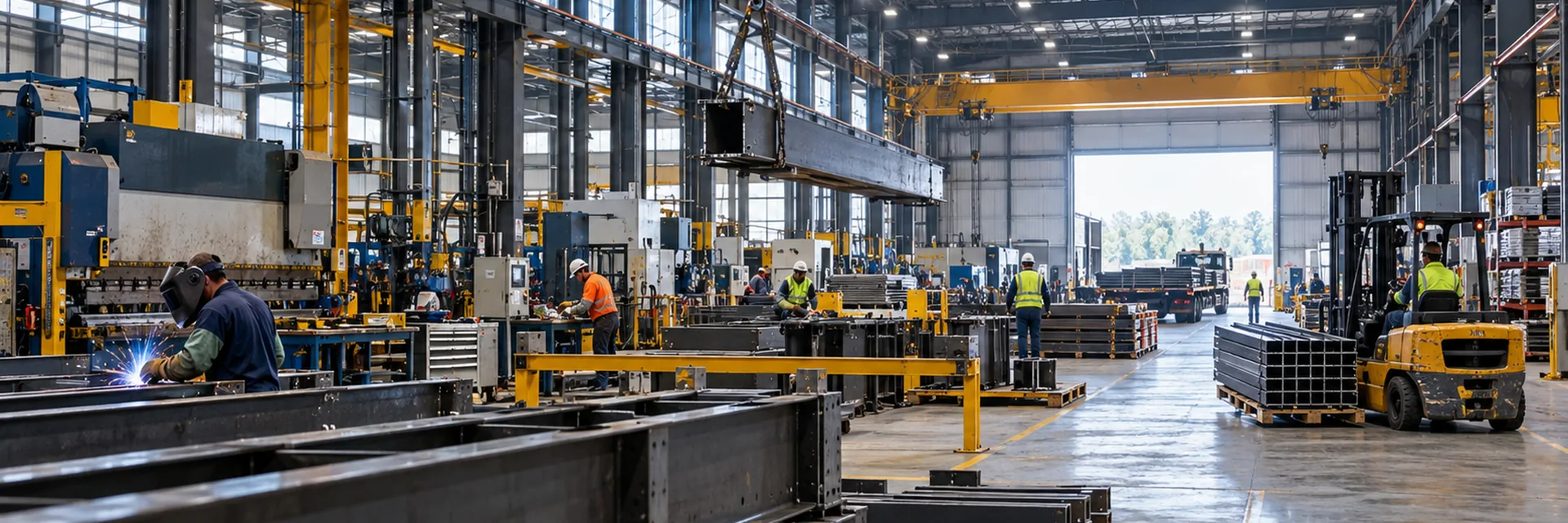
A heavy industrial fabrication floor under overhead bridge cranes, a steel beam on the hook, a welder at work, press brakes down the bay and a forklift moving bundled tube — umbrella and excess

California commercial insurance

Umbrella Excess Liability Contractors CA

844-97-USAVE

A single serious claim can exceed a standard general liability or auto policy's limits faster than most contractors expect — especially on larger projects or with commercial auto exposure. Umbrella and excess liability extend those limits at a lower relative cost than raising each underlying policy individually.

  • Limits Above GL & Auto
  • Employer's Liability Excess
  • Contract-Required Minimums

Reviewed by David Gleason, Principal — October 12, 2026

Next Level Experience. Insurance Done Right.

CaliforniaGeneral information only, not legal advice — illustrative scenarios and coverage, subject to change without notice. Content may be out of date or contain errors, and requirements vary by city, county, state, agency, project, contract, carrier and policy, among other factors; verifying what applies to your own situation is your responsibility. Full disclaimer

Interactive coverage guide

Build a coverage stack around how the business actually operates.

Start with the preselected industry or trade, then adjust the operational questions. The commonly considered stack updates live. Keep the coverages you want GIB to evaluate, remove ones you do not want included in your quote request, and add other available lines before continuing.

Common Starting Coverages

General LiabilityThird-party injury and property damage

What it is

General Liability commonly addresses covered third-party bodily injury, property damage and certain personal or advertising injury claims, subject to the policy.

Why businesses like yours commonly carry it

Businesses commonly use it as a starting liability policy and to satisfy customer, landlord or contract requirements.

Possible coverage gap

General Liability is not intended to replace policies for employee injuries, business vehicles, owned property, cyber events or professional errors.

Learn more about General Liability

Commonly Added Based on Operations

Contractor Equipment / Inland MarineMobile tools, equipment and property away from premises

What it is

Inland Marine is commonly used for tools, equipment and certain mobile property that moves between locations or jobsites.

Why businesses like yours commonly carry it

Contractors frequently move tools, testing equipment and mobile machinery among jobsites.

Possible coverage gap

General Liability should not be assumed to insure the business's own tools and equipment against theft or physical damage.

Learn more about Contractor Equipment / Inland Marine
Cyber Liability & Data BreachCyber events, data and system interruption

What it is

Cyber insurance may address certain first-party and third-party losses from covered data breaches, cyberattacks, ransomware and system interruption, depending on the policy.

Why businesses like yours commonly carry it

Contractors commonly use email, electronic banking, project platforms, payroll systems and cloud document storage.

Possible coverage gap

General Liability generally should not be assumed to address data breach response, ransomware or network interruption.

Learn more about cyber insurance for contractors

Exposure-Dependent Coverages

Installation FloaterMaterials awaiting or undergoing installation

What it is

An Installation Floater may cover certain materials and equipment in transit, temporary storage and during installation, subject to the policy.

Why businesses like yours commonly carry it

Businesses responsible for materials before final installation commonly consider this coverage.

Possible coverage gap

A basic liability policy generally should not be assumed to cover the insured's materials against physical loss before installation is complete.

Learn more about Installation Floater
Builder's RiskProject property during construction

What it is

Builder's Risk may insure covered buildings, materials and certain project property while construction is underway.

Why businesses like yours commonly carry it

Owners, developers and contractors commonly consider it when a structure or major renovation is exposed during construction.

Possible coverage gap

Commercial Property and General Liability are not automatic substitutes for course-of-construction property coverage.

Learn more about Builder's Risk
Contractors Pollution LiabilityPollution conditions and cleanup liability

What it is

Pollution Liability may address covered cleanup costs and third-party injury or property damage arising from pollution conditions.

Why businesses like yours commonly carry it

Businesses working with fuels, chemicals, soil, water, demolition or environmental conditions may have pollution exposures.

Possible coverage gap

Standard General Liability commonly contains pollution exclusions or limitations.

Learn more about Contractors Pollution Liability
Umbrella / Excess LiabilityAdditional limits above scheduled liability policies

What it is

Umbrella or Excess Liability may provide additional limits above identified underlying liability policies, subject to its own terms and exclusions.

Why businesses like yours commonly carry it

Businesses with larger contracts, vehicles, public exposure or higher severity potential commonly consider additional limits.

Possible coverage gap

An umbrella does not automatically broaden every exclusion or sit over every policy unless the issued terms say it does.

Learn more about Umbrella / Excess Liability

Loading quote and requirements options…

Educational guidance only. Results are not a coverage recommendation, quote, binder, policy interpretation, or guarantee of coverage. Actual needs, availability, forms, limits, exclusions and requirements vary. A licensed insurance professional should review the complete risk and issued policy terms.

Verified Google reviews

What contractors say about us

5.0 / 5from 7 Google reviews

Reviews reflect individual client experiences and are not a guarantee of coverage, pricing or results.

91 Enterprise LLC

91 Enterprise LLC

March 24, 2026

We are using Gleason insurance for our commercial auto policy and GL policy. David is the best insurance broker I've worked with — very honest, responsive, and knowledgeable. Highly recommend.

Fito Plumbers

Fito Plumbers

February 20, 2026

We have been working with David at Gleason Insurance Brokers for 8+ years. David always goes above and beyond to make sure we have the appropriate coverages. He explains everything in detail and makes sure we feel confident and understand all of our policies. He is always available and responds right away!

Barry Stay

Barry Stay

February 17, 2026

David provides great service and I highly recommend him for your insurance needs.

What umbrella and excess liability actually do

Umbrella and excess liability policies sit above underlying general liability, commercial auto, and employer's liability coverage, extending the available limit once an underlying policy's limit is exhausted by a covered claim — they don't replace the underlying policies, they extend them.

Read more

The distinction between "umbrella" and "excess" matters in the fine print: a true umbrella policy can sometimes provide broader coverage than the underlying policies ("drop-down" coverage for gaps), while a straight excess policy generally just adds limit on top of identical underlying terms. Confirm which structure a specific quote actually provides.

Extends limits above GL, auto and employer's liability — doesn't replace them
Requires underlying policies to already be in place
"Umbrella" and "excess" aren't always identical structures
Confirm whether drop-down coverage is included or it's strictly excess

Why contractors carry it

Larger project size, higher contract limits required by a general contractor or public agency, commercial auto fleet exposure, and simply the scale of potential liability in construction all push contractors toward umbrella coverage — a single serious bodily injury claim can exceed a $1M primary GL limit without much difficulty.

Read more

Contracts increasingly specify a minimum combined limit — GL plus umbrella together — rather than accepting a standalone GL limit alone, particularly on larger commercial and public works projects.

Larger project size increases the chance of exceeding primary limits
Commercial auto fleet exposure is a common umbrella trigger
Contracts increasingly specify combined GL + umbrella minimums
A single serious claim can exceed standard primary limits

How umbrella pricing compares to raising primary limits

Umbrella coverage is typically more cost-efficient than raising a primary GL or auto limit to the same total — the underlying policy already absorbs the more frequent, lower-severity claims, and the umbrella layer prices against the lower-frequency, higher-severity exposure sitting above it.

Read more

Underlying limits still matter to umbrella pricing and eligibility — most umbrella carriers require specific minimum underlying limits before they'll write the excess layer, so raising a materially outdated underlying limit sometimes needs to happen first.

Generally more cost-efficient than raising primary limits alone
Prices against lower-frequency, higher-severity exposure
Underlying limits must meet the umbrella carrier's minimums
An outdated underlying limit may need to be raised first

Coordinating umbrella with the rest of the program

An umbrella policy needs to follow form with the underlying policies it sits above — matching named insureds, matching effective dates where practical, and understanding which underlying policies it actually extends (GL only, or GL plus auto plus employer's liability).

Read more

Adding a new underlying exposure — a new commercial vehicle, a new classification — without notifying the umbrella carrier can create a mismatch between what the primary policy and the umbrella policy each assume is covered.

Umbrella should follow form with the specific underlying policies
Confirm which underlying lines it actually extends
Notify the umbrella carrier when underlying exposures change
A mismatch between primary and umbrella assumptions is a real gap

A realistic scenario: when the umbrella actually triggers

A multi-vehicle accident involving a contractor's crew truck results in serious injury claims that exceed the $1M primary commercial auto liability limit.

Read more

The umbrella policy picks up exactly where the primary limit runs out, extending coverage to whatever additional limit was purchased — without it, the contractor's own assets become exposed to the difference.

This is also frequently the specific ask in a GC's insurance requirement letter — a $2M or $5M umbrella requirement that no single underlying policy meets on its own, which is the umbrella's actual job: making a contract's higher limit requirement achievable without inflating every underlying policy.

This is a typical, illustrative example meant to show how coverage lines can interact — not a description of any actual claim, and not a guarantee of how a specific claim would be handled. Actual outcomes depend on the exact policy language, the facts of the situation, and the carrier's determination; for anything case-specific, consult your policy documents, a licensed attorney, or the applicable regulatory authority.

The umbrella triggers once a primary limit is exhausted, not before
Without it, the gap between the loss and the primary limit is the contractor's own exposure
GC contract requirements often specify a total limit only an umbrella reaches
It raises the ceiling without inflating every underlying policy

Getting the right umbrella limit in place

Review current contract requirements, typical project size, and fleet exposure to determine whether $1M, $2M, $5M or higher combined limits fit actual operations — more coverage than needed has a real cost too, so this is worth reviewing rather than defaulting to a round number.

Read more

Gleason Insurance Brokers coordinates umbrella and excess liability with the rest of a contractor's program across California — call 844-978-7283 or request a quote with your current limits and contract requirements.

Size the limit to actual contract requirements and project scale
More coverage than needed has a real cost — review, don't default
We coordinate umbrella with your full existing program
Call 844-978-7283 or request a quote to get started

What your excess limit actually sits over

An umbrella or excess policy doesn't stand alone — it sits on top of the underlying general liability, auto and workers compensation policies, which are often written with different carriers.

Read more

When those underlying policies aren't scheduled correctly, when the umbrella excludes an operation the general liability actually covers, when the attachment point has shifted, or when a project specifically requires true follow-form wording, the limit you think you have and the limit that's actually available in a claim can be two different numbers.

We build out the underlying-to-excess picture explicitly — what's scheduled, what attaches where, what's excluded on the umbrella that isn't excluded underneath it, and whether the wording is true follow-form or something narrower — so you know exactly what your umbrella actually sits over before you need it, not after.

Underlying GL, auto and WC are often with different carriers
An umbrella exclusion can be narrower than what the GL policy actually covers
Attachment points and scheduled underlying limits both matter, not just the top number
True follow-form wording isn't automatic on every umbrella program

The renewal timeline that avoids a last-minute surprise

Umbrella and excess renewals are getting harder to leave until the last month.

Read more

Recent industry construction outlooks have projected excess/umbrella pricing pressure in the range of roughly 5%–30%, with some individual layers seeing increases toward the higher end, and capacity itself has tightened — insurers that once wrote $15M–$25M on a single layer are increasingly writing $5M–$10M instead, which can mean stacking more carriers to reach the same total limit.

A renewal that starts 30 days out, with a call from the incumbent broker saying the umbrella is being non-renewed or a market has added an exclusion, doesn't leave time to do anything but accept the outcome. We start the renewal process roughly 120 days ahead of expiration — mapping carrier appetite, cleaning up exposure data, pulling loss runs, writing claim narratives where needed, and lining up alternate markets — so there's a real decision to make instead of one dictated by the calendar.

2026 industry outlooks have projected umbrella/excess pricing pressure of roughly 5%–30%
Individual excess layers have generally shrunk from $15M–$25M toward $5M–$10M
A 30-day-out renewal call leaves little real time to respond
We start the renewal process roughly 120 days ahead of expiration

Frequently asked questions

13 questions — start typing to filter

Does umbrella coverage replace my general liability policy?

No — it sits above and extends your existing GL, auto and employer's liability policies once their limits are exhausted by a covered claim. The underlying policies still need to be in place.

What's the difference between umbrella and excess liability?

A true umbrella policy can include broader "drop-down" coverage for gaps in the underlying policies; a straight excess policy generally just adds limit on top of identical underlying terms. Confirm which structure a specific quote provides.

How much umbrella coverage do I actually need?

It depends on your typical contract requirements, project size and fleet exposure — review current contract insurance specifications rather than defaulting to a round number that may be more or less than actually required.

Is umbrella coverage cheaper than just raising my GL limit?

Generally yes, on a cost-per-dollar-of-limit basis — umbrella prices against lower-frequency, higher-severity exposure, while raising the primary limit means paying more for coverage that also absorbs routine, lower-severity claims.

Do I need minimum underlying limits to qualify for umbrella coverage?

Yes — most umbrella carriers require the underlying GL, auto and employer's liability policies to meet specific minimum limits before they'll write the excess layer above them.

What happens if I add a new vehicle or classification without telling my umbrella carrier?

It can create a mismatch between what your primary and umbrella policies each assume is covered — notify the umbrella carrier when underlying exposures change, not just the primary carrier.

Does my umbrella policy automatically extend my commercial auto coverage too?

Not necessarily — confirm which specific underlying policies (GL only, or GL plus auto plus employer's liability) your umbrella actually follows form with, since this varies by policy.

Is umbrella liability the same as excess liability, and does it only sit over general liability?

No to both. Excess liability follows form — it strictly matches one specific underlying policy (often just general liability) and simply raises that policy's limit. A commercial umbrella policy is broader: it typically sits above a whole schedule of underlying policies at once — general liability, commercial auto and employer's liability together, not general liability alone — and can sometimes respond to a gap the underlying policies don't cover at all. If a contract requires umbrella or excess coverage, confirm which underlying lines it actually needs to sit above before assuming general liability limits are the only thing being extended.

Does an umbrella policy extend over non owned auto insurance the same way it does owned vehicles?

Typically yes, if the underlying non owned auto insurance is scheduled correctly on the umbrella's underlying-coverage list — an unscheduled or missing underlying policy is a common reason an umbrella doesn't actually respond the way an insured expects.

Do umbrella limits need to increase as a contracting business grows?

Typically yes — required umbrella/excess limits generally scale with project size and contract value. See our guide on insurance for growing construction companies California for how this and the rest of the program need to keep pace with real growth.

What does it mean for an umbrella policy to be 'follow-form'?

True follow-form means the umbrella mirrors the coverage terms of the underlying policy it sits over, rather than applying its own, potentially narrower set of exclusions. Confirming whether a specific umbrella program is genuinely follow-form — and where it isn't — is part of understanding what the limit actually protects.

Why is excess liability capacity tighter than it used to be?

A number of construction excess insurers have been writing smaller individual layers than in past years — commonly $5M–$10M instead of the $15M–$25M chunks that were more typical previously — which can mean assembling a program from more carriers to reach the same total limit. Starting the renewal early gives more room to work through that stacking process.

Where can I get excess liability insurance in California?

Gleason Insurance Brokers places excess liability insurance California contractors need above general liability, commercial auto and employers liability limits, matched to the actual underlying coverage rather than assumed limits. Call 844-978-7283.

Official resources

Verify current licensing, regulatory and program requirements directly with the responsible agency — this is general information, not legal advice, requirements change without notice, and what is summarized here may be out of date or contain errors. Confirming what applies to your own city, project, contract and policy is your responsibility.

Explore Related Coverage and Contractor Resources

Related coverage
Guides, trades and resources

Updated October 12, 2026