Gleason Insurance Brokers

General Liability · Workers' Comp · Commercial Auto · Pollution Insurance · Surety Bonds Start a Business Insurance Quote Today

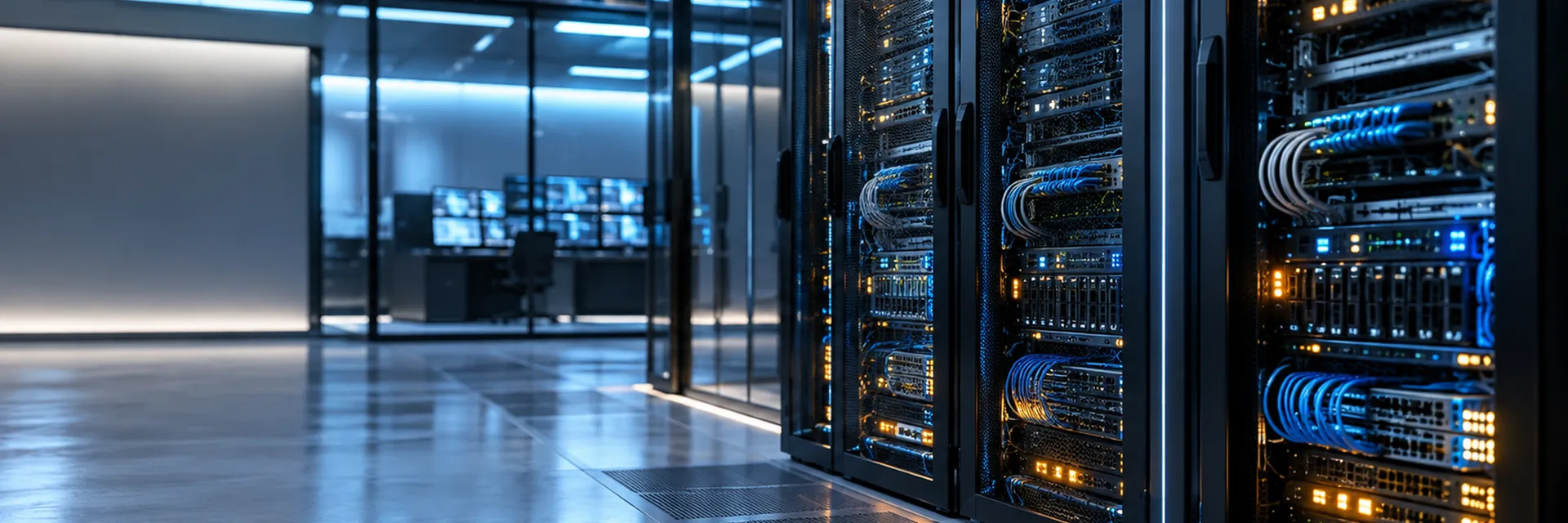
A data center aisle at night, locked server racks with status lights and bundled network cabling, an operations room behind glass — cyber insurance by industry

California commercial insurance

Cyber Insurance California

844-97-USAVE

Cyber risk no longer belongs to any one industry. Ransomware, business email compromise and AI-accelerated phishing now target construction payment workflows, medical practices, escrow closings and freight brokerages with the same intensity attackers once reserved for banks and tech companies. Gleason Insurance Brokers places cyber liability coverage for California businesses across every industry we serve.

  • Ransomware
  • Business Email Compromise
  • Data Breach Response

Reviewed by David Gleason, Principal — October 11, 2026

Next Level Experience. Insurance Done Right.

CaliforniaGeneral information only, not legal advice — illustrative scenarios and coverage, subject to change without notice. Content may be out of date or contain errors, and requirements vary by city, county, state, agency, project, contract, carrier and policy, among other factors; verifying what applies to your own situation is your responsibility. Full disclaimer

Interactive coverage guide

Build a coverage stack around how the business actually operates.

Start with the preselected industry or trade, then adjust the operational questions. The commonly considered stack updates live. Keep the coverages you want GIB to evaluate, remove ones you do not want included in your quote request, and add other available lines before continuing.

Common Starting Coverages

General LiabilityThird-party injury and property damage

What it is

General Liability commonly addresses covered third-party bodily injury, property damage and certain personal or advertising injury claims, subject to the policy.

Why businesses like yours commonly carry it

Businesses commonly use it as a starting liability policy and to satisfy customer, landlord or contract requirements.

Possible coverage gap

General Liability is not intended to replace policies for employee injuries, business vehicles, owned property, cyber events or professional errors.

Learn more about General Liability
Cyber Liability & Data BreachCyber events, data and system interruption

What it is

Cyber insurance may address certain first-party and third-party losses from covered data breaches, cyberattacks, ransomware and system interruption, depending on the policy.

Why businesses like yours commonly carry it

Most California businesses now run payments, records and customer contact through email and cloud systems, which is the exposure a cyber policy is written around.

Possible coverage gap

General Liability generally should not be assumed to address data breach response, ransomware or network interruption.

Learn more about what cyber insurance costs in California

Commonly Added Based on Operations

Business Owners Policy / Commercial PackageLiability and property components evaluated together

What it is

A Business Owners Policy commonly combines liability and property coverages for eligible businesses. A Commercial Package Policy may combine multiple commercial coverage parts depending on the account and carrier.

Why businesses like yours commonly carry it

Businesses with premises, contents, inventory or other property exposures may ask GIB to evaluate whether liability and property components can be packaged where appropriate.

Possible coverage gap

Eligibility, included coverages and package structure vary by carrier. Commercial Property may also be written separately rather than as part of a package.

Learn more about Business Owners Policy / Commercial Package
Commercial Crime / FidelityEmployee theft and certain fraud losses

What it is

Commercial Crime may address certain covered theft, fraud and funds-transfer losses, depending on the selected insuring agreements.

Why businesses like yours commonly carry it

Businesses handling money, inventory, payments or account access commonly consider crime coverage.

Possible coverage gap

Property and cyber policies do not necessarily cover every employee theft or social-engineering loss.

Learn more about Commercial Crime / Fidelity

Exposure-Dependent Coverages

Employment Practices LiabilityEmployment-related allegations

What it is

EPLI may address certain covered employment-related claims such as discrimination, harassment, retaliation or wrongful termination.

Why businesses like yours commonly carry it

Businesses with employees or managers commonly consider employment-practices protection as the workforce grows.

Possible coverage gap

Workers Compensation and General Liability generally do not replace employment-practices coverage.

Learn more about Employment Practices Liability
Umbrella / Excess LiabilityAdditional limits above scheduled liability policies

What it is

Umbrella or Excess Liability may provide additional limits above identified underlying liability policies, subject to its own terms and exclusions.

Why businesses like yours commonly carry it

Businesses with larger contracts, vehicles, public exposure or higher severity potential commonly consider additional limits.

Possible coverage gap

An umbrella does not automatically broaden every exclusion or sit over every policy unless the issued terms say it does.

Learn more about Umbrella / Excess Liability

Loading quote and requirements options…

Educational guidance only. Results are not a coverage recommendation, quote, binder, policy interpretation, or guarantee of coverage. Actual needs, availability, forms, limits, exclusions and requirements vary. A licensed insurance professional should review the complete risk and issued policy terms.

Verified Google reviews

What our cyber insurance clients say about us

5.0 / 5from 7 Google reviews

Reviews reflect individual client experiences and are not a guarantee of coverage, pricing or results.

91 Enterprise LLC

91 Enterprise LLC

March 24, 2026

We are using Gleason insurance for our commercial auto policy and GL policy. David is the best insurance broker I've worked with — very honest, responsive, and knowledgeable. Highly recommend.

Fito Plumbers

Fito Plumbers

February 20, 2026

We have been working with David at Gleason Insurance Brokers for 8+ years. David always goes above and beyond to make sure we have the appropriate coverages. He explains everything in detail and makes sure we feel confident and understand all of our policies. He is always available and responds right away!

Barry Stay

Barry Stay

February 17, 2026

David provides great service and I highly recommend him for your insurance needs.

Why Every California Business Now Faces Real Cyber Risk

The common thread across every industry below isn't a shared technology stack — it's that all of them move money and sensitive information through email, cloud platforms and vendor relationships every single day.

Read more

Attackers don't need to understand your business to exploit that; they only need to compromise one mailbox or one credential at the right moment.

Generative AI has made this worse in a specific, measurable way: phishing emails and impersonation scripts that once carried obvious grammar mistakes or generic phrasing can now be generated in a convincing, business-specific voice in seconds. For more on this shift, see our blog post, How AI Is Changing the Cyber Threat Facing California Businesses.

Every industry below moves money and data through email and cloud tools daily
Attackers need only one compromised credential, not industry expertise
AI-generated phishing now reads as convincing, business-specific communication
The exposure is operational and financial, not only a data-privacy question

What Cyber Liability Insurance Commonly Covers

Cyber liability policies are typically built around several coverage components: data-breach response (forensics, legal, notification, credit monitoring), cyber extortion/ransomware response, network business interruption for lost income during an outage, and — critically for many of the industries below — social engineering and funds-transfer fraud coverage for a fraudulent wire or payment redirection.

Read more

That last component is often the one that matters most in practice. A construction company, escrow office or freight brokerage is far more likely to lose money to a convincing fraudulent payment instruction than to a headline-grabbing consumer data breach — and social-engineering coverage is frequently sublimited well below the policy's stated limit, so it has to be checked explicitly rather than assumed.

Breach response, extortion response and business interruption are core components
Social-engineering/funds-transfer coverage is often the most relevant piece
Sublimits on that coverage are common — confirm them, don't assume them
The right coverage mix depends heavily on how your specific industry operates

Two halves of every cyber policy, and how each one pays

Every cyber policy combines two kinds of protection, and they respond to different events.

Read more

First-party coverage pays the business's own costs: forensic investigation, legal advice, notifying affected people, restoring data, income lost while systems are down and, where the policy includes it and the law allows, an extortion payment. Third-party coverage responds when someone outside the business — a customer, a client, a vendor or a regulator — brings a claim, defense costs or a covered penalty because of the incident.

The practical question is which half a likely loss falls into. A ransomware outage at a restaurant is mostly first-party; a breach of client files at an accounting or design firm can become a third-party claim; a diverted wire usually turns on a separate social-engineering or fraudulent-instruction line. Reading a quote with those three events in mind shows quickly whether the structure fits.

First-party: the business's own response, restoration and lost income
Third-party: claims, defense and covered penalties brought by others
Payment fraud usually sits on its own sublimited line
Test a quote against the three losses most likely for your business

Cyber Insurance by Industry

Cyber exposure looks different across industries — a medical practice's largest risk is patient-record and interruption exposure, a restaurant's is card data and point-of-sale downtime, and a freight broker's is load-board credential theft and carrier-payment fraud.

Read more

Browse all 14 industries, grouped by category with search, in our Cyber Insurance Industries Directory.

Smaller businesses that do not see their industry listed can start with small business cyber insurance in California, and anyone weighing the premium can read what cyber insurance costs and which factors move it. Contractors have two pages: contractor cyber risks explained and the construction cyber liability insurance quote page.

Exposure profiles differ meaningfully across industries
Restaurants and breweries now have their own cyber insurance page
Small businesses and cost questions each have a dedicated guide
Contractors: one explainer page and one quote page

California-Specific Considerations

California tightened its breach-notification law in 2026.

Read more

Under Civil Code section 1798.82, as amended by SB 446 effective January 1, 2026, businesses must notify affected California residents within 30 calendar days of discovering a breach, subject to limited delays, and must send a sample notice to the Attorney General within 15 calendar days of notifying consumers when more than 500 residents are involved.

Businesses that meet the California Consumer Privacy Act's thresholds — adjusted for inflation in 2025, including annual revenue above $26,625,000 — also face a private right of action after certain breaches, with statutory damages of $107 to $799 per consumer per incident or actual damages if greater. These are compliance obligations separate from any insurance purchase: a cyber policy can help fund the response, but it does not satisfy the legal duty. Businesses operating across state lines should confirm which other states' laws apply.

30-calendar-day notice to affected California residents (SB 446)
Sample notice to the Attorney General when over 500 residents are affected
CCPA statutory damages adjusted to $107–$799 per consumer per incident
Insurance funds the response; it does not replace legal compliance

Getting a Cyber Liability Quote

Start by describing how your business actually moves money and data day to day — the platforms you use, the size and frequency of electronic payments, the records you hold, and any security controls (MFA, backups, verification procedures) already in place.

Read more

That operational picture, more than your industry label alone, is what actually drives the right coverage design.

What comes with the policy can differ as much as the wording. Some carriers we work with include risk-management support at no added cost — preventive-security guidance, suggested internal procedures and alerts on current phishing and ransomware activity — though it varies by carrier and is not part of every policy, and at least one national market uses a notably short quote application for eligible businesses.

Gleason Insurance Brokers places cyber liability coverage for California businesses across every industry above — call 844-978-7283 or request a quote to get started.

Describe how money and data actually move through your business day to day
Note payment size/frequency, records held and existing security controls
Your operational profile drives coverage design more than the industry label alone
Request a quote online, or call 844-978-7283

Frequently asked questions

13 questions — start typing to filter

Is cyber security insurance the same as cyber liability insurance?

In practice yes — "cyber security insurance", "cyber liability" and "cyber insurance" are used interchangeably for the same kind of policy, and carriers do not file them under one standard name. What matters is not the label on the quote but which coverage parts are included: first-party response and business interruption, third-party liability, and whether crime exposures like funds transfer fraud are inside the policy or sit on a separate crime form.

What is cyber insurance?

Cyber insurance covers the costs a business faces when its data or systems are attacked, stolen or shut down — incident response and forensics, notifying affected people, restoring data, lost income while you are down, extortion payments where legally permitted, and liability to others whose information you held. General liability generally excludes all of it, which is the gap this policy exists to close. What any individual policy covers depends on its own terms and endorsements.

Is cybersecurity insurance worth it for a small business?

Small businesses are often targeted because they are assumed to have weaker controls, and many response costs do not scale down with headcount: forensics, notifying everyone whose data was held and the income lost while offline. Whether coverage is worth it depends on the data you hold and how much revenue depends on systems staying up. Our small business cyber insurance page walks through it.

Does every California business really need cyber insurance?

Most businesses that move money electronically or hold employee, customer or vendor data have some cyber exposure — the right limit and coverage structure depend on your specific industry and operations, not a blanket rule.

What is the single most common cyber loss across industries?

Business email compromise leading to a fraudulent payment — an attacker impersonates a vendor, lender or executive and redirects a routine payment to a fraudulent account.

Is cyber insurance the same for every industry?

No. A medical practice's biggest exposure is different from a freight broker's or a developer's — see the industry-specific pages above for how coverage priorities shift by business type.

Does general liability or a BOP cover a cyber event?

Generally no. Modern GL and BOP forms typically exclude or narrowly limit data-breach and network-security exposures, which is why a dedicated cyber liability policy is usually needed.

How is artificial intelligence changing this risk?

AI tools have made phishing and impersonation content dramatically more convincing and harder to spot on sight — see How AI Is Changing the Cyber Threat Facing California Businesses for the details.

What should I have ready before requesting a cyber quote?

A description of how your business processes payments and data, the platforms you use, your typical and maximum payment sizes, and current security controls like MFA and backups.

Does cyber insurance cover stolen construction equipment or vehicles?

No — physical theft of equipment or vehicles falls under inland marine, auto or property coverage. Cyber liability addresses data, network-security and payment-fraud events specifically.

Can a small business skip cyber insurance if it feels low-tech?

Usually not safely. Smaller businesses are frequently targeted precisely because they tend to have less robust security controls than larger firms, not because attackers only target large or 'tech' companies.

Do data centers and colocation facilities need a different kind of cyber policy?

Yes — outage severity, operational-technology (OT) exposure and Tech E&O from missed uptime SLAs typically matter more than a traditional privacy breach for this industry. See Data Center Cyber Insurance California for that specific profile.

How much does cyber insurance cost in California?

It depends on revenue, industry, records held, security controls, prior incidents and the limit and retention chosen. Our cyber insurance cost guide explains each factor without quoting a one-size number that would not fit your business.

Official resources

Verify current licensing, regulatory and program requirements directly with the responsible agency — this is general information, not legal advice, requirements change without notice, and what is summarized here may be out of date or contain errors. Confirming what applies to your own city, project, contract and policy is your responsibility.

Updated October 11, 2026