Gleason Insurance Brokers

General Liability · Workers' Comp · Commercial Auto · Pollution Insurance · Surety Bonds Start a Business Insurance Quote Today

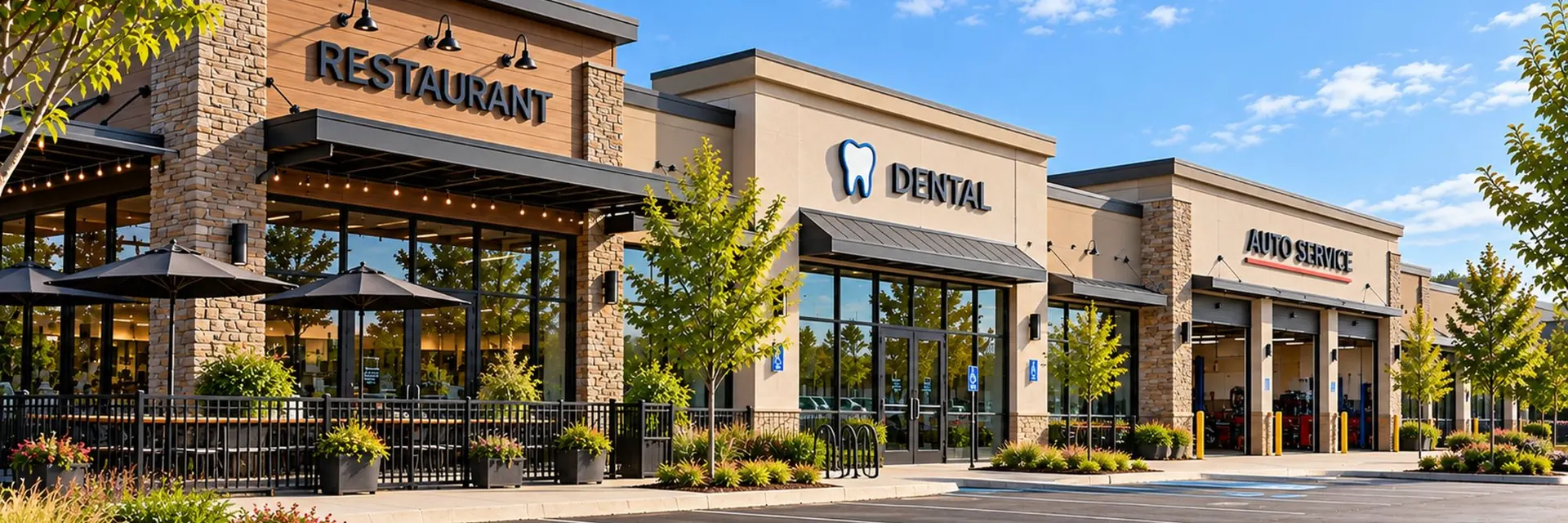
A multi-tenant retail center on a clear day, with a restaurant and its shaded patio, a dental practice and an auto service shop with its bay doors open, side by side along one storefront row

Cover for California businesses

General Liability Insurance California

844-97-USAVE

General liability is the policy a landlord, a franchisor or a customer will ask to see before anything else, and the one most often assumed to be identical from one carrier to the next. Two policies showing the same $1M/$2M limits can respond very differently once a claim, an exclusion or a contract requirement is actually tested.

  • Third-Party Injury
  • Property Damage
  • Defense Costs

Reviewed by David Gleason, Principal — October 11, 2026

Next Level Experience. Insurance Done Right.

CaliforniaGeneral information only, not legal advice — illustrative scenarios and coverage, subject to change without notice. Content may be out of date or contain errors, and requirements vary by city, county, state, agency, project, contract, carrier and policy, among other factors; verifying what applies to your own situation is your responsibility. Full disclaimer

Interactive coverage guide

Build a coverage stack around how the business actually operates.

Start with the preselected industry or trade, then adjust the operational questions. The commonly considered stack updates live. Keep the coverages you want GIB to evaluate, remove ones you do not want included in your quote request, and add other available lines before continuing.

Common Starting Coverages

General LiabilityThird-party injury and property damage

What it is

General Liability commonly addresses covered third-party bodily injury, property damage and certain personal or advertising injury claims, subject to the policy.

Why businesses like yours commonly carry it

Businesses commonly use it as a starting liability policy and to satisfy customer, landlord or contract requirements.

Possible coverage gap

General Liability is not intended to replace policies for employee injuries, business vehicles, owned property, cyber events or professional errors.

Learn more about General Liability

Commonly Added Based on Operations

Cyber Liability & Data BreachCyber events, data and system interruption

What it is

Cyber insurance may address certain first-party and third-party losses from covered data breaches, cyberattacks, ransomware and system interruption, depending on the policy.

Why businesses like yours commonly carry it

Modern businesses commonly rely on email, banking, accounting systems, websites, cloud services and electronic records.

Possible coverage gap

General Liability generally should not be assumed to address data breach response, ransomware or network interruption.

Learn more about small business cyber insurance in California

Exposure-Dependent Coverages

Business Owners Policy / Commercial PackageLiability and property components evaluated together

What it is

A Business Owners Policy commonly combines liability and property coverages for eligible businesses. A Commercial Package Policy may combine multiple commercial coverage parts depending on the account and carrier.

Why businesses like yours commonly carry it

Businesses with premises, contents, inventory or other property exposures may ask GIB to evaluate whether liability and property components can be packaged where appropriate.

Possible coverage gap

Eligibility, included coverages and package structure vary by carrier. Commercial Property may also be written separately rather than as part of a package.

Learn more about Business Owners Policy / Commercial Package
Umbrella / Excess LiabilityAdditional limits above scheduled liability policies

What it is

Umbrella or Excess Liability may provide additional limits above identified underlying liability policies, subject to its own terms and exclusions.

Why businesses like yours commonly carry it

Businesses with larger contracts, vehicles, public exposure or higher severity potential commonly consider additional limits.

Possible coverage gap

An umbrella does not automatically broaden every exclusion or sit over every policy unless the issued terms say it does.

Learn more about Umbrella / Excess Liability

Loading quote and requirements options…

Educational guidance only. Results are not a coverage recommendation, quote, binder, policy interpretation, or guarantee of coverage. Actual needs, availability, forms, limits, exclusions and requirements vary. A licensed insurance professional should review the complete risk and issued policy terms.

Verified Google reviews

What California business owners say about us

5.0 / 5from 7 Google reviews

Reviews reflect individual client experiences and are not a guarantee of coverage, pricing or results.

91 Enterprise LLC

91 Enterprise LLC

March 24, 2026

We are using Gleason insurance for our commercial auto policy and GL policy. David is the best insurance broker I've worked with — very honest, responsive, and knowledgeable. Highly recommend.

Fito Plumbers

Fito Plumbers

February 20, 2026

We have been working with David at Gleason Insurance Brokers for 8+ years. David always goes above and beyond to make sure we have the appropriate coverages. He explains everything in detail and makes sure we feel confident and understand all of our policies. He is always available and responds right away!

Barry Stay

Barry Stay

February 17, 2026

David provides great service and I highly recommend him for your insurance needs.

What general liability actually responds to

General liability answers for bodily injury and property damage you cause to other people, and for personal and advertising injury such as libel or infringing on someone else’s advertising idea.

Read more

For most businesses the everyday version is simpler than it sounds: a customer slips in your dining room, a delivery damages a neighboring tenant’s stock, a product you sold causes harm after it leaves your premises.

It is written around premises, operations and products rather than around any one industry, which is why a clinic, a brewery, a dealership and a software company can all carry the same form and still be underwritten quite differently. What changes is the classification, the revenue and payroll behind it, and the endorsements attached.

Bodily injury and property damage to third parties, on and off your premises
Products and completed operations — harm caused after the sale or the job ends
Personal and advertising injury, including libel, slander and advertising claims
Defense costs, which on many policies sit outside the limit and on some inside it

What it does not cover, which is where most surprises live

The exclusions matter more than the coverage grant, because a business usually discovers them at the worst time.

Read more

Injuries to your own employees belong to workers compensation. Damage you cause while driving belongs to commercial auto. A claim that your professional advice or service was negligent belongs to professional liability. A data breach belongs to a cyber policy. Alcohol-related claims generally need liquor liability.

None of that makes general liability weak; it makes it one part of a program. The practical question on any account is which of those neighboring policies you also need, and whether the gaps between them have been looked at rather than assumed away.

Employee injuries — workers compensation territory
Auto claims — commercial auto, including vehicles you hire or do not own
Professional negligence — errors and omissions
Data breach and network interruption — cyber
Alcohol service — liquor liability, which most general liability forms exclude

How carriers rate it, and what moves the number

Pricing starts with classification: what the business actually does, expressed as a class the carrier has loss data for.

Read more

Revenue or payroll then provides the exposure base, and the limits, deductible and any required endorsements adjust from there. Loss history matters, and so does how clearly the operation is described — an ambiguous description tends to be rated conservatively.

Two details are worth getting right before a submission goes out. First, describe everything the business does, including the small sideline, because an undisclosed operation is the easiest thing for a carrier to decline on later. Second, know what your contracts and leases actually require, since additional insured status and waivers of subrogation are priced rather than free.

Classification, revenue and payroll are the main exposure inputs
Loss runs for the prior three to five years, where they exist
Additional insured and waiver requirements from leases and contracts
Any operation that sits outside the obvious description of the business

Sources for this section

Certificates, additional insured status and what a landlord is really asking

A certificate of insurance is evidence, not coverage.

Read more

It confirms a policy existed on the day it was issued and nothing more. What actually changes your protection is the endorsement behind it: naming a landlord or a customer as an additional insured extends your policy to them for liability arising out of your work or your use of the premises.

The wording matters. Blanket additional insured endorsements apply where a written contract requires it; scheduled ones name the party. Primary and non-contributory wording, and a waiver of subrogation, are separate requests that are frequently bundled into one line of a lease. Reading the requirement before binding is cheaper than discovering the mismatch when a certificate is rejected.

A certificate is evidence a policy existed, not coverage itself
Additional insured status comes from an endorsement, not the certificate
Blanket endorsements apply where a written contract requires the status
Primary and non-contributory wording and waivers are separate requests

Who carries it, and what differs by industry

Almost every commercial operation carries general liability, which is why the form looks the same on a restaurant, a manufacturer and a property manager.

Read more

The difference shows up in which endorsements are attached and which neighboring policies do the real work. A restaurant leans on liquor liability. A technology firm leans on errors and omissions. A dealership leans on garagekeepers and property. A medical group leans on malpractice.

If your business is one of those, the industry page will usually be more use than this one, because it deals with the specific exclusions and endorsements that come up in that trade. This page is for the general case and for working out which of those conversations you need to have.

The form looks similar across industries; the endorsements do not
Restaurants lean on liquor liability, technology firms on errors and omissions
An industry page will usually be more use than this one where it exists

General liability across California’s major markets

California is not one insurance market, and the same business can see very different terms depending on where it operates.

Read more

Los Angeles and Orange County carry the state’s heaviest litigation volume, which tends to show up in both pricing and in how carefully carriers read a submission. The Bay Area adds high property values and dense mixed-use buildings, so the dollar figure behind an ordinary slip or water-damage claim is simply larger. San Diego carries a large hospitality and tourism economy, and the Inland Empire’s warehouse and logistics corridor brings fleet and premises exposures together on one risk.

Inland and northern markets read differently again. Sacramento, Stockton, Modesto and Fresno sit in a region where a single business may serve customers across several counties, which makes the question of where work is actually performed more important than the address on the application. Bakersfield and the southern Central Valley carry industrial and agricultural exposures that some carriers appetite and others do not. None of this changes what general liability covers. It changes who will write it and at what price, which is why the same operation can be straightforward in one county and difficult in the next. For a broader look at liability across a construction business, covering premises, operations, completed work and contracts, see construction liability insurance.

Los Angeles and Orange County: the highest claim frequency and severity in the state
San Francisco, Oakland and San Jose: high values, dense mixed-use premises
San Diego: hospitality, tourism and a large service economy
Inland Empire: warehousing and logistics, premises and fleet on one risk
Sacramento, Stockton, Modesto and Fresno: multi-county service areas

Occurrence coverage, and why the date of the event matters

Most general liability in California is written on an occurrence basis.

Read more

That means the policy generally responding is the one that was in force when the injury or damage happened, not the one in force when the claim arrives. A customer hurt in your store in 2024 who files in 2027 is usually a 2024 policy matter, even if you have since changed carriers or closed. That is a genuinely useful property and it is worth understanding, because it is the opposite of how professional liability and most cyber policies work.

Two practical consequences follow. Old policies still matter, so the declarations pages and the policy numbers are worth keeping well past expiration rather than discarded at renewal. And a gap in coverage is permanent rather than recoverable: a month uninsured is a month of operations with nothing standing behind it, and buying a new policy later does not reach back to cover it.

The policy in force when the damage occurred is generally the one that responds
Keep expired declarations pages; they are the record of which policy applies
A lapse cannot be repaired later, because the new policy starts at its own date
Completed work can generate claims years after the invoice was paid

Where higher limits and extra endorsements tend to show up

The limit a business chooses is frequently not the limit it ends up carrying, because somebody else sets it.

Read more

Commercial leases, vendor and supplier agreements, franchise documents, municipal permits, event licenses and client master agreements all routinely state a required limit and a list of required endorsements. The request often arrives with a deadline attached, which is the worst moment to discover the current policy does not match.

The endorsements asked for are usually a short list, and the wording is where the arguments happen. Additional insured status, primary and non-contributory wording, a waiver of subrogation and a notice-of-cancellation provision cover most of what a contract will name. Not every carrier offers every one of them, and the version a carrier offers may not match the version a contract demands, so reading the two side by side before signing is worth more than any amount of negotiating afterwards.

Commercial leases and the certificate a landlord asks for before handover
Vendor, supplier and client master service agreements
Municipal permits, encroachment permits and event licenses
Franchise agreements, which often name both limits and endorsements
Lender and investor requirements on a financed property

What tends to raise the bar

Where higher limits and extra endorsements are commonly requested

Patterns this agency typically sees, not a statement of what any particular customer, landlord, agency or carrier will ask for.

Customer agreements around two million dollars and up

Larger accounts are where umbrella or excess limits start being written into the insurance exhibit, and where a designated-location aggregate is most often asked for. The figure is a rough threshold we tend to see rather than a rule — plenty of smaller agreements ask for more, and some larger ones ask for less.

Landlords and property management companies

The manager, the building owner and sometimes a lender are commonly all named, and the waiver of subrogation is often mutual. A management company typically has one standard insurance exhibit it applies to every tenant and every vendor, and the lease usually carries it rather than a separate document.

Retail centers, malls and mixed-use buildings

Center rules commonly set named additional insureds and specific limits before anyone is cleared to trade or to work on site, and the requirement frequently comes from the center itself or its property manager rather than from the party you signed with.

High-rise and multi-tenant premises

Height, occupancy and water damage exposure commonly push limits up and bring specific endorsements with them. Building access rules for your own staff and for anyone you send in are frequently a separate document again.

Colleges, universities and school districts

Institutional purchase terms commonly specify limits and endorsements directly, and depending on the work may ask about lines a general liability policy does not carry as standard — professional liability, crime or a fidelity bond among them.

Hospitals and health systems

Vendor credentialing commonly layers its own insurance conditions on top of the contract, checked by a third-party service rather than by the people who hired you, and the conditions frequently differ between facilities inside one system.

Vendor onboarding and compliance portals

Larger customers increasingly hand certificate review to an automated compliance service. It reads the certificate against the agreement and rejects on wording, so a policy that genuinely answers the requirement is commonly turned away over how the endorsement is described rather than over what it does.

Cities, counties and state agencies as customers

A public buyer writes its own wording into the purchase order, and it is rarely identical to what a standard commercial policy already provides. Evidence is usually due on a deadline tied to the award rather than to the start of work.

Licensing boards and regulators

Some professions and some permits carry a minimum limit set by the regulator, entirely separate from anything a customer asks for. It is worth reading that condition as its own document rather than assuming a client contract covers it.

What tends to be asked for alongside the higher limits

Designated-location aggregateCG 25 04
The one that surprises people most. A general aggregate is normally shared across everything running in the policy term, so a claim at one site or on one account can erode the limit the next agreement assumed was there. This sets a separate limit for each designated location instead.
Additional insured — managers or lessors of premisesCG 20 11
The form a landlord or property manager is usually asking for. It reaches their interest in the premises you occupy, which is a narrower thing than being named generally.
Additional insured — designated person or organizationCG 20 26
The broader one a customer, a franchisor or an institution commonly names. Scheduled and blanket versions both exist, and larger agreements often specify which.
Primary and non-contributoryoften CG 20 01
Decides whether your policy responds first or shares with the other party’s own cover. Usually keyed to a written agreement requiring it.
Waiver of subrogationCG 24 04
Gives up the insurer’s right to recover from the other party after paying a claim. Frequently named alongside additional insured status rather than instead of it, and a separate waiver is commonly asked for on the workers compensation policy.
Higher umbrella or excess limits
Commonly the first thing an insurance exhibit raises. If the underlying limits do not match what the umbrella sits above, the tower may not respond the way the agreement assumes.

Two real examples, published by the buyers themselves

Reading an actual insurance clause is worth more than any summary of one. Both of these are public, and they ask for different things — which is the point.

  • City of San Diego — insurance and bonds for vendorsApplies to vendors and services regardless of the dollar amount of the work, with evidence due within ten days of provisional award rather than before work starts. Asks for the CGL on an ISO occurrence form, for primary and non-contributory wording, for additional insured status shown on a separate endorsement page rather than on the certificate, and for a waiver of subrogation on the workers compensation policy.
  • University of California, Irvine — supplier insurance requirementsA purchasing department rather than a permit counter, and the list runs past general liability: professional liability and a fidelity bond or crime coverage both appear, workers compensation turns on whether the supplier has employees at all, and the certificate holder wording is specified down to the mailing address. The page calls its own figures guidelines "subject to change, based upon the specific transaction".

Reading a general liability quote line by line

Two quotes at the same limit and a similar premium can be meaningfully different policies, and the differences are rarely on the first page.

Read more

The classification code decides what the premium is actually buying and whether a claim will be argued later as outside the described operations. The aggregate limit decides how much is available across a whole policy year rather than for one event. Whether defense costs sit outside the limit or erode it changes what the limit is worth in a long matter.

Then the exclusions and the endorsement schedule, which is where most of the real differences live. A quote carrying an exclusion for a service the business actually performs is not a cheaper version of the other quote; it is a different product. Asking for the full form rather than the summary before binding is ordinary diligence, and it is much easier than arguing about the wording during a claim.

Classification: does it describe what the business actually does?
Per-occurrence and aggregate limits, which are two different numbers
Whether defense costs sit inside or outside the limit
The exclusion list, read against the real operations
The endorsement schedule, read against what contracts require

Frequently asked questions

15 questions — start typing to filter

How much general liability does a California business actually need?

The honest answer is that your contracts usually decide it before you do. A commercial lease, a vendor agreement or a franchise contract will typically state a required limit, and that becomes the floor. Beyond the contractual floor the question is what a serious claim could cost relative to the assets of the business, which is where an umbrella is usually a more efficient answer than buying a higher primary limit.

Is general liability required by law in California?

Not generally. Unlike workers compensation, which California requires of any employer with employees, general liability is usually required by a contract rather than by statute — a lease, a customer agreement, a license or a venue. Some licensed activities do carry their own requirements, so the specific license or contract is the place to check.

Does general liability cover my employees if they are hurt at work?

No. Employee injuries fall to workers compensation, and general liability forms exclude them. This is one of the most common misunderstandings we see, and it matters because an uninsured employee injury is both a coverage problem and a compliance problem in California.

What is the difference between a general liability policy and a BOP?

A business owners policy packages general liability with commercial property, and often business interruption, into one contract for an eligible business. Where a business qualifies it is frequently the better buy. Eligibility depends on size, class and the nature of the operation, and larger or more hazardous accounts are generally written on separate policies instead.

Why do two quotes with the same limits come back at different prices?

Because the limits are the least informative part of a quote. Carriers differ on classification, on which endorsements they attach, on whether defense costs erode the limit, on deductibles, and on their appetite for your class at that moment. Comparing quotes on price alone, without comparing the forms, is how a cheaper policy turns out to be a narrower one.

Does general liability follow my business to another state?

Often, but it should be confirmed rather than assumed. Policies carry a coverage territory, and operations in another state may need to be scheduled, rated or written separately. If you work across California, Arizona, Nevada, Texas or Utah, say so on the submission rather than after a loss.

What is products and completed operations coverage?

It is the part of general liability that answers for harm caused after your product is sold or your work is finished — a food product that makes someone ill, an installed item that fails later. It is usually subject to its own aggregate limit, separate from the general aggregate, which is worth checking on a business whose exposure is mostly post-sale.

Can I add a landlord or a customer to my policy?

Usually yes, by additional insured endorsement, and the specific wording is what determines how far that protection reaches. Blanket endorsements apply where a written contract requires the status; scheduled ones name the party. Requirements for primary and non-contributory wording or a waiver of subrogation are separate asks and are not automatic.

What is the difference between the per-occurrence limit and the aggregate?

The per-occurrence limit is the most the policy will generally pay for any one claim; the aggregate is the most it will pay across the whole policy year. A policy written at one million per occurrence and two million aggregate can face several claims in a year and run out, which is why the aggregate matters as much as the headline number. Check both against what your contracts require, because many name only the first.

Does general liability cover damage to a building I rent?

Partly, and the detail is easy to miss. Most forms carry a separate, much smaller limit called damage to premises rented to you, which is commonly aimed at fire damage to space you occupy. It is typically a fraction of the main limit. Damage to your own contents and improvements is normally a property question rather than a liability one, so a lease that makes you responsible for both usually needs both policies.

Do I need general liability before signing a commercial lease?

Usually yes, and usually before you get the keys. Most commercial leases in California require a certificate naming the landlord, often with additional insured status and specific wording, as a condition of handover. The practical advice is to read the insurance clause during negotiation rather than after signing, because the required limits and endorsements are negotiable then and are generally not negotiable once the lease is executed.

What does "primary and non-contributory" mean on a certificate?

It is a request that your policy pay first and that the other party’s policy not be asked to contribute. It is two ideas in one phrase, and both normally require an endorsement rather than being automatic. Carriers differ in whether they offer the wording and in how it is worded, so a contract that names it specifically is worth checking against what your carrier will actually issue before you promise it.

Does general liability cover a product recall?

Generally not. A standard form is aimed at injury or damage caused by a product that has already failed, rather than the cost of withdrawing products from the market before they do. Recall expense is normally a separate coverage. Businesses that manufacture, package, relabel or import goods are the ones most likely to need the distinction explained before they rely on it.

Will one claim raise my premium?

Not necessarily, and the pattern matters more than any single file. A large claim on an otherwise clean record is often absorbed; several small ones in a short period tend to affect pricing and appetite more, because frequency reads as a process problem rather than bad luck. Claims that were reported and closed with no payment still appear on a loss run, which is one reason to be able to explain them.

Can a general liability policy cover work done by people I hire in?

It depends on the form and on who those people are. Some policies extend to work performed on your behalf, and many require that the outside firm carry its own coverage with you named as an additional insured. The reliable approach is to collect their certificates before work starts rather than after, and to confirm the certificate actually shows the endorsements your own contract promised downstream.

Additional official resources

Verify current licensing, regulatory and program requirements directly with the responsible agency — this is general information, not legal advice, requirements change without notice, and what is summarized here may be out of date or contain errors. Confirming what applies to your own city, project, contract and policy is your responsibility.

Updated October 11, 2026