Gleason Insurance Brokers

General Liability · Workers' Comp · Commercial Auto · Pollution Insurance · Surety Bonds Start a Business Insurance Quote Today

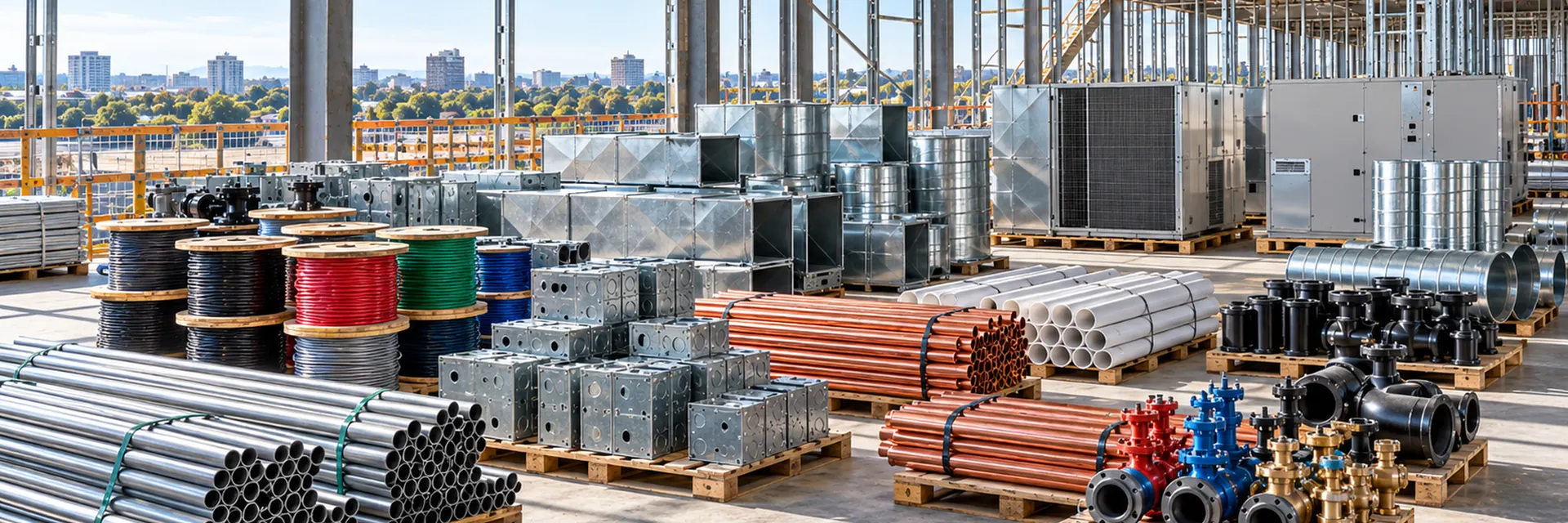
Construction materials staged on pallets inside an unfinished building: wire spools, electrical boxes, copper and PVC pipe, duct sections and rooftop air-handling units — installation floater and

California commercial insurance

Installation Floater & Materials-in-Transit Insurance CA

844-97-USAVE

An installation floater isn't simply "tools insurance for materials." The difficult claims usually arise at the boundaries: when did coverage start, when does it end, and was the property still material awaiting installation or already part of the completed structure?

  • Materials in Transit
  • Installation Floater
  • Offsite Storage

Reviewed by David Gleason, Principal — October 11, 2026

Next Level Experience. Insurance Done Right.

CaliforniaGeneral information only, not legal advice — illustrative scenarios and coverage, subject to change without notice. Content may be out of date or contain errors, and requirements vary by city, county, state, agency, project, contract, carrier and policy, among other factors; verifying what applies to your own situation is your responsibility. Full disclaimer

Interactive coverage guide

Build a coverage stack around how the business actually operates.

Start with the preselected industry or trade, then adjust the operational questions. The commonly considered stack updates live. Keep the coverages you want GIB to evaluate, remove ones you do not want included in your quote request, and add other available lines before continuing.

Common Starting Coverages

General LiabilityThird-party injury and property damage

What it is

General Liability commonly addresses covered third-party bodily injury, property damage and certain personal or advertising injury claims, subject to the policy.

Why businesses like yours commonly carry it

Businesses commonly use it as a starting liability policy and to satisfy customer, landlord or contract requirements.

Possible coverage gap

General Liability is not intended to replace policies for employee injuries, business vehicles, owned property, cyber events or professional errors.

Learn more about General Liability

Commonly Added Based on Operations

Contractor Equipment / Inland MarineMobile tools, equipment and property away from premises

What it is

Inland Marine is commonly used for tools, equipment and certain mobile property that moves between locations or jobsites.

Why businesses like yours commonly carry it

Contractors frequently move tools, testing equipment and mobile machinery among jobsites.

Possible coverage gap

General Liability should not be assumed to insure the business's own tools and equipment against theft or physical damage.

Learn more about Contractor Equipment / Inland Marine
Cyber Liability & Data BreachCyber events, data and system interruption

What it is

Cyber insurance may address certain first-party and third-party losses from covered data breaches, cyberattacks, ransomware and system interruption, depending on the policy.

Why businesses like yours commonly carry it

Contractors commonly use email, electronic banking, project platforms, payroll systems and cloud document storage.

Possible coverage gap

General Liability generally should not be assumed to address data breach response, ransomware or network interruption.

Learn more about cyber insurance for contractors

Exposure-Dependent Coverages

Installation FloaterMaterials awaiting or undergoing installation

What it is

An Installation Floater may cover certain materials and equipment in transit, temporary storage and during installation, subject to the policy.

Why businesses like yours commonly carry it

Businesses responsible for materials before final installation commonly consider this coverage.

Possible coverage gap

A basic liability policy generally should not be assumed to cover the insured's materials against physical loss before installation is complete.

Learn more about Installation Floater
Builder's RiskProject property during construction

What it is

Builder's Risk may insure covered buildings, materials and certain project property while construction is underway.

Why businesses like yours commonly carry it

Owners, developers and contractors commonly consider it when a structure or major renovation is exposed during construction.

Possible coverage gap

Commercial Property and General Liability are not automatic substitutes for course-of-construction property coverage.

Learn more about Builder's Risk
Contractors Pollution LiabilityPollution conditions and cleanup liability

What it is

Pollution Liability may address covered cleanup costs and third-party injury or property damage arising from pollution conditions.

Why businesses like yours commonly carry it

Businesses working with fuels, chemicals, soil, water, demolition or environmental conditions may have pollution exposures.

Possible coverage gap

Standard General Liability commonly contains pollution exclusions or limitations.

Learn more about Contractors Pollution Liability
Umbrella / Excess LiabilityAdditional limits above scheduled liability policies

What it is

Umbrella or Excess Liability may provide additional limits above identified underlying liability policies, subject to its own terms and exclusions.

Why businesses like yours commonly carry it

Businesses with larger contracts, vehicles, public exposure or higher severity potential commonly consider additional limits.

Possible coverage gap

An umbrella does not automatically broaden every exclusion or sit over every policy unless the issued terms say it does.

Learn more about Umbrella / Excess Liability

Loading quote and requirements options…

Educational guidance only. Results are not a coverage recommendation, quote, binder, policy interpretation, or guarantee of coverage. Actual needs, availability, forms, limits, exclusions and requirements vary. A licensed insurance professional should review the complete risk and issued policy terms.

Verified Google reviews

What contractors say about us

5.0 / 5from 7 Google reviews

Reviews reflect individual client experiences and are not a guarantee of coverage, pricing or results.

91 Enterprise LLC

91 Enterprise LLC

March 24, 2026

We are using Gleason insurance for our commercial auto policy and GL policy. David is the best insurance broker I've worked with — very honest, responsive, and knowledgeable. Highly recommend.

Fito Plumbers

Fito Plumbers

February 20, 2026

We have been working with David at Gleason Insurance Brokers for 8+ years. David always goes above and beyond to make sure we have the appropriate coverages. He explains everything in detail and makes sure we feel confident and understand all of our policies. He is always available and responds right away!

Barry Stay

Barry Stay

February 17, 2026

David provides great service and I highly recommend him for your insurance needs.

Why Installation Floater & Materials-in-Transit Insurance Needs Its Own Equipment Conversation

A contractor orders switchgear, pipe, HVAC equipment, pumps, solar components or fabricated material. That property may sit at a supplier, move by truck, wait at a contractor yard, be staged at the project, be partially installed, undergo testing, and remain at risk until the owner accepts the work.

The insurance needs to match that entire chain. Gaps commonly appear when the form covers jobsite property but not offsite storage, covers transit but not certain conveyances, or terminates coverage earlier than the contract's actual acceptance process.

Coverage boundaries — start, end, and what counts as "installed" — decide most disputes
The insurance needs to follow the material's full trip, not just the jobsite moment
Gaps commonly appear at offsite storage, unusual transit, or early termination
The headline limit matters less than exactly where coverage starts and stops

What Inland Marine Typically Covers

Materials can be damaged by collision, overturn, theft, fire, loading, unloading or improper handling. Many forms have specific restrictions involving air transit, waterborne property or property being worked on underground — a contractor moving pipe by truck presents a different exposure than moving equipment by barge.

The physical value of a component may understate the real loss: if installed material is damaged, the contractor may need to remove damaged work, buy replacement material, pay expedited freight and repeat labor already performed. The limit should reflect that full exposed value, not just supplier invoices.

Transit coverage varies materially by mode — truck, air and waterborne aren't equivalent
Offsite storage often needs its own sublimit, not just jobsite coverage
Labor, overhead and reinstallation cost can exceed the material's invoice value
The form should reflect the full exposed value, not just the purchase price

Where the Exposure Commonly Shows Up

Pipe, switchgear, HVAC units and fixtures are different from excavators and tools — the first group is generally intended to become part of the project, the second helps perform the work and remains the contractor's equipment. A contractors-equipment floater isn't the right coverage for $500,000 of customer-specific equipment waiting to be installed.

Mechanical, electrical, process and specialty contractors should confirm when testing begins and whether the policy has testing restrictions — a pump damaged during ordinary installation is different from one damaged while being energized, pressure-tested or commissioned. Windows and doors are the textbook case for this: high value, easily broken, and often sitting on site for weeks before they are hung — window and door suppliers and the contractors installing their product can both have an interest in the same pane of glass. Pool builders have their own version of this exposure, with pumps, heaters and filtration on site before startup, covered on installation floater coverage for pool contractors.

Materials awaiting installation and contractor equipment are different property classes
The same contractor often genuinely needs both coverages, not just one
Testing and commissioning can fall outside a basic installation form
Confirm whether hot testing, pressure testing or startup is contemplated by the form

Common Exclusions to Confirm, Not Assume

Some installation forms restrict property while being worked on underground — a sewer contractor laying pipe or an electrical contractor pulling underground feeders shouldn't assume the same language used for interior HVAC equipment is adequate.

Water causes are not one issue either: a burst pipe that damages stored fixtures is different from river flooding, groundwater infiltration or contamination before installation, and a policy can treat those causes very differently.

Flood, surface water and mud can be treated differently by the same policy
Underground and waterborne equipment often face specific restrictions
Mechanical/electrical breakdown is usually separate from direct physical damage
Employee theft, unattended-vehicle property and equipment rented to others are common gaps

A Realistic Equipment Loss Scenario for Installation Floater & Materials-in-Transit Insurance

Equipment arrives six months before installation and is stored offsite — the contractor's installation limit is adequate, but the offsite-storage sublimit is not, exposing the gap only after a loss.

In a separate pattern, pipe is being worked on underground when a loss occurs, and the form contains an underground restriction that was never discussed during the underwriting conversation.

This is offered as a general, illustrative example of how this type of situation commonly plays out — not a specific case, and not a promise of how any real claim would be decided. For an actual situation, the specific policy language and a licensed attorney or the relevant regulatory authority are the right resources, not this page.

An adequate installation limit doesn't guarantee an adequate offsite-storage sublimit
Underground restrictions are easy to miss until a loss actually occurs underground
Testing-stage damage can fall outside a policy's ordinary installation language
This is illustrative — real claims depend on the actual policy and facts

Getting Equipment Coverage That Fits Installation Floater & Materials-in-Transit Insurance

Prepare a description of materials, maximum value at one job, maximum value in transit and in temporary storage, storage locations, transportation method, and whether the work is underground or waterborne.

Gleason Insurance Brokers places contractor equipment and inland marine coverage across California — call 844-978-7283 or request a quote with your current equipment schedule.

For a deeper look at how equipment values, limits and claims actually work, see our equipment limits and claims guide.

Document maximum value at one job, in transit, and in temporary storage
Disclose storage locations, transportation method and testing/commissioning activity
Note whether work is underground or waterborne
Call 844-978-7283 or request a quote to get started

Frequently asked questions

8 questions — start typing to filter

What is an installation floater?

It is inland marine coverage designed for covered materials, fixtures and equipment while they are being transported, stored, installed and, depending on the form, through specified stages of completion or acceptance.

Is an installation floater the same as builders risk?

No. Builders risk generally covers the broader construction project, while an installation floater is commonly used by contractors for property they are installing — the policies can overlap, so project documents should be reviewed.

Are materials covered while stored offsite?

They may be, but offsite storage can have separate limits, scheduled-location requirements or security conditions.

Does installation floater cover property in transit?

Often it can, but the mode of transit and policy restrictions matter — air transit and waterborne property are examples that may require special review.

Are underground materials automatically covered?

No. Some installation forms restrict or exclude materials while being worked on underground — underground installation should be specifically disclosed.

Does the policy cover labor already invested in installed property?

It may, depending on how covered property and value are defined — labor, overhead and reinstallation expense should be reviewed when selecting limits.

When does installation floater coverage stop?

Termination provisions vary and may relate to completion, acceptance, occupancy or intended use — the policy should be compared with the construction contract.

Does installation coverage protect the contractor's excavators and tools?

Not usually as the primary purpose. Contractor equipment and installation materials are different property classes and may need separate inland marine coverages.

Official resources

Verify current licensing, regulatory and program requirements directly with the responsible agency — this is general information, not legal advice, requirements change without notice, and what is summarized here may be out of date or contain errors. Confirming what applies to your own city, project, contract and policy is your responsibility.

Updated October 11, 2026