
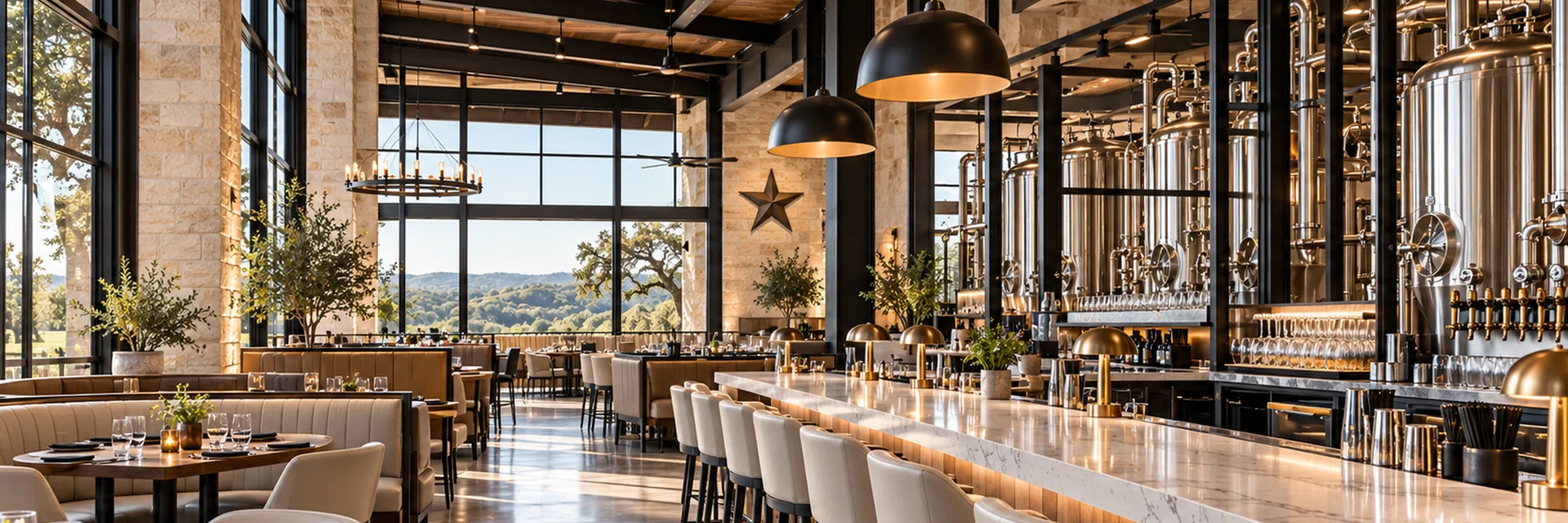
Restaurant and brewery risk in Houston
Restaurants and breweries in Houston carry exposures a generic business owner's policy often misses — liquor liability tied to alcohol service, spoilage from refrigeration failure, and equipment breakdown on kitchen and brewing equipment. Alcohol insurance is the usual phrase in the Houston market, where a restaurant group running several locations needs the alcohol exposure described per site rather than in aggregate.
The baseline for a Houston restaurant or brewery is general liability and property — the specialized endorsements are what protect it day to day. This is exactly how a business ends up finding a gap — on the one day it actually needed that specific coverage.
A concrete version of this: a Houston brewery taproom near the Ship Channel with wholesale distribution carries different transit and product exposure than an inside-the-loop restaurant with only dine-in and delivery service, and both share the same Gulf Coast hurricane property exposure that needs its own confirmed windstorm terms. Ground-up restaurant projects in Houston are usually insured on the owner's side as development risk, described on Houston developer and subdivider coverage.
Liquor liability and licensing
Any Houston restaurant or brewery serving alcohol needs liquor liability coverage, tied to licensing through the Texas Alcoholic Beverage Commission (TABC) — Texas's real state alcohol authority, separate from the trade-specific TDLR/TSBPE licenses that apply to electricians and plumbers, not restaurants.
As its own separate coverage from general liability, liquor liability is worth verifying directly, not taking for granted. Confirming this before the license is finalized avoids a gap that only becomes visible after an incident occurs.
Houston licensing runs through TABC's Houston Regional Office (Region 3, on NW Freeway), which handles the state-level license, while Harris County's own Tax Office separately administers county renewal questions and local fees — two different offices for two different parts of the same overall requirement, not a single point of contact.
Houston has no formal zoning ordinance, which affects site selection and lease review more than day-to-day operations, and Gulf Coast named-storm/hurricane exposure is a real, recurring property and business-interruption consideration for any Houston-area food-and-beverage location, worth confirming on the property side alongside standard liability coverage.
Sources for this section
- Texas Alcoholic Beverage Commission (TABC)Verified 2026-09-02
Core coverage for a food-and-beverage business
Workers compensation for a Houston restaurant or brewery with employees is not mandated at the state level — private employers can opt out, though most GCs and lenders require it by contract.
For a food-and-beverage operation, spoilage and equipment breakdown coverage matter just as much as liability — one refrigeration or fryer failure can be a major loss by itself. These two coverages rank among the most frequently assumed — and least frequently actually confirmed — parts of the program.
Lease and franchise requirements
Landlords, franchisors and distribution partners in Houston routinely set their own insurance requirements through the lease or contract.
Additional insured status and specific limits are set by the contract, not automatic — read the actual lease or contract's insurance requirements to confirm. First-time operators moving into a new location tend to overlook this step more than most. Before construction starts on a new location in Houston, ask your contractor for a certificate; contractor insurance in Houston explains what it should show.
Getting coverage in place
Tell us the real picture of your Houston operation: alcohol service, kitchen equipment, seating capacity, and any lease or franchise insurance requirements already in place.
Restaurant and brewery coverage for Houston is placed as part of our broader Texas practice — call 844-978-7283 or request a quote to get started.
Health, fire and business licensing in Houston
Beyond TABC licensing, a Houston food-and-beverage operation needs a food permit from Houston Health Department — Food Permits, fire/occupancy sign-off from the Houston Fire Department, and confirmation of the City of Houston (no separate general business license required for most restaurants beyond permits) — Texas's lack of a statewide business license means this varies by city.
For most private Texas employers, workers compensation is optional (non-subscriber status); opting out doesn't eliminate injury exposure, it just moves it into civil liability. Confirm your actual coverage decision is reflected accurately in the program, not left ambiguous.
Sources for this section
- Houston Health Department — Food PermitsVerified 2026-09-02
Houston restaurant & brewery submission checklist
Have the following ready for a Houston submission:
Frequently asked questions
8 questions — start typing to filter
Is workers compensation required for a Houston restaurant or brewery?
Workers compensation is not mandated at the state level — private employers can opt out, though most GCs and lenders require it by contract for Texas employers — apply that to your actual Houston staffing.
Do landlords in Houston require specific insurance from restaurant tenants?
Often, yes — commercial leases in Houston frequently require specific liability limits and additional insured status naming the landlord; read the actual lease before assuming standard coverage satisfies it.
Is TABC the right agency for a Houston restaurant's liquor license?
Yes — the Texas Alcoholic Beverage Commission (TABC) is the state's actual alcohol authority. TDLR and TSBPE license specific trades (electricians, plumbers), not restaurants or breweries — a distinction worth getting right.
Does Gleason Insurance Brokers write restaurant and brewery coverage in Houston, TX?
Yes — we're licensed in California, Arizona, Nevada, Texas and Utah, and place coverage for Houston restaurants, bars and breweries directly. For a Houston operation that usually means working through liquor liability, property and kitchen or brewing equipment, workers compensation, and the commercial auto or umbrella layers a delivery, catering or taproom operation adds — the mix depends on how the business actually runs.
Does a Houston restaurant or brewery need separate property coverage for the building itself?
If you own the building in Houston, yes — commercial property coverage protects the structure itself, separate from the business personal property, equipment and liability coverages that protect the operation.
How quickly can coverage be put in place for a Houston restaurant or brewery?
Timing depends heavily on submission completeness and the specific coverage requested — simpler programs typically move faster than ones involving bonds or larger fleets. Coverage involving bonds, public works, or larger fleets typically takes longer to underwrite than a standard general liability policy.
Does Gleason Insurance Brokers need to visit my Houston location in person?
No — coverage is arranged remotely in the vast majority of cases, based on the information you provide. The same standard applies whether you're down the street or across the state.
Does a Houston brewery taproom need different coverage than a restaurant?
Yes — a taproom or production brewery carries manufacturing and equipment exposure (brewing systems, CO2, kegging) beyond the liquor liability both share with a straight restaurant. Describe your actual operation type rather than a generic label.