Gleason Insurance Brokers

General Liability · Workers' Comp · Commercial Auto · Pollution Insurance · Surety Bonds Start a Business Insurance Quote Today

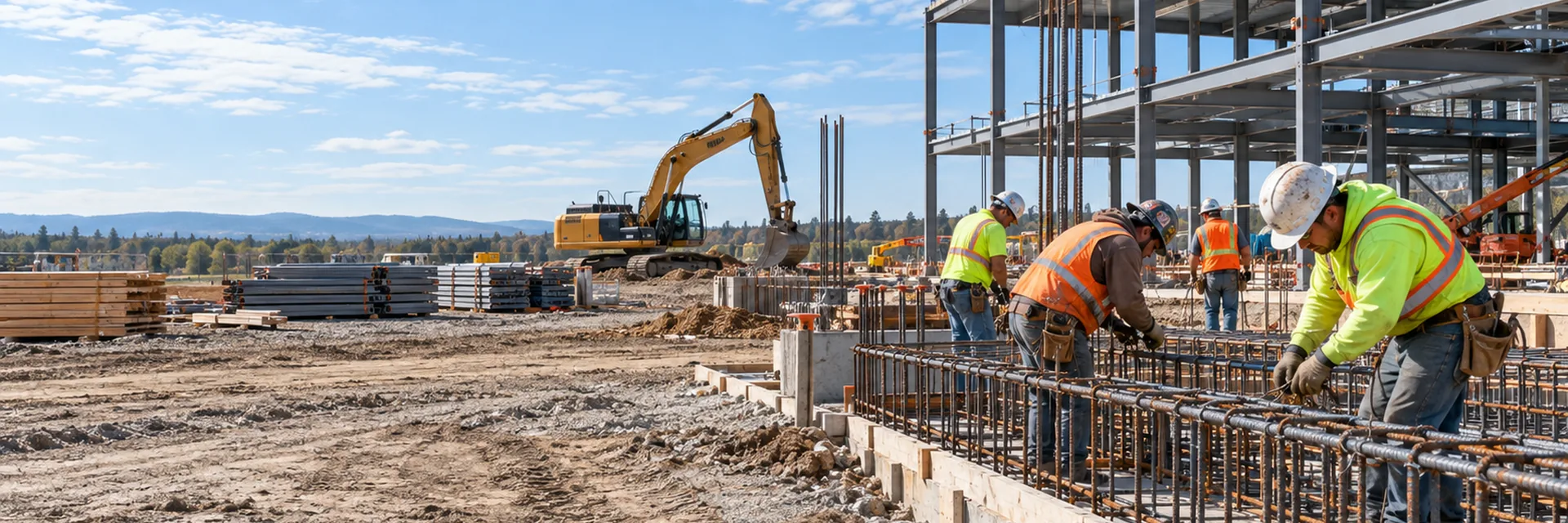
A construction crew working together on an active job site — workers compensation insurance for Texas contractors

Texas commercial insurance

Texas — Workers Compensation Insurance

844-97-USAVE

Texas is one of the few states where workers compensation is optional for most private employers — the opposite default from California, Arizona and Nevada. Opting out has real consequences of its own, which is worth understanding before deciding either way. Working with an independent agency licensed across Texas instead of a single-carrier agent means faster comparisons and more affordable options for your construction projects.

  • Non-Subscriber Status
  • Contract Requirements
  • Optional for Most Employers

Reviewed by David Gleason, Principal — October 11, 2026

Next Level Experience. Insurance Done Right.

TexasGeneral information only, not legal advice — illustrative scenarios and coverage, subject to change without notice. Content may be out of date or contain errors, and requirements vary by city, county, state, agency, project, contract, carrier and policy, among other factors; verifying what applies to your own situation is your responsibility. Full disclaimer

Interactive coverage guide

Build a coverage stack around how the business actually operates.

Start with the preselected industry or trade, then adjust the operational questions. The commonly considered stack updates live. Keep the coverages you want GIB to evaluate, remove ones you do not want included in your quote request, and add other available lines before continuing.

Common Starting Coverages

General LiabilityThird-party injury and property damage

What it is

General Liability commonly addresses covered third-party bodily injury, property damage and certain personal or advertising injury claims, subject to the policy.

Why businesses like yours commonly carry it

Businesses commonly use it as a starting liability policy and to satisfy customer, landlord or contract requirements.

Possible coverage gap

General Liability is not intended to replace policies for employee injuries, business vehicles, owned property, cyber events or professional errors.

Learn more about General Liability

Commonly Added Based on Operations

Cyber Liability & Data BreachCyber events, data and system interruption

What it is

Cyber insurance may address certain first-party and third-party losses from covered data breaches, cyberattacks, ransomware and system interruption, depending on the policy.

Why businesses like yours commonly carry it

Modern businesses commonly rely on email, banking, accounting systems, websites, cloud services and electronic records.

Possible coverage gap

General Liability generally should not be assumed to address data breach response, ransomware or network interruption.

Learn more about small business cyber insurance in California

Exposure-Dependent Coverages

Business Owners Policy / Commercial PackageLiability and property components evaluated together

What it is

A Business Owners Policy commonly combines liability and property coverages for eligible businesses. A Commercial Package Policy may combine multiple commercial coverage parts depending on the account and carrier.

Why businesses like yours commonly carry it

Businesses with premises, contents, inventory or other property exposures may ask GIB to evaluate whether liability and property components can be packaged where appropriate.

Possible coverage gap

Eligibility, included coverages and package structure vary by carrier. Commercial Property may also be written separately rather than as part of a package.

Learn more about Business Owners Policy / Commercial Package
Umbrella / Excess LiabilityAdditional limits above scheduled liability policies

What it is

Umbrella or Excess Liability may provide additional limits above identified underlying liability policies, subject to its own terms and exclusions.

Why businesses like yours commonly carry it

Businesses with larger contracts, vehicles, public exposure or higher severity potential commonly consider additional limits.

Possible coverage gap

An umbrella does not automatically broaden every exclusion or sit over every policy unless the issued terms say it does.

Learn more about Umbrella / Excess Liability

Loading quote and requirements options…

Educational guidance only. Results are not a coverage recommendation, quote, binder, policy interpretation, or guarantee of coverage. Actual needs, availability, forms, limits, exclusions and requirements vary. A licensed insurance professional should review the complete risk and issued policy terms.

Verified Google reviews

What California business owners say about us

5.0 / 5from 7 Google reviews

Reviews reflect individual client experiences and are not a guarantee of coverage, pricing or results.

91 Enterprise LLC

91 Enterprise LLC

March 24, 2026

We are using Gleason insurance for our commercial auto policy and GL policy. David is the best insurance broker I've worked with — very honest, responsive, and knowledgeable. Highly recommend.

Fito Plumbers

Fito Plumbers

February 20, 2026

We have been working with David at Gleason Insurance Brokers for 8+ years. David always goes above and beyond to make sure we have the appropriate coverages. He explains everything in detail and makes sure we feel confident and understand all of our policies. He is always available and responds right away!

Barry Stay

Barry Stay

February 17, 2026

David provides great service and I highly recommend him for your insurance needs.

Why Texas workers comp works differently

Unlike most states, Texas doesn't require private employers to carry workers compensation — employers who choose not to carry it are called "non-subscribers," and this is a lawful choice under Texas law, not a compliance gap by itself.

This is a genuine, significant difference from California, Arizona and Nevada, where coverage is mandatory once there's an employee — don't assume Texas rules mirror those states.

The actual statutory framework is Labor Code Chapter 406 (the Texas Workers' Compensation Act). An employer electing not to carry coverage must notify the Texas Department of Insurance, Division of Workers' Compensation (TDI-DWC) under §406.004, and non-subscriber employers file an annual Report of Non-Coverage (Form DWC-005) confirming their status — this isn't just an informal choice, it's a real filing requirement most non-subscribers aren't aware of until it's missed. Whether or not you subscribe to workers comp, injuries to people who are not your employees are handled separately, under Texas general liability insurance.

Workers comp is optional for most private Texas employers
Employers who opt out are called "non-subscribers"
This is lawful under Texas law, not a compliance gap
A real, significant difference from CA/AZ/NV's mandatory requirement

What opting out (non-subscriber status) actually means

Non-subscriber employers lose certain traditional legal defenses in a workplace injury lawsuit — Texas law removes some common defenses (like contributory negligence) specifically for non-subscribers, which changes the litigation risk profile compared to carrying coverage.

Many non-subscriber employers carry an occupational accident policy or similar alternative coverage to manage this exposure — the decision to opt out isn't the same as having no risk management plan for workplace injuries at all.

Non-subscribers lose certain traditional legal defenses
This changes litigation risk compared to carrying standard coverage
Many non-subscribers carry alternative coverage instead
Opting out isn't the same as having no injury risk plan

When Texas contracts still require workers compensation

Many general contractors, especially on larger commercial and public projects, require subcontractors to carry workers compensation as a condition of the work — regardless of Texas law making it optional generally.

A contract requirement layered on top of optional state law isn't a conflict — it's simply an additional, contract-specific obligation that has to be satisfied to win or keep the work.

Many GCs require WC as a subcontract condition regardless of state law
This is common on larger commercial and public Texas projects
A contract requirement doesn't conflict with optional state law
Read the actual contract before assuming state law settles the question

Deciding whether to carry coverage

The decision involves weighing the cost of coverage against the litigation exposure of non-subscriber status, current and likely future contract requirements, and the practical reality of competing for work where GCs require it.

This is a genuine business decision, not just an insurance transaction — worth discussing directly with a broker who can lay out both paths clearly rather than assuming one is obviously correct.

Weigh coverage cost against non-subscriber litigation exposure
Consider current and likely future contract requirements
Many contracts simply require it, making the decision practical
Discuss both paths directly rather than assuming one is obvious

A realistic scenario: a misclassified crew

A Texas contractor with field labor and office staff often reports the whole payroll under a single classification code rather than splitting field and clerical duties the way the policy is actually rated.

A concrete version of this: a Texas contractor who does carry coverage (rather than opting out) reports a mixed framing-and-punch-out crew of 10 entirely under one labor code, when 3 of those workers spend most of their time on lower-hazard finish work that should be coded separately. The blended code overstates premium — and because Texas's non-subscriber option means fewer contractors carry coverage at all, carriers scrutinize the submissions they do see more closely, not less.

Illustrative only — this describes a typical pattern, not an actual case or guaranteed outcome. Combining classification codes usually means overpaying on the clerical portion of payroll and can also complicate a claim if the injured worker's actual duties don't match the code reported. Report payroll by the classification each employee actually works, not one blended code.

Combining classification codes often means overpaying on clerical payroll
A mismatched code can complicate a claim after an injury
Report payroll by actual duties, not one blended code
Confirm the classification with the carrier and rating bureau before binding

Getting Texas workers compensation coverage in place

If workers compensation fits your operations or contract requirements, share your current payroll and employee count so the quote reflects real exposure.

Gleason Insurance Brokers places workers compensation for Texas contractors who choose to carry it — call 844-978-7283 or request a quote to discuss your specific situation.

Share current payroll and employee count if pursuing coverage
We can discuss both subscriber and non-subscriber considerations
Coverage available across CA, AZ, NV, TX and UT
Request a quote online, or call 844-978-7283

Exclusions and exposures that matter in Texas workers comp

A Texas non-subscriber doesn't eliminate injury exposure — it shifts it from the workers' comp system into ordinary civil liability, where a workplace injury lawsuit can seek damages a workers' comp claim never would (pain and suffering, punitive damages). Many non-subscribers pair an occupational accident policy with a strong general liability and umbrella program specifically to address this shifted exposure, since standard GL wasn't built for employee-injury claims either.

Gulf Coast and hurricane-exposed regions can see a spike in post-storm cleanup and repair work staffed quickly — classification accuracy for that surge work matters as much as for standing crews, and often gets overlooked in the rush.

Opting out shifts injury exposure into civil liability, not away entirely
Occupational accident policies plus strong GL/umbrella are common non-subscriber pairings
Post-storm surge staffing still needs accurate classification, not just standing crews
A written safety and injury-response plan matters more for non-subscribers, not less

Texas workers comp / non-subscriber submission checklist

Whether carrying coverage or operating as a non-subscriber, have the following ready:

Current subscriber status (carrying coverage vs. non-subscriber) and, if non-subscriber, your written injury-benefit plan
Payroll by classification code if carrying standard coverage
3-year loss run or claims history, with a short explanation for any claim
Written safety program and incident-reporting protocol — especially important for non-subscribers
Any occupational accident policy or umbrella coverage carried alongside non-subscriber status

Frequently asked questions

10 questions — start typing to filter

Is workers compensation required for Texas employers?

No — Texas is one of the few states where it's optional for most private employers, the opposite default from California, Arizona and Nevada.

What does it mean to be a Texas "non-subscriber"?

It's the term for an employer who chooses not to carry workers compensation, a lawful option under Texas law — but one that removes certain traditional legal defenses in a workplace injury lawsuit.

Can a general contractor require me to carry workers comp in Texas even though it's optional by law?

Yes — many GCs require it as a subcontract condition, especially on larger commercial and public projects, regardless of the general state-law option to opt out.

What happens if I opt out of workers comp and an employee is injured?

As a non-subscriber, certain traditional legal defenses are unavailable in a resulting lawsuit under Texas law — many non-subscriber employers manage this risk with occupational accident or similar alternative coverage.

Should I carry workers comp in Texas even if my current contracts don't require it?

That's a genuine business decision weighing coverage cost against non-subscriber litigation exposure and likely future contract requirements — worth discussing directly with a broker.

Do all Texas contractors handle this decision the same way?

No — it depends on the specific business's risk tolerance, typical clients, and whether the contracts being pursued require it. There's no single right answer for every Texas contractor.

Does Gleason Insurance Brokers place workers compensation for Texas contractors?

Yes — for contractors who choose to carry it, alongside general liability and other coverage across our five licensed states.

Should a Texas contractor use an insurance agent or an independent broker for workers comp?

An independent broker is usually the stronger fit for workers comp specifically — where an agent is limited to one carrier's appetite and rates, Gleason Insurance Brokers can shop your Texas workers comp submission across multiple markets and bring back real, comparable options rather than a single quote.

Does a documented safety program matter in Texas, where coverage is optional?

It can matter more here than elsewhere. Because Texas does not require private employers to carry coverage, an employer that elects non-subscriber status gives up certain legal defenses in a workplace injury lawsuit, which puts more weight on documented safety practice rather than less. For employers who do carry coverage, carriers generally expect the same written program and incident reporting as any other state. Either way, general contractors on larger commercial and public projects frequently require coverage by contract regardless of what state law permits, and the safety file is usually part of that prequalification.

If I opt out of Texas workers comp, am I protected from injury claims?

Not entirely — opting out shifts injury exposure from the workers' comp system into ordinary civil liability, where an injured worker can sue for damages a workers' comp claim wouldn't include. Many non-subscribers pair an occupational accident policy with strong general liability and umbrella coverage specifically to address that shifted exposure.

Additional official resources

Verify current licensing, regulatory and program requirements directly with the responsible agency — this is general information, not legal advice, requirements change without notice, and what is summarized here may be out of date or contain errors. Confirming what applies to your own city, project, contract and policy is your responsibility.

Updated October 11, 2026