Gleason Insurance Brokers

Restaurant & Brewery Insurance · Liquor Liability · General Liability · Workers' Comp Start a Business Insurance Quote Today

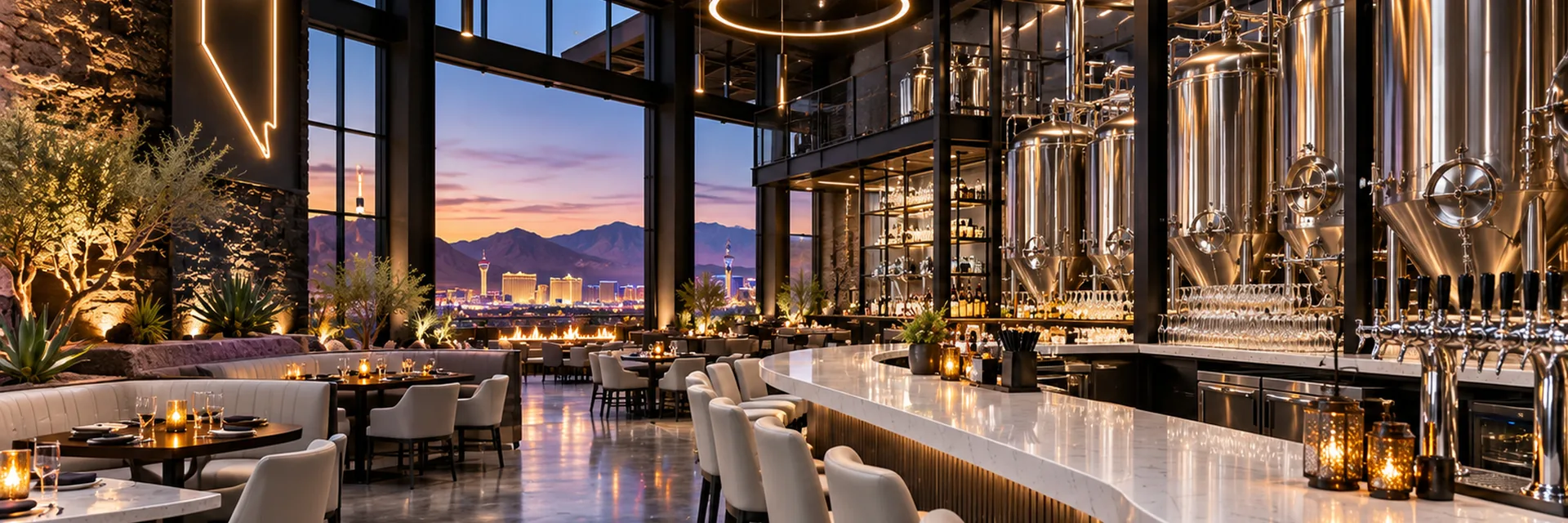
A Nevada restaurant and brewery interior at dusk, a curved marble bar and brewing tanks with windows onto the Las Vegas skyline and the mountains beyond — restaurant and brewery insurance for Nevada

Nevada commercial insurance

Nevada — Restaurants & Breweries Insurance

844-97-USAVE

Nevada does two things differently that change how a restaurant or bar is insured here. Alcohol is licensed by the city or county rather than by one statewide restaurant license, so the rules come from the jurisdiction the doors open in. And the state's own statute on liability for serving alcohol reads differently from most states', which changes what liquor liability coverage is doing rather than whether it is worth carrying.

  • Liquor Liability
  • City & County Licensing
  • Late-Hours & Assault/Battery

Reviewed by David Gleason, Principal — October 12, 2026

Next Level Experience. Insurance Done Right.

NevadaGeneral information only, not legal advice — illustrative scenarios and coverage, subject to change without notice. Content may be out of date or contain errors, and requirements vary by city, county, state, agency, project, contract, carrier and policy, among other factors; verifying what applies to your own situation is your responsibility. Full disclaimer

Interactive coverage guide

Build a coverage stack around how the business actually operates.

Start with the preselected industry or trade, then adjust the operational questions. The commonly considered stack updates live. Keep the coverages you want GIB to evaluate, remove ones you do not want included in your quote request, and add other available lines before continuing.

Common Starting Coverages

General LiabilityThird-party injury and property damage

What it is

General Liability commonly addresses covered third-party bodily injury, property damage and certain personal or advertising injury claims, subject to the policy.

Why businesses like yours commonly carry it

Businesses commonly use it as a starting liability policy and to satisfy customer, landlord or contract requirements.

Possible coverage gap

General Liability is not intended to replace policies for employee injuries, business vehicles, owned property, cyber events or professional errors.

Learn more about General Liability
Business Owners Policy / Commercial PackageLiability and property components evaluated together

What it is

A Business Owners Policy commonly combines liability and property coverages for eligible businesses. A Commercial Package Policy may combine multiple commercial coverage parts depending on the account and carrier.

Why businesses like yours commonly carry it

Businesses with premises, contents, inventory or other property exposures may ask GIB to evaluate whether liability and property components can be packaged where appropriate.

Possible coverage gap

Eligibility, included coverages and package structure vary by carrier. Commercial Property may also be written separately rather than as part of a package.

Learn more about Business Owners Policy / Commercial Package

Commonly Added Based on Operations

Equipment BreakdownMechanical, electrical and pressure-system breakdown

What it is

Equipment Breakdown may address certain sudden mechanical, electrical or pressure-system breakdown losses, subject to the policy.

Why businesses like yours commonly carry it

Businesses dependent on refrigeration, production, HVAC, electrical or other critical equipment commonly consider it.

Possible coverage gap

Standard property forms may not address every internal mechanical or electrical breakdown.

Learn more about Equipment Breakdown
Cyber Liability & Data BreachCyber events, data and system interruption

What it is

Cyber insurance may address certain first-party and third-party losses from covered data breaches, cyberattacks, ransomware and system interruption, depending on the policy.

Why businesses like yours commonly carry it

Restaurants increasingly rely on POS systems, payment processing, online ordering, employee information and vendor platforms.

Possible coverage gap

General Liability generally should not be assumed to address data breach response, ransomware or network interruption.

Learn more about cyber insurance for restaurants and breweries

Exposure-Dependent Coverages

Liquor LiabilityLiability connected with serving or selling alcohol

What it is

Liquor Liability may address covered claims arising from the sale or service of alcohol, subject to policy terms.

Why businesses like yours commonly carry it

Restaurants, bars, breweries and event operations that sell or serve alcohol commonly consider separate liquor liability coverage.

Possible coverage gap

General Liability commonly limits or excludes liquor liability for businesses in the business of selling or serving alcohol.

Learn more about Liquor Liability
Umbrella / Excess LiabilityAdditional limits above scheduled liability policies

What it is

Umbrella or Excess Liability may provide additional limits above identified underlying liability policies, subject to its own terms and exclusions.

Why businesses like yours commonly carry it

Businesses with larger contracts, vehicles, public exposure or higher severity potential commonly consider additional limits.

Possible coverage gap

An umbrella does not automatically broaden every exclusion or sit over every policy unless the issued terms say it does.

Learn more about Umbrella / Excess Liability

Loading quote and requirements options…

Educational guidance only. Results are not a coverage recommendation, quote, binder, policy interpretation, or guarantee of coverage. Actual needs, availability, forms, limits, exclusions and requirements vary. A licensed insurance professional should review the complete risk and issued policy terms.

Verified Google reviews

What restaurant and brewery owners say about us

5.0 / 5from 7 Google reviews

Reviews reflect individual client experiences and are not a guarantee of coverage, pricing or results.

91 Enterprise LLC

91 Enterprise LLC

March 24, 2026

We are using Gleason insurance for our commercial auto policy and GL policy. David is the best insurance broker I've worked with — very honest, responsive, and knowledgeable. Highly recommend.

Fito Plumbers

Fito Plumbers

February 20, 2026

We have been working with David at Gleason Insurance Brokers for 8+ years. David always goes above and beyond to make sure we have the appropriate coverages. He explains everything in detail and makes sure we feel confident and understand all of our policies. He is always available and responds right away!

Barry Stay

Barry Stay

February 17, 2026

David provides great service and I highly recommend him for your insurance needs.

Nevada licenses alcohol locally, not through one state license

A restaurant or bar in Nevada is generally licensed to serve alcohol by the city or county it operates in rather than through a single statewide restaurant license.

Read more

Las Vegas, unincorporated Clark County, Reno, Sparks and Washoe County each run their own process, with their own categories, fees and renewal cycles. The Department of Taxation's role sits mainly at the wholesale and import end of the chain.

For an operator with more than one location that is a practical problem before it is an insurance one: two restaurants forty minutes apart can sit under two different licensing regimes with different conditions attached. For underwriting it means the jurisdiction is part of the account description, not a footnote.

It also affects what the business is permitted to do — hours, gaming adjacency, patio and sidewalk service — and those permissions are what the liability exposure is actually built on.

Alcohol licensing for restaurants and bars generally runs through the city or county
Las Vegas, Clark County, Reno, Sparks and Washoe County each run their own process
Two locations in one state can sit under two different sets of conditions
Hours, patio service and gaming adjacency come from the local license

What NRS 41.1305 does, and what it does not do

Nevada's statute on liability for serving alcohol is framed differently from most states'.

Read more

The Nevada Legislature's own index to NRS 41.1305 describes it in two parts: no liability where the person served is 21 years of age or older, and liability in certain circumstances where the person served is under 21. That is a materially narrower route to a claim against a licensee than the dram shop statutes most states operate.

What it does not do is remove the reason to carry liquor liability. The statute addresses one specific theory. It does not touch an assault and battery claim arising from how an intoxicated patron was handled, a premises claim, property damage, an employee injury, or a claim brought in another state where the consequences landed. Nor does it decide what any policy covers, which is set by the policy as issued.

The practical effect is that the conversation in Nevada is about what the alcohol insurance is for rather than whether to have it. This is general information and not legal advice; the statute's current text and how it applies to any particular situation are questions for your own counsel.

The statute distinguishes service to someone 21 or older from service to someone under 21
It is narrower than the dram shop statutes most states operate
Assault and battery, premises, property damage and employee claims are untouched by it
General information only — the statute and its application are questions for counsel

Late hours, gaming floors and the exposures that come with them

Nevada runs later than most states, and an underwriter prices that.

Read more

A kitchen serving until two in the morning, a bar running later still, and a location adjacent to a gaming floor are each a different account from a restaurant closing at ten. Closing time is one of the first questions on a liquor liability submission for a reason.

Assault and battery is the coverage that most often turns out to be limited or excluded, and it is the one late-night accounts most need to read. It is frequently sublimited rather than carried at the full liability limit, and the sublimit is easy to miss on a proposal. Security arrangements, whether staff are employed or contracted, and how incidents are recorded all feed into both price and availability.

Where a restaurant sits inside or beside a gaming operation, the question of whose policy responds to what is worth settling in writing in advance rather than after an incident.

Closing time is a primary rating question, not a detail
Assault and battery cover is commonly sublimited — read the sublimit, not the headline limit
Contracted versus employed security changes who is responsible for what
Gaming adjacency raises the question of whose policy responds

The kitchen, the desert and equipment that fails in July

Nevada summers put sustained load on refrigeration, HVAC and ice machines, and equipment breakdown is where that shows up.

Read more

A property policy generally answers an external cause; breakdown generally answers the machine failing on its own, which is the more common restaurant loss by a wide margin.

Spoilage and business interruption are the two limits most often set too low. A walk-in that fails over a holiday weekend is a product loss and a closed dining room at once, and both numbers are chosen before anything happens. Waiting periods matter as much as limits here.

Hood and duct cleaning records and suppression system service dates affect price, affect which carriers will quote, and are often among the first documents requested after a kitchen fire.

Equipment breakdown answers the failure a property policy generally does not
Sustained summer heat is a real load on refrigeration and HVAC
Spoilage and business interruption limits and waiting periods are set in advance
Hood cleaning and suppression records affect price, appetite and claims

Workers compensation in Nevada, which the state calls industrial insurance

Nevada requires industrial insurance — the state's term for workers compensation — of employers with employees, overseen by the Division of Industrial Relations.

Read more

A restaurant reaches the threshold immediately, and the claims are the ordinary ones: burns, cuts, slips, lifting and the occasional incident involving a patron.

Payroll separated by role is what an audit turns on. Kitchen, service and management are rated differently, and records that cannot distinguish them generally resolve against the employer. Staffing that swings with the season makes the estimate-versus-actual gap wider, which is where year-end surprises come from.

We do not pick or suggest classification codes. We make sure the operation is described accurately enough for the carrier and the rating bureau to apply the right one, and that the payroll records support it.

Nevada calls it industrial insurance; the obligation applies to employers with employees
Burns, cuts, slips and lifting are the frequency drivers
Payroll separated by role is what the audit turns on
Describing the operation is the broker's job; the code is not ours to assign

Breweries, taprooms and anything that leaves the building

A producing brewery is a manufacturer with a bar attached.

Read more

Tanks, glycol, CO2 and boilers are property and equipment breakdown exposures. Anything sold into retail or distributed in the brewery's own van brings products liability and commercial auto into the account in a way a restaurant never faces.

Taproom events are the part most often left off a submission. Live music, food trucks, private hire and anything that changes the crowd changes the exposure, and a carrier generally wants to know before binding rather than after.

Recall and contamination generally sit outside a standard general liability policy. Whether that is worth insuring depends on volume and on how far the product travels.

Production equipment, glycol and CO2 are property and breakdown exposures
Self-distribution adds products liability and commercial auto
Events and live music change the crowd and the exposure
Recall and contamination generally sit outside general liability

Working with Gleason Insurance Brokers as a Nevada restaurant or brewery

We are an independent brokerage licensed in Nevada as well as California, placing commercial accounts only.

Read more

For a restaurant, bar or brewery that means one submission describing the whole operation, so the liquor liability, the property, the equipment breakdown and the workers compensation are arranged by people who have the same picture of the business.

What moves a Nevada submission is specific: which city or county issued the license, closing time, whether there is entertainment or security and how it is staffed, the receipts split between food and alcohol, the cooking line's age and service history, and payroll by role.

Coverage remains subject to carrier underwriting and to the policy as issued. A broker can explain the available terms; only the policy and its endorsements establish coverage.

Independent brokerage, licensed in Nevada, commercial accounts only
One submission across liquor liability, property, breakdown and workers compensation
Issuing jurisdiction, closing time, security and payroll by role are what move a quote
Terms are set by the issued policy, not by the proposal

Restaurant and brewery insurance by Nevada metro

Local pages for restaurants, breweries and taprooms in the larger Nevada markets.

Frequently asked questions

9 questions — start typing to filter

If Nevada limits liability for serving alcohol, do we still need liquor liability?

It is worth separating the statute from the exposure. The Nevada Legislature's index to NRS 41.1305 describes no liability where the person served is 21 or older, and liability in certain circumstances where the person served is under 21 — narrower than most states' dram shop statutes. But that addresses one theory of claim. It does not touch an assault and battery claim arising from how an intoxicated patron was handled, a premises claim, property damage, an employee injury, or a claim brought where the consequences landed rather than where the drink was poured. Most Nevada operators carry the cover for those. This is general information, not legal advice.

Who issues our alcohol license in Nevada — the state or the city?

For a restaurant or bar it is generally the city or county. Las Vegas, unincorporated Clark County, Reno, Sparks and Washoe County each run their own process with their own categories, conditions and renewal cycles, and the Department of Taxation's role sits mainly at the wholesale and import end. For an operator with locations in more than one jurisdiction that means more than one set of rules, which is worth knowing before it is discovered at renewal.

Why does closing time come up so early in a Nevada quote?

Because it is one of the strongest available signals of what kind of account it is. A kitchen that closes at ten and a bar that runs until four in the morning carry different crowds, different staffing and a different claims picture, and Nevada has more of the second than most states. Closing time, whether there is entertainment, and how security is arranged tend to decide both the price and which carriers will look at the account.

Is assault and battery covered on a Nevada bar policy?

Often, but frequently at a sublimit rather than at the full liability limit, and sometimes not at all. For a late-night account it is commonly the most important number on the policy and the easiest one to miss, because a proposal may lead with the general liability limit and carry the assault and battery sublimit further down. It is worth reading on the issued form rather than the summary, and worth asking about specifically when limits are being set.

What is industrial insurance, and is it the same as workers compensation?

It is Nevada's term for workers compensation, overseen by the Division of Industrial Relations, and the obligation applies to employers with employees. The name is the main difference. For a restaurant the practical content is the same as anywhere: burns, cuts, slips and lifting drive the frequency, payroll separated by role is what the audit turns on, and staffing that swings with the season is what makes an estimate and an actual diverge.

Our restaurant is inside a casino property. Whose insurance responds?

That depends on the agreements, and it is worth settling in writing before it matters rather than after. A lease or operating agreement with a gaming property commonly names the property, its manager and sometimes a lender as additional insureds, specifies limits, and allocates responsibility for common areas and for the space itself. Which policy responds to a given incident is decided by those documents and by the policies as issued, which makes reading the insurance exhibit early the practical step. The wording is a question for counsel.

Do you cover breweries that self-distribute?

Self-distribution is one of the things worth saying on the submission rather than leaving to be discovered. A brewery delivering its own kegs is running commercial auto exposure and a products liability exposure on everything that leaves the building, on top of the taproom and the production equipment. Those are different underwriting questions from a taproom-only operation, and carriers differ in appetite for each. Describing the distribution honestly at the start generally gets a better answer than describing it at renewal.

How much does the food-to-alcohol split matter in Nevada?

It still matters, and for the same reason it does elsewhere: it is the closest available proxy for how much alcohol exposure the business actually carries, and it is checked at audit against the books. Nevada's narrower civil liability framing does not change how a carrier rates the account or what its reinsurance treaty will accept. An alcohol-dominant account is a different submission from a food-dominant one in any state.

Do you write personal insurance alongside the restaurant policy?

No. We place commercial accounts only. For a restaurant, bar or brewery that focus is the point — the people arranging your liquor liability also arrange the property, the equipment breakdown and the industrial insurance, and the operation only has to be explained once. Personal coverage for an owner is better handled by a brokerage that specializes in it.

Official resources

Verify current licensing, regulatory and program requirements directly with the responsible agency — this is general information, not legal advice, requirements change without notice, and what is summarized here may be out of date or contain errors. Confirming what applies to your own city, project, contract and policy is your responsibility.

Updated October 12, 2026