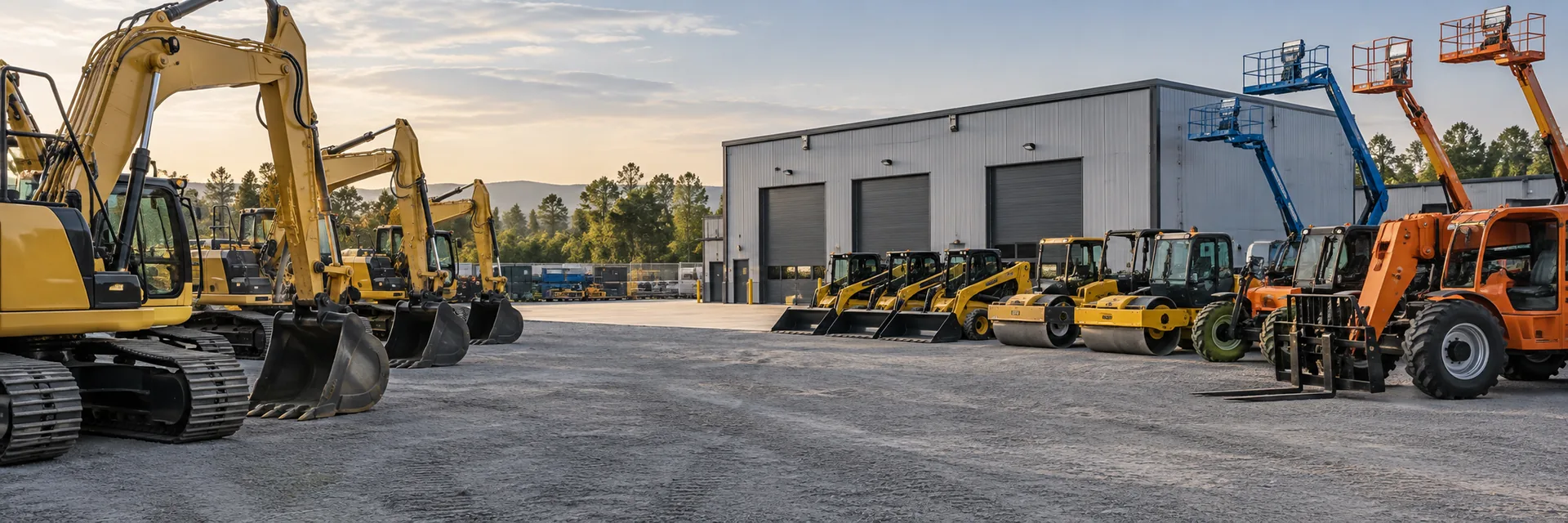
Heavy-equipment rental businesses serve the part of construction where one bad loss can involve a six-figure machine, a specialized recovery contractor and a customer dispute at the same time. The target account here is the California rental company supplying demolition, excavation, grading, paving, utility, trenchless and civil contractors with excavators, dozers, loaders, articulated trucks, trenchers, directional drills, compactors, breakers and specialty attachments.
✓Largest-Unit Severity
✓Demolition Use
✓Excavation & Utility Work
Reviewed by David Gleason, Principal — October 12, 2026
CaliforniaGeneral information only, not legal advice — illustrative scenarios and coverage, subject to change without notice. Content may be out of date or contain errors, and requirements vary by city, county, state, agency, project, contract, carrier and policy, among other factors; verifying what applies to your own situation is your responsibility. Full disclaimer
Interactive coverage guide
Build a coverage stack around how the business actually operates.
Start with the preselected industry or trade, then adjust the operational questions. The commonly considered stack updates live. Keep the coverages you want GIB to evaluate, remove ones you do not want included in your quote request, and add other available lines before continuing.
Common Starting Coverages
General LiabilityThird-party injury and property damage
What it is
General Liability commonly addresses covered third-party bodily injury, property damage and certain personal or advertising injury claims, subject to the policy.
Why businesses like yours commonly carry it
Businesses commonly use it as a starting liability policy and to satisfy customer, landlord or contract requirements.
Possible coverage gap
General Liability is not intended to replace policies for employee injuries, business vehicles, owned property, cyber events or professional errors.
Business Owners Policy / Commercial PackageLiability and property components evaluated together
What it is
A Business Owners Policy commonly combines liability and property coverages for eligible businesses. A Commercial Package Policy may combine multiple commercial coverage parts depending on the account and carrier.
Why businesses like yours commonly carry it
Businesses with premises, contents, inventory or other property exposures may ask GIB to evaluate whether liability and property components can be packaged where appropriate.
Possible coverage gap
Eligibility, included coverages and package structure vary by carrier. Commercial Property may also be written separately rather than as part of a package.
Cyber Liability & Data BreachCyber events, data and system interruption
What it is
Cyber insurance may address certain first-party and third-party losses from covered data breaches, cyberattacks, ransomware and system interruption, depending on the policy.
Why businesses like yours commonly carry it
Rental operations keep renter identification, card data and telematics on connected systems.
Possible coverage gap
General Liability generally should not be assumed to address data breach response, ransomware or network interruption.
Educational guidance only. Results are not a coverage recommendation, quote, binder, policy interpretation, or guarantee of coverage. Actual needs, availability, forms, limits, exclusions and requirements vary. A licensed insurance professional should review the complete risk and issued policy terms.
Verified Google reviews
What contractors say about us
5.0 / 5from 7 Google reviews
Reviews reflect individual client experiences and are not a guarantee of coverage, pricing or results.
91 Enterprise LLC
March 24, 2026
We are using Gleason insurance for our commercial auto policy and GL policy. David is the best insurance broker I've worked with — very honest, responsive, and knowledgeable. Highly recommend.
Fito Plumbers
February 20, 2026
We have been working with David at Gleason Insurance Brokers for 8+ years. David always goes above and beyond to make sure we have the appropriate coverages. He explains everything in detail and makes sure we feel confident and understand all of our policies. He is always available and responds right away!
Barry Stay
February 17, 2026
David provides great service and I highly recommend him for your insurance needs.
Severity Starts With the Largest Unit
A fleet may be worth $20 million, but the real stress test is the $800,000 drill, large excavator or specialty crusher at one remote project. Schedules should capture attachments, telematics and replacement values rather than relying on stale book values.
The limit question on a heavy fleet is not the fleet total, it is the largest single exposure that can be destroyed, stolen or buried in one event — and that figure is often higher than the machine's own value. A tracked excavator that rolls into a trench takes recovery equipment, a specialist rigging contractor, possibly a road closure and several days of crane time before anyone assesses the machine itself. A schedule built on acquisition cost alone tends to understate what the event actually costs.
Blanket versus scheduled treatment matters more here than on a high-frequency fleet. A blanket limit sized to average unit value will not answer a loss on the largest machine, while scheduling every unit creates an administrative burden that goes stale the moment the fleet turns over. Many heavy fleets end up with a scheduled approach for the top tier and a blanket for the rest, with the schedule reviewed on a defined cycle rather than at renewal only. Whether that structure is available, and on what terms, depends on the carrier and the underwriting.
A fleet may be worth $20 million, but the real stress test is the $800,000 drill, large excavator or specialty crusher at one remote project
Schedules should capture attachments, telematics and replacement values rather than relying on stale book values
Demolition Use Changes the Risk
Demolition exposes machines to debris, heat, metal, unstable structures, contamination and accelerated wear. Rental agreements should say whether demolition use is permitted and how misuse, wear and accidental damage are separated.
Demolition exposes machines to debris, heat, metal, unstable structures, contamination and accelerated wear
Rental agreements should say whether demolition use is permitted and how misuse, wear and accidental damage are separated
Excavation and Utility Work Add Water, Mud and Underground Questions
Machines can be staged beside trenches, operate on slopes, work around groundwater or remain overnight on remote rights-of-way. Flood, mud, underground property and recovery expense should not be assumed covered simply because the machine is scheduled.
Machines can be staged beside trenches, operate on slopes, work around groundwater or remain overnight on remote rights-of-way
Flood, mud, underground property and recovery expense should not be assumed covered simply because the machine is scheduled
Heavy Haul Is Part of the Account
Tractors, lowboys and rollback units create their own severity. Underwriters typically look at CDL/MVR quality, permitted loads, tie-down procedures, radius, maintenance and backing at construction sites.
Moving the fleet is a regulated activity in its own right, and on heavy units it is rarely a simple load-and-go. Oversize and overweight movements commonly need permits routed to the specific road network, and the permit conditions may dictate travel hours, escort vehicles, and routes chosen around bridge weight ratings rather than around distance. A delivery that deviates from the permitted route is a different conversation with both the agency and the carrier if something happens on it.
That makes the haul file part of the insurance file. Lowboy and multi-axle trailer capacity against the heaviest unit in the fleet, the ramp and winching procedure, who holds the permits, and whether hauling is done in-house or brokered all change how the exposure is presented. Where it is brokered, the broker-carrier agreement and the hauler's own limits matter, because a machine damaged in transit under someone else's authority is a subrogation question before it is a coverage one.
Tractors, lowboys and rollback units create their own severity
Underwriters typically look at CDL/MVR quality, permitted loads, tie-down procedures, radius, maintenance and backing at construction sites
Four Claims to Model
Excavator theft: a customer leaves the unit on an unfenced subdivision overnight.
Dozer submerged: storm runoff fills a grading cut and the machine sits in mud and water.
Demolition breaker damage: the customer returns an attachment with severe internal damage and disputes whether it was abuse or wear.
Lowboy overturn: the rental company's tractor and a high-value machine are both damaged during pickup.
Excavator theft: a customer leaves the unit on an unfenced subdivision overnight
Dozer submerged: storm runoff fills a grading cut and the machine sits in mud and water
Demolition breaker damage: the customer returns an attachment with severe internal damage and disputes whether it was abuse or wear
Lowboy overturn: the rental company's tractor and a high-value machine are both damaged during pickup
Underwriting Package
Fleet schedule, attachments, largest unit, demolition percentage, underground/water use, delivery fleet, heavy-haul radius, drivers, GPS, yard security, rental contract, customer screening and loss history.
schedule
attachments
largest unit
demolition percentage
underground/water use
delivery fleet
heavy-haul radius
drivers
Middle-Market Coverage Stack
Larger heavy-rental operations should coordinate rented-to-others equipment coverage with yard property, business income, commercial auto, workers compensation, GL/products, crime and umbrella/excess. Pollution may also deserve review when the business stores bulk fuel, rents environmental equipment or has service operations involving oils and hydraulic fluids. Rental companies that also sell tractors and industrial machines can see insurance for tractor and industrial equipment dealers.
business income
commercial auto
workers compensation
GL/products
crime
rents environmental equipment or has service operations involving oils
hydraulic fluids
Customer Qualification and Contract Controls
A commercial renter file can include business verification, driver/operator requirements, COIs for high-value rentals, credit controls, GPS consent, prohibited-use language and clear procedures when equipment becomes overdue. Those controls can matter as much as physical yard security because conversion loss begins with a legitimate handoff. Conversion, a renter who never returns the machine, starts as a legitimate transaction, which is why our article on heavy equipment theft and conversion prevention begins with customer verification.
Those controls can matter as much as physical yard security because conversion loss begins with a legitimate handoff
How risk transfer works in a rental agreement
Equipment Rental Company → Renter → The Jobsite It Goes To
A rental agreement moves risk before the equipment leaves the yard, and the machine then sits on a site governed by contracts the rental company never signed. Open a handoff to see what commonly travels with it.
Equipment Rental Company
The rental agreement itselfThe contract doing the work here, and not a subcontract. It commonly sets who bears physical damage, who carries liability while the machine is in use, what happens if it is stolen, and what is owed for the time it cannot be re-rented. Those terms generally govern regardless of what either party’s policy says, which is why reading it first tends to be the useful order.
A damage waiver is not insuranceA waiver is the rental company agreeing, by contract, to limit what it will pursue the renter for. It is not a policy, there is no insurer behind it, and it commonly carries exclusions — overturn, misuse, operating outside the manufacturer’s specifications, theft without signs of forced entry, and unattended equipment are frequently among them. A renter who declines it is not uninsured, and a renter who accepts it is not fully covered.
Rented or leased equipment coverageThe renter’s own inland marine cover for equipment in its care. The limit has to reach the largest single unit on rent, not the average one, and a contract that names a flat figure may sit well below the machine actually being collected.
The rental company named on the renter’s policyCommonly as loss payee on the equipment cover and as an additional insured on the liability side for operations involving the machine. These are two different things on two different policies, and a certificate showing one is not evidence of the other.
Waiver of subrogationCG 24 04Gives up the insurer’s right to recover from the upstream party after paying a claim. Frequently named alongside additional insured status rather than instead of it.
Certificate, plus the endorsements behind itA certificate evidences that a policy existed on the day it was issued. It is not proof that any particular endorsement sits on that policy, which is why a requirement is commonly checked against the endorsement itself.
Collected once at account opening and never again is the common failure. A rental relationship frequently outlives the policy term that was evidenced when it started.
Renter — the contractor or business renting
Who is responsible in transitDelivery and pickup are their own exposure and commonly fall to whoever is hauling. Where the rental company delivers, that is its fleet; where the renter collects, it is generally the renter’s. Overturn on the road and damage during loading tend to be argued about afterwards unless the agreement addressed them.
Operator liability is not equipment damageTwo separate questions that a single conversation often blurs. Harm the machine causes to people or property is a liability matter; harm to the machine itself is a property one. A renter can be well covered for one and carry nothing for the other.
Additional insured, ongoing operationsoften CG 20 10Extends the downstream party’s general liability to the upstream party for work still in progress. It is the form most contracts have in mind when they say "name us as additional insured", and on its own it generally stops responding once the work is finished.
Whether a wrap-up or builders risk reaches itOn a project with an OCIP, CCIP or builders risk policy, rented equipment is commonly outside what that program covers — those generally respond to the work and the structure rather than to somebody else’s machine sitting on the site. Worth confirming against the actual program documents rather than assumed either way.
Lost rental income while it is out of serviceA damaged machine stops earning. Whether that loss is recoverable, and from whom, is usually a term of the rental agreement rather than a standard feature of a policy, and it is frequently sub-limited where it is covered at all.
The rental company generally has the least visibility of anyone here and the most value at stake, since the machine is its asset sitting on a site it does not control.
The Jobsite, and whoever controls it
The limits a contract asks for, and what each one means
Rental agreements and the contracts on the sites equipment goes to both commonly state limits. One million dollars per occurrence with a two million dollar general aggregate is a combination many of these agreements use, but for a rental account the equipment limit is frequently the number that decides whether a loss is made whole, and it varies by fleet rather than by contract.
Per occurrence
The most the policy generally pays for any one covered occurrence.
Rented or leased equipment limit
Needs to reach the largest single unit on rent rather than a typical one. A fleet average is a common way to end up short on exactly the machine that was damaged.
General aggregate
The most the policy generally pays across the term, covering the yard and the operation as well as the equipment in the field.
Auto liability for delivery and pickup
A rental company that delivers is running a fleet business alongside a rental one, and it is commonly the higher-frequency half of the account.
Umbrella or excess above it
Sits above the underlying limits. What it sits over matters as much as how high it reaches, since a tower built only over general liability leaves the fleet and the equipment short of what an agreement may assume.
Values and Lost Rental Income
Heavy units should be valued using current market/replacement assumptions appropriate to the form. A total loss can also remove a revenue-producing machine for months, so rental-income and substitute-equipment options should be reviewed where available.
Lost rental income is the part of a heavy-equipment loss that rarely appears in the schedule and frequently appears in the claim. A machine on a long-term contract at a known day rate has a measurable earnings stream, and when it is destroyed the business loses that stream until a replacement can be sourced — which on a specialized unit can take months rather than weeks, because the replacement market for late-model heavy equipment is not deep.
Where coverage for that loss of income is available it is commonly written with its own limit, waiting period and basis of recovery, and those three terms matter more than the headline amount. A limit sized to a short replacement window will not carry a unit that takes a quarter to replace. Documenting actual utilization and day rates by unit class, rather than quoting a fleet average, is what lets the limit be sized to the real exposure. Availability and terms are subject to the carrier's underwriting. Operations that rent tools and light equipment alongside heavy machines can see insurance for tool and equipment rental stores.
Heavy units should be valued using current market/replacement assumptions appropriate to the form
A total loss can also remove a revenue-producing machine for months, so rental-income and substitute-equipment options should be reviewed where available
Frequently asked questions
10 questions — start typing to filter
Is heavy equipment rental insurance different from tool rental insurance?
Yes. Heavy equipment has larger single-unit values, heavy-haul exposure, recovery costs and harsher jobsite conditions.
Is demolition use automatically covered?
No. It should be disclosed and checked against the rental contract and equipment form.
What about flood or mud damage?
Coverage varies materially. Flood, surface water, mud and recovery costs should be reviewed specifically.
Does inland marine cover a transmission failure?
Not automatically. Internal breakdown can be excluded or require equipment-breakdown coverage.
Are attachments included with the machine?
Only if the schedule or blanket provisions support that result.
Can heavy-haul losses involve both auto and inland marine?
Yes. The hauling unit and the equipment being transported can trigger different policies.
Does heavy-haul transport need its own review?
Yes — moving heavy equipment on a lowboy involves permitting, escort and securement questions distinct from the equipment coverage itself, and a transport-related loss can affect both the trailer and the machine in one occurrence.
How should the limit on a single machine be set?
By what the event costs, not by what the machine cost. A tracked unit that goes into a trench can take recovery equipment, a specialist rigging contractor, a possible road closure and days of crane time before the machine itself is assessed. A schedule built on acquisition cost alone commonly understates the loss. Sizing to the largest single exposure that one event can destroy is the more useful exercise.
Is lost rental income covered when a machine is destroyed?
Where it is available it is commonly written with its own limit, waiting period and basis of recovery, and those terms matter more than the headline amount. The reason it matters on heavy equipment specifically is that the replacement market for late-model specialized units is not deep, so the earnings gap can run months rather than weeks. Documenting real utilization and day rates by unit class, rather than a fleet average, is what lets the limit be sized to the actual exposure. Availability and terms are subject to the carrier's underwriting.
Does it matter whether we haul our own equipment?
It changes the file substantially. Oversize and overweight movements commonly need permits routed to a specific road network, and the conditions can dictate travel hours, escorts and routes chosen around bridge weight ratings. Hauling in-house puts the permits, the trailer capacity and the winching procedure in your own file; brokering it puts the broker-carrier agreement and the hauler's limits in play, which makes a transit loss a subrogation question before it is a coverage one.
Official resources
Verify current licensing, regulatory and program requirements directly with the responsible agency — this is general information, not legal advice, requirements change without notice, and what is summarized here may be out of date or contain errors. Confirming what applies to your own city, project, contract and policy is your responsibility.