Gleason Insurance Brokers

General Liability · Workers' Comp · Commercial Auto · Pollution Insurance · Surety Bonds Start a Business Insurance Quote Today

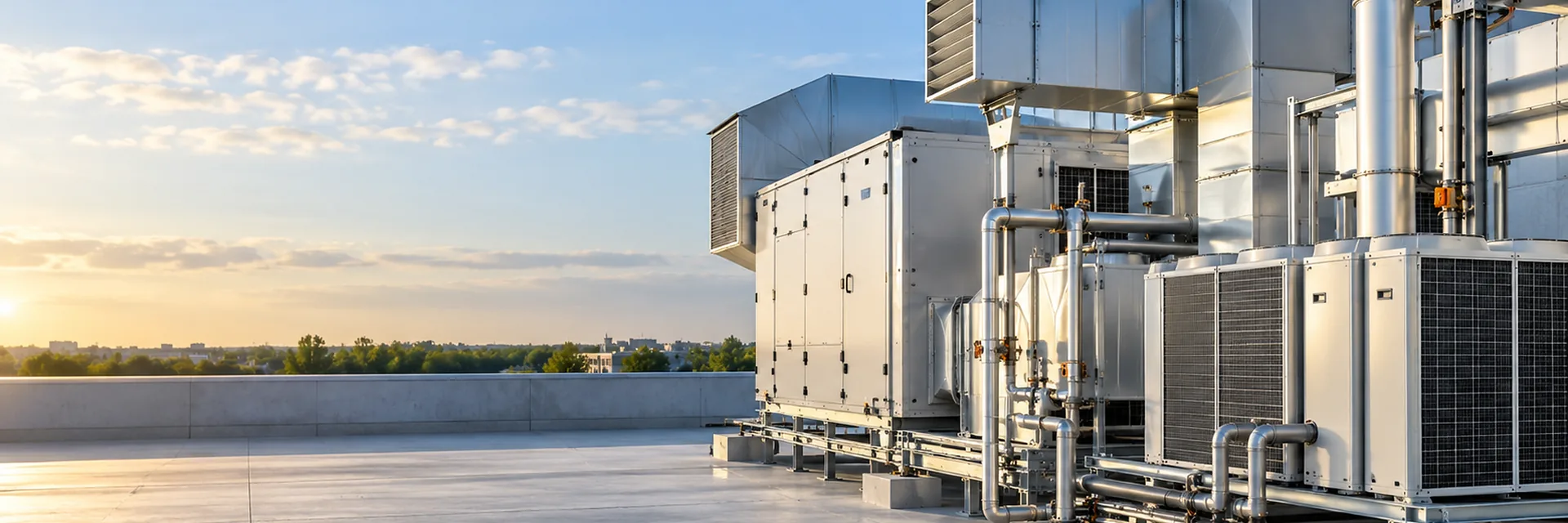
Rooftop HVAC and mechanical units on a commercial building — HVAC, mechanical and commercial refrigeration contractor insurance

California commercial insurance

HVAC / Mechanical / Refrigeration Contractor Insurance California

844-97-USAVE

HVAC, mechanical and commercial refrigeration work spans more coverage lines than almost any other trade on this site — C-20 licensing, mandatory workers' compensation regardless of employee count, equipment and rigging exposure, design-build liability on larger mechanical installs, and real Legionella and water-damage considerations on commercial refrigeration and cooling tower work.

  • General Liability
  • Workers Comp (C-20)
  • Completed Operations

Reviewed by David Gleason, Principal — October 12, 2026

Next Level Experience. Insurance Done Right.

CaliforniaGeneral information only, not legal advice — illustrative scenarios and coverage, subject to change without notice. Content may be out of date or contain errors, and requirements vary by city, county, state, agency, project, contract, carrier and policy, among other factors; verifying what applies to your own situation is your responsibility. Full disclaimer

Interactive coverage guide

Build a coverage stack around how the business actually operates.

Start with the preselected industry or trade, then adjust the operational questions. The commonly considered stack updates live. Keep the coverages you want GIB to evaluate, remove ones you do not want included in your quote request, and add other available lines before continuing.

Common Starting Coverages

General LiabilityThird-party injury and property damage

What it is

General Liability commonly addresses covered third-party bodily injury, property damage and certain personal or advertising injury claims, subject to the policy.

Why businesses like yours commonly carry it

Businesses commonly use it as a starting liability policy and to satisfy customer, landlord or contract requirements.

Possible coverage gap

General Liability is not intended to replace policies for employee injuries, business vehicles, owned property, cyber events or professional errors.

Learn more about General Liability

Commonly Added Based on Operations

Contractor Equipment / Inland MarineMobile tools, equipment and property away from premises

What it is

Inland Marine is commonly used for tools, equipment and certain mobile property that moves between locations or jobsites.

Why businesses like yours commonly carry it

Contractors frequently move tools, testing equipment and mobile machinery among jobsites.

Possible coverage gap

General Liability should not be assumed to insure the business's own tools and equipment against theft or physical damage.

Learn more about Contractor Equipment / Inland Marine
Cyber Liability & Data BreachCyber events, data and system interruption

What it is

Cyber insurance may address certain first-party and third-party losses from covered data breaches, cyberattacks, ransomware and system interruption, depending on the policy.

Why businesses like yours commonly carry it

Contractors commonly use email, electronic banking, project platforms, payroll systems and cloud document storage.

Possible coverage gap

General Liability generally should not be assumed to address data breach response, ransomware or network interruption.

Learn more about cyber insurance for contractors

Exposure-Dependent Coverages

Installation FloaterMaterials awaiting or undergoing installation

What it is

An Installation Floater may cover certain materials and equipment in transit, temporary storage and during installation, subject to the policy.

Why businesses like yours commonly carry it

Businesses responsible for materials before final installation commonly consider this coverage.

Possible coverage gap

A basic liability policy generally should not be assumed to cover the insured's materials against physical loss before installation is complete.

Learn more about Installation Floater
Builder's RiskProject property during construction

What it is

Builder's Risk may insure covered buildings, materials and certain project property while construction is underway.

Why businesses like yours commonly carry it

Owners, developers and contractors commonly consider it when a structure or major renovation is exposed during construction.

Possible coverage gap

Commercial Property and General Liability are not automatic substitutes for course-of-construction property coverage.

Learn more about Builder's Risk
Contractors Pollution LiabilityPollution conditions and cleanup liability

What it is

Pollution Liability may address covered cleanup costs and third-party injury or property damage arising from pollution conditions.

Why businesses like yours commonly carry it

Businesses working with fuels, chemicals, soil, water, demolition or environmental conditions may have pollution exposures.

Possible coverage gap

Standard General Liability commonly contains pollution exclusions or limitations.

Learn more about Contractors Pollution Liability
Umbrella / Excess LiabilityAdditional limits above scheduled liability policies

What it is

Umbrella or Excess Liability may provide additional limits above identified underlying liability policies, subject to its own terms and exclusions.

Why businesses like yours commonly carry it

Businesses with larger contracts, vehicles, public exposure or higher severity potential commonly consider additional limits.

Possible coverage gap

An umbrella does not automatically broaden every exclusion or sit over every policy unless the issued terms say it does.

Learn more about Umbrella / Excess Liability

Loading quote and requirements options…

Educational guidance only. Results are not a coverage recommendation, quote, binder, policy interpretation, or guarantee of coverage. Actual needs, availability, forms, limits, exclusions and requirements vary. A licensed insurance professional should review the complete risk and issued policy terms.

Verified Google reviews

What contractors say about us

5.0 / 5from 7 Google reviews

Reviews reflect individual client experiences and are not a guarantee of coverage, pricing or results.

91 Enterprise LLC

91 Enterprise LLC

March 24, 2026

We are using Gleason insurance for our commercial auto policy and GL policy. David is the best insurance broker I've worked with — very honest, responsive, and knowledgeable. Highly recommend.

Fito Plumbers

Fito Plumbers

February 20, 2026

We have been working with David at Gleason Insurance Brokers for 8+ years. David always goes above and beyond to make sure we have the appropriate coverages. He explains everything in detail and makes sure we feel confident and understand all of our policies. He is always available and responds right away!

Barry Stay

Barry Stay

February 17, 2026

David provides great service and I highly recommend him for your insurance needs.

Why HVAC and mechanical work carries broad, layered exposure

HVAC and mechanical contracting isn't one narrow exposure — it spans residential and light-commercial HVAC, large mechanical equipment installation, commercial refrigeration systems, and often crane or rigging work to set rooftop units or chillers. Each of those carries a genuinely different risk profile, and a program built around only the most common scope can leave real gaps on a larger commercial project.

Water damage is a particularly common claim driver for this trade — a failed condensate line, a refrigerant leak, a burst line on a commercial system — and completed operations coverage matters here the same way it does for any trade whose failures can surface well after installation.

Spans residential/light-commercial HVAC, large mechanical installs and commercial refrigeration
Water damage from failed lines or leaks is a common, recurring claim driver
Larger commercial mechanical work often adds crane/rigging exposure standard HVAC work doesn't carry
Completed operations coverage matters here as much as it does for any trade with delayed-failure exposure

Workers compensation: C-20 is in the mandatory group

C-20 (Warm-Air Heating, Ventilating and Air-Conditioning) was one of the four original classifications named in SB 216 (2022), requiring workers' compensation insurance regardless of employee count starting January 1, 2023 — already in effect, not a future deadline. Every remaining CSLB classification follows by January 1, 2028 under SB 1455, but C-20 has already been in this group for several years.

C-20 has required workers comp regardless of employee count since January 1, 2023 under SB 216
This already applies — not a future deadline like the broader 2028 timeline
See our Workers Compensation guide for the full SB 216 / SB 1455 timeline

Sources for this section

Commercial refrigeration and Legionella exposure

Commercial refrigeration and cooling tower work carries a real water-treatment and bacterial-growth exposure — Legionella specifically — that a straightforward residential HVAC install doesn't. Cooling towers and evaporative systems require ongoing water treatment to manage this risk, and a contractor performing installation, maintenance or water-treatment-adjacent work on these systems carries a real liability exposure if that risk isn't managed and documented correctly.

This is a real, named exposure carriers underwrite specifically for contractors working on cooling towers and large refrigeration systems — not a generic pollution concern folded into standard coverage.

Cooling towers and evaporative systems carry a real Legionella/water-treatment exposure
Distinct from standard residential HVAC risk — relevant specifically to commercial refrigeration and cooling tower work
Documented water-treatment protocols matter to how this exposure is underwritten

Cranes, rigging and equipment for large mechanical installs

Setting a rooftop unit, chiller or large commercial condenser often means crane or rigging work most standard HVAC jobs don't require — a distinct liability and equipment exposure worth confirming is actually covered, not assumed to fall under a standard installation policy. See our Contractor Equipment & Inland Marine guide for how equipment coverage applies to owned and rented rigging equipment.

Crane/rigging work for rooftop units and chillers is a distinct exposure from standard HVAC installs
Confirm equipment coverage extends to rigging operations, not just the mechanical unit itself

Design-build and delegated mechanical design exposure

Mechanical contractors providing system sizing, load calculations or design input on larger commercial projects carry a real professional liability exposure standard general liability doesn't cover — the same exposure covered in more depth on our Professional Liability / E&O guide, which addresses design-build and delegated design specifically.

System sizing, load calculations and design input carry professional liability exposure, not just GL
See our Professional Liability / E&O guide for the delegated design exposure this creates

A realistic HVAC claims scenario

A commercial rooftop unit is installed; six months later, a condensate line failure causes water damage to the floor below. Investigation traces it to an installation defect rather than equipment failure — a completed operations claim surfacing well after the crew finished the job.

This is a typical, illustrative example meant to show how completed operations coverage responds to a real HVAC exposure — not a description of any actual claim, and not a guarantee of how a specific claim would be handled. Actual outcomes depend on the policy's actual terms and the specific facts involved.

Water damage from installation defects is a common delayed-failure claim type for this trade
Completed operations coverage is what responds to a claim like this
The scenario above is illustrative only, not a guarantee of how any specific claim is handled

Getting HVAC, mechanical and refrigeration coverage in place

Describe the actual scope — residential HVAC, commercial mechanical, refrigeration, design input, rigging — so the program reflects the real breadth of this trade rather than a generic single-line policy.

Gleason Insurance Brokers places HVAC, mechanical and refrigeration contractor coverage throughout California — call 844-978-7283 or request a quote to get started. On design-build mechanical work, the engineer of record's coverage is a separate policy, outlined on insurance for MEP engineering firms.

Describe the real scope: residential, commercial mechanical, refrigeration, design input, rigging
Confirm workers comp is in place — required regardless of employee count for C-20
Reach a broker on 844-978-7283, or request a quote

Contractors we work with, growing and established

We work with HVAC, mechanical and refrigeration contractors across a range of company sizes — from residential HVAC service up through established commercial mechanical and refrigeration programs. Program structure, market access and current capacity all factor into how a specific account is approached, whether the business is an established operation adding crews or already running a considerably larger program.

An HVAC contractor moving from residential service into commercial or industrial mechanical and refrigeration work is taking on real additional exposure, and it's easier to plan for that ahead of the shift than after. Reach out and we'll be direct about what fits your operation today.

We work with both growing and established operations, trade to trade
Program structure and market access are matched to the size and complexity of the account
Current capacity and focus can affect timing — reach out early so we can plan around it
We'll be direct with you about the best path forward for your specific business

Frequently asked questions

9 questions — start typing to filter

Is workers compensation required for HVAC contractors in California regardless of employee count?

Yes for C-20 specifically — it was one of the original four SB 216 classifications, requiring workers' compensation regardless of employee count since January 1, 2023. This already applies, not a future deadline.

What is the Legionella exposure for HVAC contractors?

Contractors working on cooling towers, evaporative cooling systems or commercial refrigeration carry a real water-treatment and bacterial-growth (Legionella) exposure that standard residential HVAC work doesn't — a named, specifically underwritten exposure for this scope of work, not a generic pollution concern.

Do HVAC contractors need an installation floater for mechanical equipment?

Often, yes — depending on the policy, equipment and materials in transit to or staged at a job site before installation may need inland marine or an installation floater specifically, separate from what covers the finished, installed system. Confirm which applies to a specific project.

Does general liability cover crane or rigging work for rooftop units?

Not automatically — rigging work to set a rooftop unit or chiller is a distinct exposure from the mechanical installation itself, and confirming equipment/liability coverage actually extends to it (owned or rented rigging equipment) is worth doing before a larger commercial project starts.

Do mechanical contractors need professional liability coverage?

If the scope includes system sizing, load calculations or design input on a project — common on larger commercial mechanical work — yes. Standard general liability excludes design/professional-judgment exposure entirely; that's what professional liability / E&O is built to address.

Does HVAC insurance cover water damage from a failed line or leak?

General liability with completed operations coverage typically responds to this kind of claim when it traces to an installation or workmanship issue — confirming completed operations is actually part of the program matters given how common delayed water-damage claims are for this trade.

What's the difference between residential and commercial HVAC underwriting?

Scope and scale matter significantly — commercial mechanical work often adds rigging exposure, design/sizing input, and larger-loss potential a residential HVAC install doesn't carry. Describing the real mix of work gets a program matched to the actual risk rather than a generic HVAC policy.

Does pollution liability apply to HVAC and refrigeration contractors?

It can — refrigerant release and water-treatment chemical handling on cooling towers are real, potential pollution triggers for this trade. See our Contractors Pollution Liability guide for the broader trigger list this applies within.

What insurance do mechanical trades contractors need?

Mechanical trades — HVAC, plumbing, refrigeration, boiler and steam fitting — generally need the same core stack (general liability, workers compensation, commercial auto) with trade-specific attention to completed operations, equipment coverage, and in some cases professional liability for design/sizing input on larger commercial systems.

Additional official resources

Verify current licensing, regulatory and program requirements directly with the responsible agency — this is general information, not legal advice, requirements change without notice, and what is summarized here may be out of date or contain errors. Confirming what applies to your own city, project, contract and policy is your responsibility.

Updated October 12, 2026