Gleason Insurance Brokers

General Liability · Workers' Comp · Commercial Auto · Pollution Insurance · Surety Bonds Start a Business Insurance Quote Today

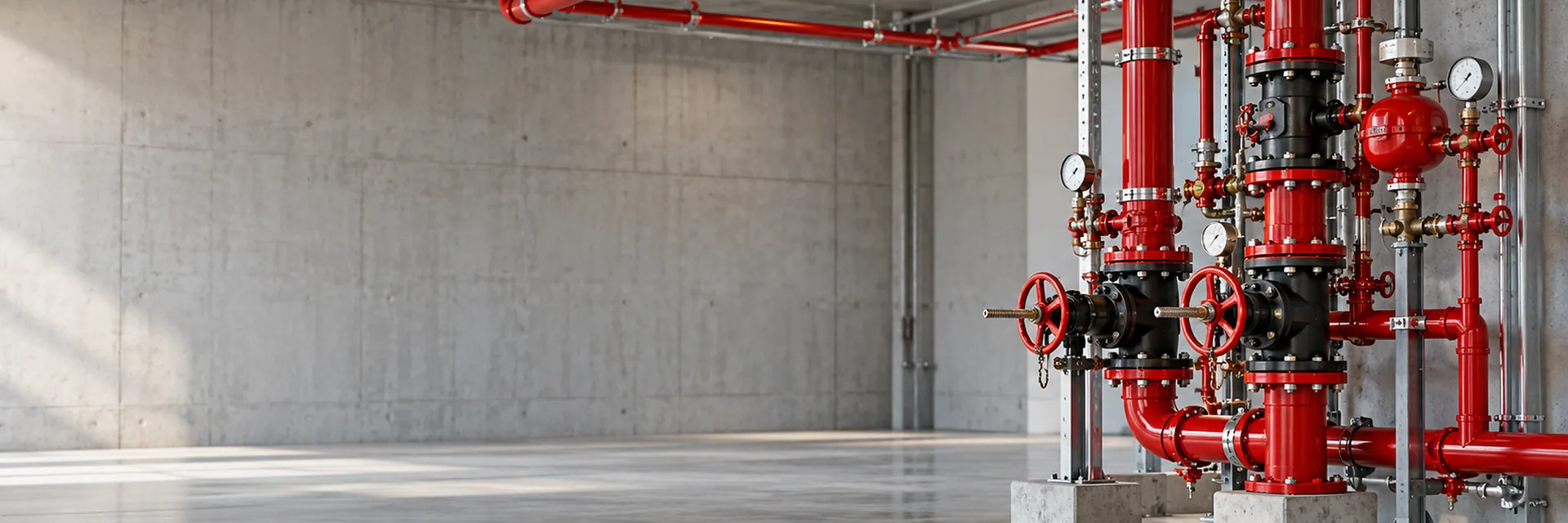
Fire sprinkler pipework installed through a ceiling — fire sprinkler and fire protection contractor insurance

California commercial insurance

Fire Sprinkler Contractor Insurance CA

844-97-USAVE

Fire sprinkler and fire protection work carries a distinct exposure most trades don't face: if a system fails to activate during an actual fire, the resulting claim can be catastrophic — property loss, business interruption, and potentially worse. Coverage needs to reflect that severity, plus the design-liability exposure that comes with code-compliance work.

  • C-16 Classification
  • Accidental Discharge
  • Completed Operations

Reviewed by David Gleason, Principal — October 12, 2026

Next Level Experience. Insurance Done Right.

CaliforniaGeneral information only, not legal advice — illustrative scenarios and coverage, subject to change without notice. Content may be out of date or contain errors, and requirements vary by city, county, state, agency, project, contract, carrier and policy, among other factors; verifying what applies to your own situation is your responsibility. Full disclaimer

Interactive coverage guide

Build a coverage stack around how the business actually operates.

Start with the preselected industry or trade, then adjust the operational questions. The commonly considered stack updates live. Keep the coverages you want GIB to evaluate, remove ones you do not want included in your quote request, and add other available lines before continuing.

Common Starting Coverages

General LiabilityThird-party injury and property damage

What it is

General Liability commonly addresses covered third-party bodily injury, property damage and certain personal or advertising injury claims, subject to the policy.

Why businesses like yours commonly carry it

Businesses commonly use it as a starting liability policy and to satisfy customer, landlord or contract requirements.

Possible coverage gap

General Liability is not intended to replace policies for employee injuries, business vehicles, owned property, cyber events or professional errors.

Learn more about General Liability

Commonly Added Based on Operations

Contractor Equipment / Inland MarineMobile tools, equipment and property away from premises

What it is

Inland Marine is commonly used for tools, equipment and certain mobile property that moves between locations or jobsites.

Why businesses like yours commonly carry it

Contractors frequently move tools, testing equipment and mobile machinery among jobsites.

Possible coverage gap

General Liability should not be assumed to insure the business's own tools and equipment against theft or physical damage.

Learn more about Contractor Equipment / Inland Marine
Cyber Liability & Data BreachCyber events, data and system interruption

What it is

Cyber insurance may address certain first-party and third-party losses from covered data breaches, cyberattacks, ransomware and system interruption, depending on the policy.

Why businesses like yours commonly carry it

Contractors commonly use email, electronic banking, project platforms, payroll systems and cloud document storage.

Possible coverage gap

General Liability generally should not be assumed to address data breach response, ransomware or network interruption.

Learn more about cyber insurance for contractors

Exposure-Dependent Coverages

Installation FloaterMaterials awaiting or undergoing installation

What it is

An Installation Floater may cover certain materials and equipment in transit, temporary storage and during installation, subject to the policy.

Why businesses like yours commonly carry it

Businesses responsible for materials before final installation commonly consider this coverage.

Possible coverage gap

A basic liability policy generally should not be assumed to cover the insured's materials against physical loss before installation is complete.

Learn more about Installation Floater
Builder's RiskProject property during construction

What it is

Builder's Risk may insure covered buildings, materials and certain project property while construction is underway.

Why businesses like yours commonly carry it

Owners, developers and contractors commonly consider it when a structure or major renovation is exposed during construction.

Possible coverage gap

Commercial Property and General Liability are not automatic substitutes for course-of-construction property coverage.

Learn more about Builder's Risk
Contractors Pollution LiabilityPollution conditions and cleanup liability

What it is

Pollution Liability may address covered cleanup costs and third-party injury or property damage arising from pollution conditions.

Why businesses like yours commonly carry it

Businesses working with fuels, chemicals, soil, water, demolition or environmental conditions may have pollution exposures.

Possible coverage gap

Standard General Liability commonly contains pollution exclusions or limitations.

Learn more about Contractors Pollution Liability
Umbrella / Excess LiabilityAdditional limits above scheduled liability policies

What it is

Umbrella or Excess Liability may provide additional limits above identified underlying liability policies, subject to its own terms and exclusions.

Why businesses like yours commonly carry it

Businesses with larger contracts, vehicles, public exposure or higher severity potential commonly consider additional limits.

Possible coverage gap

An umbrella does not automatically broaden every exclusion or sit over every policy unless the issued terms say it does.

Learn more about Umbrella / Excess Liability

Loading quote and requirements options…

Educational guidance only. Results are not a coverage recommendation, quote, binder, policy interpretation, or guarantee of coverage. Actual needs, availability, forms, limits, exclusions and requirements vary. A licensed insurance professional should review the complete risk and issued policy terms.

Verified Google reviews

What contractors say about us

5.0 / 5from 7 Google reviews

Reviews reflect individual client experiences and are not a guarantee of coverage, pricing or results.

91 Enterprise LLC

91 Enterprise LLC

March 24, 2026

We are using Gleason insurance for our commercial auto policy and GL policy. David is the best insurance broker I've worked with — very honest, responsive, and knowledgeable. Highly recommend.

Fito Plumbers

Fito Plumbers

February 20, 2026

We have been working with David at Gleason Insurance Brokers for 8+ years. David always goes above and beyond to make sure we have the appropriate coverages. He explains everything in detail and makes sure we feel confident and understand all of our policies. He is always available and responds right away!

Barry Stay

Barry Stay

February 17, 2026

David provides great service and I highly recommend him for your insurance needs.

What the C-16 classification actually covers

California's C-16 Fire Protection classification covers the layout, installation, alteration, testing, monitoring, service, maintenance and repair of automatic fire sprinkler systems, standpipes, fire pumps, and other fixed fire suppression and detection systems.

Read more

This trade sits at the intersection of construction and life-safety code compliance — work is governed by NFPA standards (NFPA 13 for sprinkler systems specifically) and generally requires UL-listed components, on top of standard CSLB licensing and local fire marshal permitting.

Inspection, testing and maintenance (ITM) work on an existing system — required on a recurring basis for most commercial occupancies — carries a different risk profile than new-construction installation, since it's performed on an active system in an occupied building rather than a ground-up install on a vacant site.

C-16 covers layout, installation, alteration, testing, monitoring, service, maintenance and repair of fire suppression/detection systems
Governed by NFPA standards (NFPA 13 for sprinkler systems) and generally requires UL-listed components
ITM work on existing occupied-building systems carries a different risk profile than new installation
Local fire marshal permitting applies on top of standard CSLB licensing

Sources for this section

Why this trade carries catastrophic-severity exposure

The defining risk in fire sprinkler work is what happens if the system doesn't work when it's actually needed — a failure to activate, an undersized system, or a design that doesn't match the occupancy's actual fire load can result in a catastrophic loss with real bodily injury and property-damage severity, since the system's entire purpose is preventing exactly that outcome.

Read more

This makes both general liability and professional liability/E&O genuinely important, not redundant — GL responds to an installation or workmanship defect, while E&O responds if the system design itself, not the physical installation, failed to account for the building's actual fire protection needs.

The completed-operations tail on this trade is also unusually long: a system installed correctly may not be tested under real fire conditions for years, meaning a design or installation defect can remain undiscovered until the exact moment the system is needed — which is why occurrence-based completed-operations coverage matters more here than on trades with a shorter, more visible defect-discovery window.

System failure during an actual fire is the defining, catastrophic-severity exposure in this trade
GL responds to installation/workmanship defects; professional liability/E&O responds to design failures
Both matter — they're not redundant coverage for this trade
Long completed-operations tail: a defect may not surface until the system is actually needed, sometimes years later

Accidental discharge: a real, distinct claim category

Beyond fire-related failure, accidental discharge — a sprinkler head triggering falsely, a dry-pipe system freezing and rupturing, a water-flow alarm malfunction causing an unnecessary discharge — is a common, well-documented claim category specific to this trade, causing real water damage to the building and its contents even though no fire occurred.

Read more

Freeze-related failures on dry-pipe or pre-action systems are a particular concern in any project with unheated spaces or seasonal temperature swings.

This is worth discussing directly with your broker — general liability typically responds to third-party property damage from an accidental discharge, but confirm the specific policy language rather than assuming standard coverage automatically extends to every discharge scenario, particularly on system design or valve-configuration choices that increase freeze risk.

Accidental discharge causes real water damage even without an actual fire — a distinct, common claim type
Freeze-related failures on dry-pipe/pre-action systems are a particular concern in unheated or seasonal spaces
Confirm GL policy language on accidental discharge scenarios directly, not by assumption
System design choices that increase freeze risk are worth flagging to your broker specifically

Bonding and public works considerations

Fire sprinkler contractors performing public works work — schools, government buildings, hospitals — face the same DIR registration, prevailing wage and bonding requirements as any public works trade, layered on top of this trade's own code-compliance obligations.

Read more

Healthcare facility work specifically falls under HCAI (formerly OSHPD) review rather than the standard local building department, with its own inspection and documentation requirements distinct from a standard commercial installation.

Standard bid, performance and payment bonding applies the same way it does for any CSLB-licensed trade, sized to the contract amount.

Public works fire sprinkler work adds DIR registration, prevailing wage and standard bonding requirements
Healthcare facility (HCAI) work carries its own review process distinct from standard commercial installation
Standard bid/performance/payment bonding applies, sized to contract value

A realistic fire sprinkler claim scenario

A fire sprinkler contractor installs a system in a new commercial building, and the system passes initial inspection and testing.

Read more

Two years later, a fire starts in an area the system was designed to protect, but a design error — an undersized pipe run that couldn't deliver adequate water flow to that specific zone — means the system doesn't fully suppress the fire before it spreads. The resulting claim implicates both the installation contractor and, potentially, whoever performed the original system design, and the claim's true value reflects the building and business-interruption loss, not just the cost of the original installation.

This is exactly the scenario that makes professional liability/E&O coverage genuinely important for this trade, not a redundant add-on to general liability — confirm both are in place and sized appropriately for the buildings your systems actually protect.

A design error can remain undiscovered for years until the system is actually needed
The resulting claim value reflects the building/business-interruption loss, not the installation cost
Both GL and professional liability/E&O should be confirmed in place and sized to the real exposure

Getting coverage that matches the actual risk

Describe your actual scope — new installation vs.

Read more

ITM service work, residential vs. commercial vs. healthcare occupancies, whether you perform system design or install to someone else's stamped plans — so the program reflects your real exposure rather than a generic contractor template that undersizes the professional liability side of this trade.

Gleason Insurance Brokers places fire sprinkler and fire protection contractor coverage throughout California — call 844-978-7283 or request a quote today to get started.

Describe new installation vs. ITM service, occupancy types, and whether you perform system design
Professional liability/E&O sizing should reflect the actual buildings your systems protect
Call 844-978-7283 or request a quote today to get started

Contractors we work with, growing and established

We work with fire sprinkler contractors across a range of company sizes — from smaller service and inspection work up through established commercial and industrial fire protection programs.

Read more

Program structure, market access and current capacity all factor into how a specific account is approached, whether the business is an established operation adding crews or already running a considerably larger program.

A fire sprinkler contractor adding NICET-certified staff or moving into larger commercial systems is changing its risk profile in a way worth discussing ahead of time. Reach out and we'll be direct about what fits your business as it grows.

We work with both growing and established operations, trade to trade
Program structure and market access are matched to the size and complexity of the account
Current capacity and focus can affect timing — reach out early so we can plan around it
We'll be direct with you about the best path forward for your specific business

Frequently asked questions

9 questions — start typing to filter

Do fire sprinkler contractors need professional liability/E&O in addition to general liability?

Generally yes — general liability responds to an installation or workmanship defect, while professional liability/E&O responds if the system's design itself failed to account for the building's actual fire protection needs. Both are genuinely important for this trade, not redundant coverage.

Does general liability cover water damage from an accidental sprinkler discharge?

It often does for third-party property damage, but confirm the specific policy language rather than assuming automatic coverage — accidental discharge (a false activation, a frozen dry-pipe system rupturing) is a common, distinct claim category for this trade worth discussing directly with your broker.

What CSLB classification covers fire sprinkler work in California?

Fire sprinkler and fire protection system work generally falls under the C-16 Fire Protection classification, covering layout, installation, alteration, testing, monitoring, service and repair of fire suppression and detection systems.

Does inspection, testing and maintenance (ITM) work carry different insurance considerations than new installation?

Yes — ITM work is performed on an active system in an occupied building rather than a ground-up install on a vacant site, which carries a different liability profile. Describe both types of work you perform so your program reflects your actual scope.

Do fire sprinkler contractors working on public schools or hospitals face additional requirements?

Yes — public works fire sprinkler work adds DIR registration, prevailing wage and standard bonding requirements, and healthcare facility work specifically falls under HCAI (formerly OSHPD) review rather than the standard local building department.

How is fire sprinkler contractor insurance priced?

Pricing reflects your actual scope — new installation vs. ITM service work, residential vs. commercial vs. healthcare occupancies, whether you perform system design or install to someone else's stamped plans, and your claims history.

Does Gleason Insurance Brokers write fire sprinkler contractor insurance in California?

Yes — we place general liability, professional liability/E&O, and bonding coverage for fire sprinkler and fire protection contractors throughout California. Call 844-978-7283 or start your quote today.

Does workers compensation insurance for contractors cost more for higher-risk trades like fire sprinkler work?

Generally yes — workers compensation insurance for contractors is priced against a classification code tied to the actual work performed, and elevated-work, fall and burn exposures in fire sprinkler installation typically carry a higher base rate than office-based trades.

Do fire sprinkler contractors carry similar hot-work exposure to welders?

There's real overlap — pipe welding for fire sprinkler systems carries the same hot-work and fire exposure dedicated welding contractors face. See our C-60 welding contractor insurance California guide for how this specific classification and exposure is covered.

Additional official resources

Verify current licensing, regulatory and program requirements directly with the responsible agency — this is general information, not legal advice, requirements change without notice, and what is summarized here may be out of date or contain errors. Confirming what applies to your own city, project, contract and policy is your responsibility.

Updated October 12, 2026